What's the difference?
Hybrid campers tread the line between caravan comfort and camper trailer-manoeuvrability and are touted as somewhat of a new thing; almost an evolution of comfort as more people look for a perfect camping experience.
But camper-trailers like the Cub Longreach LE prove that the concept has been around for decades.
It hasn't always been called the Longreach, but this high-walled, super-sized, off-road camper-trailer was one of the first to offer caravan-like comfort and space in a product that'll go anywhere off-road*. (* In terms of reasonable use and having obviously scrutinised your camper's warranty conditions before setting off to make sure you're covered for that sort of usage.)
The 2019 LE takes the comfort levels even further, so we grabbed one for a night to check it out.
Lamborghini is famous for making glamorous supercars whose pilots seem so carefree they don’t appear to need a boot, or back seats, or even families.
They don’t even seem to mind them being so low they have to get in and out on all fours – well that’s how I need to do it, anyway.
Yup, Lamborghini is famous for these exotic race cars for the road… not SUVs.
But it will be, I know it.
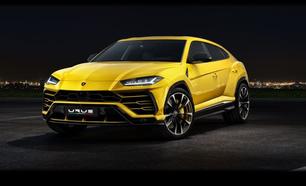
I know, because the new Lamborghini Urus came to stay with my family and we torture tested it, not on the track or off-road, but in the 'burbs doing the shopping, the school drop-offs, braving multi-storey car parks and the potholed roads daily.
While I never like to give the game away this early in a review, I need to say the Urus is astounding. This is truly a super SUV that is every bit as Lamborghini as I hoped, but with a big difference – you can live with it.
Here’s why.
This isn’t the camper for everyone – my guess is that plenty of people look at this and find it too sparse, too basic. I kinda get it.
But there are very few campers which offer the same amount of open, internal space, or that are as easy to set up.
That the Longreach, albeit with a few different names, has lasted so long on the Cub Campers' product roster is a testament to its versatility and ability to accommodate a small family on off-road camper trips.
It's arguably one of the forerunners of the hybrid camper scene, and it's now starting to evolve with campers' desires for more comfort.
Lamborghini has nailed it. The Urus is a super SUV that’s fast, dynamic, and has Lamborghini looks, but just as importantly it’s practical, spacious, comfortable and easy to drive. You’re not going to find those last four attributes in a sentence about an Aventador.
Where the Urus loses marks is in terms of warranty, value for money and fuel consumption.
I didn’t take the Urus on the Corsa nor the Neve, nor Sabbia and Terra, but as I said in my video we know this SUV is capable on the track and that it can go off-road.
What I really wanted to see was how well it handled regular life. Any competent SUV can deal with shopping centre car parks, dropping kids off at school, carrying boxes and bags, and of course fitting and being driven as you would any car.
The Urus is a Lamborghini anybody could drive, pretty much anywhere.
For a rear-fold camper-trailer, the space inside couldn't be more practical. The long body and high sides mean that when the camper is open and set up, it has a lot more space than most. Behind the bed, for instance, there is enough space for Cub to have fit a small dinette.
The dinette has cushioned benches for two and a swivel table that can also become a counter over the rear floor area.
The camper's length also means that the rear floor area is massive. It is easily big enough to lie a couple of kids on, or if your nest is empty, to set up some camp chairs and a table to enjoy a covered living area.
It is still a rear-fold camper-trailer, though so, despite the fact it has nearly twice the space of other hybrid-style campers, it's very sparsely furnished. There's no internal kitchenette or anything like that.
From the outside the Urus’s cabin looks like it could be a cramped place – it is a Lamborghini, after all right? The reality is the interior of the Urus is spacious and storage is great.
Our test car was a five-seater, but the Urus can also be ordered with just four seats. Alas, there is no seven-seater version of the Urus, but Bentley does offer a third row in its Bentayga.
The front seats in our Urus were snug but offered outstanding comfort and support.
Head-, shoulder- and legroom up front is excellent, but it’s the second row which is most impressive. Legroom for me, even at 191cm tall, is outstanding. I can sit behind my driving position with about 100mm to spare – take a look at the video if you don’t believe me. Headroom is good back there, too.
Entry and exit through the rear doors is good, although they could open wider, but the height of the Urus made putting my child into his car seat easy on my back. Also installing the car seat itself was easy – our is a top tether which hooked to the seatback.
The Urus has a 616-litre boot and that was large enough to fit the box for our new child car-seat (have a look at the images) along with several other bags – that’s damned good. Making loading easier is an air suspension system which can lower the rear of the SUV.
The big door pockets were excellent and so was the floating centre console which has storage underneath and two 12-volt power outlets. You’ll also find a USB port up front, too.
The centre console bin is the downfall – it’s only has space for the wireless charging pad.
There are two cupholders up front and another two in the fold down centre armrest in the rear.
The rear climate control system is outstanding and offers separate temperature options for left and right rear riders, with plenty of vents.
Grab handles, 'Jesus handles', call them what you will, but the Urus doesn’t have any. Both the youngest and oldest members of my family pointed this out – my son and my mother. Personally, I’ve never had a use for them, but they both feel it’s a glaring omission.
I’m not going to mark the Urus down for a lack of handles – this is a practical and family friendly SUV.
Cub Campers are famously good to tow, and even the largest of them lives up to the reputation.
As big as it is, the Longreach LE is quite light thanks to the effort Cub puts into engineering. As a result, it's not a strain, even for older dual-cabs like the D22 Navara.
And because it isn't any higher or wider than a modern SUV, there was very little wind-drag or buffeting as we cruised along the highway.
Cub developed the camper's Australian-made and -designed independent, coil-spring suspension and the set-up yields excellent ride in any conditions.
For the LE, Cub has added an extra shock-absorber each side to improve its performance even on the most corrugated roads.
An AL-KO off-road ball hitch is standard but can be upgraded to the Click-Lock version if you'd prefer that or need a more low-profile hitch.
In reverse, the long drawbar makes it an easy camper to manoeuvre around a campsite, plus it has enough size that the tow-vehicle driver never really loses sight of it while positioning it.
The Lamborghini Urus is a brute, but not brutal, in that it’s big, powerful, quick and dynamic without being hard to drive. Actually, it’s one of the easiest and most comfortable SUVs I’ve ever driven, while also being the fastest I’ve piloted.
The Urus is at its most docile in the Strada (Street) drive mode and for the most part I drove it in this setting which kept the air suspension at its cushiest, the throttle calm and steering light.
The ride quality in Strada even on Sydney’s pot-holed and patchy streets was outstanding. Remarkable, given that our test car rolled on giant 23-inch wheels wrapped in wide, low profile tyres (325/30 Pirelli P Zeros at the rear and 285/35 at the front).
Sport mode does what you’d expect – firms the dampers, adds weight to the steering, makes the throttle more responsive and dials back the traction control. Then there’s 'Neve' which is for snow and probably not hugely useful in Australia.
Our car was fitted with optional extra drive modes – 'Corsa' for the racetrack, 'Terra' for rocks and dirt, and 'Sabbia' for sand.
Alternatively, you can ‘build your own’ mode using the 'Ego' selector which lets you adjust steering, suspension and throttle in light, medium or hard settings.
So, while you still have the Lamborghini supercar looks and colossal grunt, with the ability to head off road you could pilot the Urus all day as you would any large SUV in Strada.
In this mode you’d really have to plant your foot for the Urus’s reaction to be anything other than civilised.
Like any large SUV the Urus gives its occupants a commanding view, but it was a strange feeling looking out over that very Lamborghini bonnet but then pulling up next to the No.461 bus and glancing over almost at head height with the driver.
Then there’s the acceleration – 0-100km/h in 3.6 seconds. Combine that with this height and piloting it feels like watching one of those videos of a bullet train shot from the driver’s seat.
Braking is almost as astonishing as the acceleration. The Urus has been equipped with the largest brakes ever for a production car – sombrero-sized 440mm diameter discs at the front with giant 10-piston calipers and 370mm discs at the rear. Our Urus was fitted with carbon ceramic brakes and yellow calipers.
Visibility through the front and side windows was surprisingly good, although seeing through that rear glass was limited as you’d expect. I’m talking about the Urus not the bullet train – bullet train rear visibility is terrible.
The Urus has a 360-degree camera and an excellent reversing camera, too, which makes up for the small rear window.