What's the difference?
What’s a point of difference you look for in the oversaturated SUV market? Is it price? Warranty? Features? How about comfort?
There are a lot of mid-size SUVs in Australia. Most of them like to trade on their features or value or, more than ever, sportiness.
You can see it in the huge wheels, aggressive body kits, stiff suspension. The list goes on. But not for the Citroen C5 Aircross.
The most recent offering from the storied French automaker is all about one thing. Comfort.
My question is why is comfort in SUV-land such a niche concept? And how does this quirky orange Citroen get it so right? Read on to find out.
Do you remember when you first saw an Audi TT? I can go first. It was 1998 and I’d been backpacking through Europe for months and had arrived in Paris just as all my money had run out.
Anyway, as I was beating myself up for spending way too much on a fridge magnet in a souvenir shop (it had a built-in thermometer) when one drove past me.
I saw the Audi badge but before I could work out what it was it turned the corner and was gone.
The mysterious Audi was silver and it looked like it was from the future, but actually it was the original TT, the first one, and being about October ‘98 it would have only just come out.
I would never have believed you if you’d told me at the time that 25 years later I’d be a motoring journalist and that I’d be reviewing the final Audi TT ever.
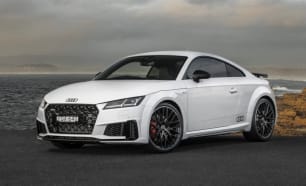
And here we are with the Audi TT Final Edition. That’s right, Audi has decided to discontinue this sports car after 25 years of production and it’s made this commemorative TT Final Edition that adds unique fettling and some nice features.
So, is the TT Final Edition worth buying? What’s so good about it? And how much more does it cost over a regular TT?
I found out after spending a weekend on some great roads to say goodbye to this icon. Oh, and I still have the fridge magnet.
The C5 Aircross might seem like a niche European 'alternative' SUV, but I wish it wasn’t. The more mainstream players could learn a lot from how brilliantly this Citroen is packaged.
It is truly class leading in terms of passenger comfort and even luggage space, even shipping with great multimedia and safety in this base Feel grade.
Unless you really need to be towing, performance (or in this case, lack thereof) should be low on your SUV priority list anyway.
Audi is finally saying hooroo to this model which has made the world stop and stare like I did on that Parisian street all those years ago.
The Final Edition is a fitting tribute to this iconic sports car and I’m glad Audi didn’t go ‘OTT’ and deck it out with gimmicky features.
At the same time the Final Edition’s big rear wing, blacked out badges, wheels and interior colour coding hint that this is not just any ordinary TT and those that know will know.
Farewell Audi TT, we hope something just like you but probably electric appears to stop us in our tracks again.
It wouldn’t be a French car without a solid dollop of style, and the Aircross has heaps of it.
From the orange paint, to its floating rear light fittings and chevron emblazoned grille, the Citroen is nothing if not unique.
Just like the C4 range before it, the C5 Aircross inherits the plastic 'airbump' fittings under the doors, with the plastic-clad soft-roader look continuing over the wheelarches and across the C5’s front and rear.
There’s a lot going on, on both the front and rear of this SUV, but somehow it’s not really over-complicated, all the flourishes and highlights manage to flow into each other to maintain some semblance of consistency.
The C5’s rear is a little more tame, with body coloured panels contrasted with the plastic strip, gloss black highlights, and dual-square exhaust facades. The floating gloss-clad roof rails are a flashy if silly touch.
I’d personally argue it’s a better-looking car than its Peugeot 3008 sibling, although it looks built entirely for city-slickers rather than the adventurous type.
Inside it’s normal. For a Citroen. Gone are the days of floating steering wheels or overtly wacky instrument clusters, it’s all quite tame and that’s for the betterment of the brand.
That’s not to say it’s not a cool place to be, and I was surprised to find myself surrounded by classy fittings, quality soft-touch materials and an understated blocky design theme. The C5 gets a small, oval steering wheel which feels great in the hands.
Those awesome memory foam seats are finished in a slightly odd grey synthetic denim kind of material. Some hated it, but I thought it contrasted the car’s exterior and interior schemes well. The raised centre console gives front passengers an extra secure premium sort of feel.
The grey materials will be slightly divisive, but the number one annoyance for me was the complete lack of tactile buttons for adjusting the climate control or media functions. Is a volume knob too much to ask?
Other than that, the C5 has one of the most tame, practical interior treatments on any Citroen… possibly ever… without managing to be boring.
The Audi TT’s shape has morphed over the past 25 years from the cute, rounded bubble car that first appeared in the late 1990s to the more aggressively and sleek looking sports car with the sharp creases we see today.
Still, there are the familiar pumped-out wheel arches and, while not as prominent as it used to be, that arching roof and the way it flows down to those tail-lights and stumpy tail remains so true to the original TT.
The TT Final Edition has a more menacing and athletic look than the regular 45 TFSI its based on thanks to the S Line Competition Plus exterior package.
So you’re getting the big fixed wing, an aggressive front bumper, and the 19-inch alloy wheels in gloss black.
There’s a black package, too, which add the decals down the side, the blacked-out badges, the black exhaust tips and black wing mirrors.
My test car’s paint colour was Turbo Blue and you can see in the images of the cabin how Audi matches interior elements in the same colour. The contrast stitching on the seats also lifts the sporty feel into high-end territory.
It’s a simple cabin, though, free from busy buttons and giant screens and the incorporation of climate controls into the air vents is genius.
If you’re wondering what the TT Final Edition’s dimensions are its 4191mm long, 1832mm wide and 1376mm tall.
The C5 Aircross is one of the most practical SUVs you can buy in this segment in terms of interior space. There’s just loads of it, and plenty of smart features to back it up.
In the front you get some small trenches in the doors, lovely big cupholders in the centre console, along with a top-box which was a little shallow, but still handy, as well as a small cavity (seemingly designed to hold the key) and a big bin for stowing your wallet or phone.
Back seat occupants get decent leg and headroom, but what’s really special here is each passenger gets their own memory foam seat with enough width to travel in decent comfort. The centre passenger’s legroom isn’t even impeded by a big transmission tunnel.
Rear passengers also get pockets on the back of the front seats, dual air vents, small cupholders in the doors, and a 12-volt power outlet. With no drop-down armrest, it would be nice to see more practical cupholders in the door cards.
The boot is truly gigantic. Like, biggest in the segment gigantic. At a minimum it weighs in at 580L (VDA), but as an added boost, the rear passenger seats can be slid forward on a rail to grant a whopping 140 extra litres of space to 720L. With the rear seats down you’ll be able to make use of 1630L.
A power tailgate, able to be operated by waving a foot under the car is also standard, revealing a totally unimpeded aperture. So, not only does it have a class leading luggage area, but it’s also easy to use.
The Audi TT isn’t going to cut it as a family car, but it’s more practical than a lot of people might think.
First this is a '2+2' sports car meaning those two rear seats are there for the odd occasion when you might need them, because the space back there is limited.
But for most of the time having a place to throw a jacket or extra luggage and not have to ask your co-plot to rest it on their lap will feel like absolute luxury.
Up front head and legroom is good, even for me at 189cm tall. Being a coupe the doors are long and although the car is low I found getting in and out easy.
There’s a pretty clever use of space when it comes down to cabin storage. You’ll find door pockets, a glove box, a covered centre console box and a hidey hole/wireless phone charger in the dash.
Back seat passengers have built-in shelves near their armrests. Surprisingly there are four cupholders - two of which fold out of the dash.
The boot isn’t huge at 305 litres but you can fold the rear seats down to open up the cargo capacity to 712 litres.
So, compared to its two-seater sports car rivals, the TT is relatively and pleasantly practical.
The C5 Aircross enters Australia in just two spec levels, and the one reviewed here is the base Feel. Priced at $39,990, before on-road costs, it’s not exactly cheap, but is thankfully well specified.
And at the time of publication a Citroen drive-away pricing campaign pitched the Feel at $44,175 with all registration, dealer and other pre-delivery charges included.
In the box is a 7.0-inch multimedia touchscreen with Apple CarPlay, Android Auto, DAB+ digital radio and built-in sat nav, a 12.3-inch digital dash display, auto-dimming rear-vision mirror, auto headlights and windscreen wipers, keyless entry and push-start ignition, dual-zone climate control, LED DRLs, and an electric tailgate.
That’s the good. Not-so-good are the halogen headlights (kind of detracting from the slick front styling) and the lack of radar cruise control.
The Aircross does get a decent set of active safety features explored in the safety section of this review.
Competitors? Well there’s a good chance you’ll be cross-shopping the C5 Aircross against other alternate options in the mid-size space, including the Peugeot 3008 Allure (with which the Aircross shares an engine and chassis - $40,990), the Renault Koleos Intens FWD ($43,990), and perhaps the Skoda Karoq (just one spec-level in Australia - $35,290).
The Aircross’ secret weapon, which you can’t get on any other mid-size SUV, is its seats. Citroen calls them 'Advanced Comfort' seats, and they’re stuffed with memory foam “inspired by mattress technology.”
And it sounds like pamphlet hype, but it’s not. Once you’re seated, it’s like you're floating on air. A little bit of genius!
Citroen pairs this with reasonably-sized 18-inch alloy wheels and a unique suspension system which uses “progressive hydraulic cushions” (a nod to Citroens past) to soften the ride.
It’s a double down of comfort features, and really adds up to a lovely place to be behind the wheel. All for a similar price to its Peugeot sibling. Worth considering.
Audi has taken the $84,000 TT Coupe 45 TFSI quattro and created this TT Final Edition with extra features for a list price of $88,749.
Here’s what you’re getting. First there’s the 'S Line Competition Plus' exterior package which beefs up the TT’s looks with the big, fixed rear wing and 19-inch Audi Sport wheels in gloss 'Anthracite Black' with red brake calipers.
There’s also the black exterior package which brings the black Audi rings badging, black chunky exhaust tips, black side trims and Audi logo decals.
Inside there’s Nappa leather S sport seats; an Alcantara and leather flat-bottomed steering wheel with paddle shifters; while the armrests, door handles and the centre console are covered by the 'Leather Package' which includes contrasting stitching.
Metallic paint is also included as part of the Final Edition’s features. Ours was 'Turbo Blue'.
Much of the rest of the Final Edition’s features are shared with the TT Coupe 45 TFSI quattro and includes a 12.4-inch 'Virtual Cockpit' digital instrument display, sat nav, CD and DVD player, eight-speaker stereo, digital radio, Apple CarPlay and Android Auto, wireless phone charging and proximity unlocking.
Our car had a couple of options fitted - the privacy glass which is $950 and the 20-inch gloss black alloy wheels for $1600.
Rivals to the TT include BMW’s Z4 which lists for $99,200, and its Toyota GR Supra twin for $87,380, while the Nissan Z Coupe is also part of that sporty coupe club at $75,800.
You might already know this but the TT doesn’t have a central media screen and that can appear odd in a new car world where big screens dominate the dashboard.
The C5 Aircross is powered by just one powerplant no matter which grade you pick. It’s a 1.6-litre turbocharged four-cylinder petrol engine, producing 121kW/240Nm.
It shares this engine with the Peugeot 3008 and the outputs compare well with the Renault Koleos’ Nissan-sourced 2.4-litre four-cylinder engine (126kW/226Nm) considering it’s much smaller and (theoretically) less thirsty.
The ever-smart Skoda Karoq is tough to beat in this segment with its 1.5-litre engine (110kW/250Nm) putting strong torque figures on the board.
The C5 Aircross sends power to the front wheels only via a six-speed automatic transmission, for a comparison the Koleos has a lackluster CVT auto, while the Karoq benefits from a seven-speed dual-clutch automatic.
The TT Final Edition has the same 2.0-litre, four-cylinder, turbo-petrol engine as the regular 45 TFSI TT Coupe with the same 180kW and 370Nm outputs.
The TT is light, though, at only 1460kg and that grunt is enough to slingshot it from 0-100km/h in 5.1 seconds.
The transmission is an eight-speed dual-clutch automatic which sends drive to all four wheels.
Sure, the TTS has more grunt and the TTRS is nothing short of wonderful with its five cylinder powerplant, but the 2.0-litre engine in the Final Edition feels perfectly suited to what is a fun and engaging sports car.
The 1430kg C5 is rated to consume 7.9 litres of mid-grade 95RON unleaded per 100km.
That’s about on-par for the segment, and in practice I managed a figure of 8.6L/100km. A litre over isn’t too bad for truly mixed driving.
The mid-grade fuel requirement is a bit of an annoyance, but it’s also to be expected from a small capacity turbocharged European engine. It’s primary competitors (with the exception of the Koleos) drink the same.
Audi says that after a combination of open and urban roads the TT Final Edition should use 7.0L/100km.
My own testing took in a combination of the best country roads and worst city traffic and at the fuel pump I measured 10.9L/100km.
But most of my time was spent in 'Dynamic' drive mode with the fuel-saving idle stop system switched off.
The TT's 55-litre fuel tank means you should have a range of about 785km.
Straight up, the C5 Aircross is not the most exciting car you can drive. It’s not even exciting for the segment, with the focus being refreshingly distant from sporty.
You’ll be getting sluggish acceleration comprised of an occasionally lazy six-speed auto transmission and a dollop of turbo lag every time you depress the accelerator pedal.
But the C5 Aircross is, refreshingly, not about being sporty at all. I’d argue Citroen is one of the few carmakers that really ‘gets’ what driving an SUV should be about. Comfort.
See, this SUV more than makes up for its lackluster performance by being possibly the nicest place to be behind the wheel in the segment.
We’ve covered how unreal the seats are in terms of their quality memory foam padding, but it doesn’t end there. The C5 has the same excellent well balanced steering from the rest of the Citroen and Peugeot passenger car ranges, as well as sensibly-sized tyres on small alloy wheels and the hydraulic cushion suspension.
It all adds up to a ride that’s quiet and makes most road corrugations, imperfections and potholes a complete non-issue.
The suspension does have its limits, hitting a particularly sharp bump or pothole will have the car bouncing off its shocks, but it’s simply awesome on 90 per cent of Australian urban roads. I wish more SUV mid-sizers rode like it.
It’s also super quiet thanks to “extra insulation” in the engine bay and the small alloy wheels.
There are plenty of sports cars out there which are dynamically superb yet uncomfortable to sit in.
But the TT’s cabin is as ergonomic as it is stylish with a great, low sitting position and good pedal feel, a steering wheel that can be adjusted to be just right and still with plenty of space underneath for long legs like mine.
The shifter feels the right distance away, good visibility even out the rear window and plenty of ventilation. And we haven’t even started driving yet.
The TT Final Edition felt to me how a TT should. Fun. Not overpowered nor brutally firm and not ridiculously loud.
Instead, my drive in the Final Edition, which took me along some of my favourite country roads, was one of the most enjoyable runs I’ve had in any car.
This is a car which ‘listens’ to you and replies with exactly what you’ve asked for in the way it turns into corners and accelerates out of them, and pulls up when you need it too.
There’s so much connection to the road, you can hear the sticks and stones flying up into the guards, you can feel the coarse chip bitumen through the steering wheel.
But it’s all so easy, too. The suspension is firm but soft enough that you can drive this daily. The steering is light but still with great feedback.
Some sports cars leave you feeling exhausted, like you’ve just wrestled a bear but the TT Final Edition just leaves you feeling like you've been on a ride and all you want to do is run back around to line up and get back on it again.
The Aircross has the same set of active safety features no matter which grade you pick. This means auto emergency braking (AEB – works up to 85km/h) with forward collision warning (FCW), lane departure warning (LDW) with lane keep assist (LKAS), blind spot monitoring (BSM), driver attention alert (DAA), and traffic sign recognition (TSR) are all standard.
You’ll get the added benefit of front and rear parking sensors and a 360-degree parking view, which is excellent in its functionality.
Expected refinements include six airbags and the regular suite of electronic stability and brake controls.
It’s an impressive suite and has everything you’d expect in a new car – apart from the strange omission of active cruise control.
The C5 Aircross has not yet been rated by ANCAP (although its European full-safety spec equivalents have a maximum five-star EuroNCAP score).
This could be a deal breaker for you. The Final Edition, like all Audi TTs, falls short in terms of safety equipment compared to its rivals.
This third generation TT only managed four ANCAP stars out of a maximum of five when it was assessed in 2015.
This was due to the model not having AEB or lane keeping assistance or rear cross-traffic alert.
The only assistance features it has are blind spot warning and self parking (which is handy). It doesn’t even have adaptive cruise control.
There are two top tether points for child seats in the second row but please be aware that the TT was also scored low by ANCAP for child occupant crash protection.
If you do have children and are looking for something safer but still small and sporty, the BMW 2 Series Gran Coupe or Mercedes-Benz A-Class are excellent choices.
Something to think about.
All current Citroens are covered by a five-year/unlimited kilometer warranty, matching the widely accepted industry standard.
That’s all well and good, but it’s the very erm… European service pricing which is the killer here.
The C5 Aircross is covered by a capped price servicing program which costs between $458 and $812 per yearly visit, for an average of $602 per year for the life of the five year warranty.
It’s a bit of a let down given the Citroen’s cheapest fixed-price service is the equivalent to an expensive service at more mainstream brands.
The TT Final Edition is covered by Audi’s five-year, unlimited kilometre warranty.
Serving is recommended every 12 months or 15,000km and although Audi doesn't have capped price servicing there is a five-year/75,000km plan which will cost about $3000 in total for regular maintenance. Yep, that's $600 per workshop visit.