What's the difference?
General Motors Australia & New Zealand (GMANZ) has recently expanded its full-electric Cadillac SUV range in Australia from one to three models, with the new Optiq and Vistiq joining the pioneering Lyriq in the company's local line-up of luxurious US-sourced SUVs and pickups.
The five-seater Lyriq is now the happy medium of the Cadillac trio, as it’s positioned between the smaller Optiq and larger Vistiq; the latter with a unique seven-seat design.
We recently spent a week aboard the Lyriq to see if its opulence, practicality, performance, driving range and price provide a compelling alternative to full-electric or combustion-powered rivals for high-end luxury SUV buyers.
If you know the Mercedes-AMG C 63 S, you know it’s a hardcore V8 thumper with little in the way of bashfulness. It’s a brawler. A beast.
Now there’s an even more eye-catching AMG C 63 S Coupe, which we’re testing here. It’s the Aero Edition - a collector’s version of the current-generation C 63 S Coupe with a bit more visual bling that also helps it stick to the road better.
It is a local area special edition, with only 63 examples to be sold across Australia and New Zealand. And if the rumours are true, the next-generation will see the V8 engine in danger of being axed in favour of a hybrid, high-performance four-cylinder version. Say it ain’t so!
Well, if the CarsGuide crystal ball turns out to be right, maybe one of these C 63 S Aero Editions is worth getting in your garage quick-smart. Or is it? Let’s go through the criteria and see how it stacks up.
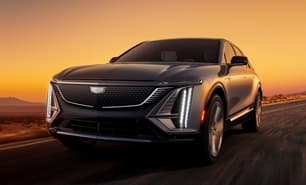
The Lyriq Luxury combines handsome styling and luxurious appointments with responsive yet supple ride quality, the choice of relaxed driving or exhilarating performance as desired and a decent driving range. Its lack of towing ability may be a deal breaker for some, but it's certainly worthy of consideration by prestige SUV buyers with a penchant for electric power and (for now at least) sub-$100K drive-away pricing.
The Mercedes-AMG C 63 S Aero Edition is an absolute beast of a car, but it comes at a pretty hefty price. Yes you get a lot of performance, and the fact there are only 63 examples being made for Australia and New Zealand could be enough to get you to sign on the line. For me, though, if I was after a C 63, it’d have to be a wagon. It doesn’t need an Aero pack to look better.
The Lyriq has a generous 3095mm wheelbase, is more than five metres long (5005mm) and almost two metres wide (1977mm, including mirrors). Its 1620mm roof height is relatively low for a large SUV, resulting in a sleek and sporty profile combined with a muscular surefooted stance fronted by a finely-etched solid grille.
It rides on five-link independent suspension with GM’s ‘passive plus’ dampers, plus there’s electric power-assisted steering and big Brembo disc brakes in each corner featuring classy Cadillac scripts on the calipers. Turning circle is 12.1 metres, which is to be expected for a car of this size.
The interior design is an elegant blend of soft-touch materials and discreetly textured surface finishes with an emphasis on chrome and satin chrome highlights. It’s also spacious as you’d expect, with the panoramic sunroof creating a bright and airy feel.
We applaud Cadillac’s adherence to tradition with physical buttons and knurled dials and knobs for controlling key cabin and driving functions, in preference to annoying and distracting touchscreen menus. There’s also nice attention to detail with small jewel-like Cadillac emblems and scripts contributing to its prestige look and feel.
I’ve never been the biggest fan of the current C-Class Coupe’s styling. To me, it has always looked a little droopy, a little melted at the back.
I have to say, the Aero Edition has changed my opinion somewhat, as the new graphic elements help lift it up a bit, visually raising its rear up like a stretching cat, tail in the air. I’m still not 100 per cent on it, but to my eye it’s better.
The carbon-fibre trim elements that have been added to the exterior certainly add some menace to the look, too, and I simply can’t help but constantly notice out of the corner of my eye the AMG pressing in the staggered, dished rims. At a glimpse, from a distance, it looks like rim damage, but thankfully it’s not!
The staggered set-up does really add some width and mongrel to the look, as if it needed more, with its open maw lower bumper air dam, and the signature 'Panamericana' grille treatment which looks like an evil character out of a movie. If you know the one I’m talking about, let me know in the comments.
As much as the look matters when it’s parked in your driveway, it’s the cabin that arguably matters more, right? That’s where you spend your time, after all. Check out the interior images to see if you think it lives up to the exterior look.
The Lyriq’s 2687kg kerb weight (largely due to its hefty propulsion battery) and 3200kg GVM results in a modest 513kg load capacity, which could easily be used up by five large adults before you could think about loading their luggage. It’s also not rated for towing in Australia which limits its appeal as a recreational vehicle.
Driver and front passenger enjoy palatial space and comfort plus ample storage with a bottle-holder and bin in each door. There's also a large glove box, pop-out drawer in the dash and a ‘floating’ centre console equipped with a lower tray, three USB-C ports, a 12V socket, wireless phone charging and a felt-lined box at the back with padded lid that doubles as an elbow rest.
The rear doors open wide for easy entry to the rear bench seat which even for tall people (I’m 186cm) offers ample room for knees and feet, enhanced by a flat floor with no transmission tunnel for centre passengers to straddle.
However, the top of my head brushes the roof lining and the unusually high floor height (we assume caused by the underfloor battery) results in raised thigh angles that concentrate more weight on the lower back.
Given the rounded lower backrest cushions, which integrate with the ISOFIX child seat anchorages in the outer seating positions, also protrude into a passenger's lower back region, the rear seat provides less than ideal comfort for tall passengers in contrast to the sublime luxury up front.
Even so, rear passenger storage is well catered for with a bottle-holder in each door, pockets on both front seat backrests and two cupholders in the fold-down centre armrest. The rear of the centre console offers two more USB-C ports, adjustable air vents and adjustments for numerous comfort settings.
The power tailgate provides access to the fully carpeted rear luggage area, which offers up to 793 litres (almost 0.8 cubic metres) of load volume with the rear seats upright and up to 1722 litres (almost 1.8 cubic metres) with the seats power-folded flat. This provides a versatile space for carrying everything from a mountain bike to flatpack furniture.
The luggage area also has four tie-down hooks, a 12V socket and a hinged floor section which when opened reveals an underfloor bin ideal for storing charging cables (see image).
No two-door coupe is going to offer you the space and comfort of a sedan or wagon, that’s just a fact. But that only matters if you plan to actually use the rear seats. If you don’t, then the Coupe version of the C 63 S might be perfect for you.
Even so, I managed to (only just) squeeze myself between the seat and the door opening to slide into the rear row. This won’t be easily achieved by all attempters, especially on the driver’s side.
Let’s just say I probably looked like I was doing something very weird to the driver’s seat as I spider-manned my way in.
The rear space is tight for someone my height (182cm/6’0”) behind their own driving position, with knees hard-up against the seat in front and not much headroom (my noggin’ was brushing the ceiling) or toe space (size 12s don’t fit so well) to speak of.
It’s certainly a selfish car. Or maybe it’d be fine for smaller kids. There are two spaces in the back, both with ISOFIX child seat anchors and top-tether points.
But there is storage in the back - cupholders and storage caddies either side of the seats, though the storage situation improves in the front zone, with bottle holders in the doors, cupholders between the seats, loose item storage under the media screen and a covered centre armrest bin, too.
The front cabin is a special looking place, with carbon-fibre abounding across the dash and nice trim on the doors. The AMG steering wheel is a sight to behold - it’s a flat-bottomed unit with carbon-fibre and Dinamica (that’s Benz talk for microsuede) trim: perfect for sapping sweat as you manhandle the C63 through the bends.
The seats are AMG Performance sports units up front, and the trim used is reserved for this model specifically: Nappa leather with yellow stripes. There are yellow details elsewhere, including on the rear seats, centre console and dash, and it certainly adds some visual excitement.
Media is controlled by a 10.25-inch display and Mercedes-Benz’s touchpad control system, but there is no touchscreen - rendering the Apple CarPlay and Android Auto smartphone mirroring technology somewhat tedious.
I’ve always had a gripe with screens that don’t allow touch but feature the tech that’s designed to transfer your phone’s screen to the media unit, and I can tell you the longer you spend twiddling the dial to get where you want to go, the more annoying it becomes.
The Burmester sound system has 13 speakers and is rather good, but I prefer the sound from the standard fit variable sports exhaust. So maybe that quibble with CarPlay isn’t that big a deal.
And if you just want to charge your phone, and there’s a second USB port up front, as well. Note: in non-Aero Edition C 63 models without the carbon-fibre interior pack, you also get Qi wireless phone charging, but it’s deleted from this variant and any model with the carbon pack.
The driver has a 12.3-inch digital info display to show where you are and what the car is up to, and there’s a head-up display as well. Yep, there’s standard sat nav with live traffic updates (and even live fuel price updates) - it’s just a shame the maps still look early 2000s-spec in 2D layout.
Cargo space is okay. The claimed cargo capacity or boot volume is 355 litres (VDA) with the rear seats in place. That’s small for a coupe of this size, and the shape of the boot (with a hump behind the rear seat) isn’t great as things do move around quite a bit.
But, thankfully, Mercedes has included its clever foldable storage box system under the boot floor - it goes where you might usually expect a spare wheel, but there isn’t one in this car. Instead you get Mercedes’ 'Tirefit' repair kit with an electric pump.
The Lyriq is available in two trim levels comprising the Luxury from $122,000 and the Sport from $124,000 (both before on-road costs) but GMANZ is currently offering both for $95,000, drive-away.
These list and drive-away prices compare more than favourably when cross-shopping German luxury EV SUV alternatives like the Audi Q8 e-tron ($140,090), BMW iX ($142,900) or Mercedes-Benz EQE ($146,700).
The key differences between the Lyriq duo are visual, with the Luxury emphasising traditional elegance with lavish chrome detailing while the Sport is more performance oriented with greater use of dark trim elements.
Our test vehicle is the Luxury variant, finished in optional ‘Crystal White Tricoat’ paired with what GM describes as ‘Noir with Santorini Blue Accents’ interior trim.
Large and stylish in true Cadillac tradition, the Lyriq is built in right-hand drive form at GM’s Spring Hill manufacturing plant in Tennessee, instead of local RHD remanufacturing like its Chevrolet pick-up siblings.
Luxurious standard equipment includes big 21-inch multi-spoke alloy wheels and 275/45R21 self-sealing tyres (no spare), a full-length panoramic sunroof with power internal sunshade, power tailgate, rear roof spoiler, heated door mirrors with puddle lamps and more.
Concealed door handles discreetly extend to allow access to a sumptuous synthetic-leather interior with power adjustable/heated steering wheel, power front seats with heating/ventilation/massage/memory functions, outer rear seating also with heating/ventilation/massage, tri-zone climate control, five USB ports, 360-degree camera, wireless phone charging, a choice of 126 ambient interior lighting colours and more.
The driver is treated to a curved 33-inch colour LED instrument cluster/multimedia display which controls premium 19-speaker AKG Studio sound (including speakers in the front seat head restraints) and numerous multimedia functions including wireless Apple CarPlay/Android Auto connectivity.
Look, I’m not likely to ever be in the position to say that a car that costs $188,600 plus on-road costs is “good value”, but to be honest, if you’re in that position, you’ll be getting plenty of car for your cash.
The Carbon Edition of the C 63 S Coupe adds $17,200 over the standard version of the high-performance two-door, but it adds a bunch of extras to help justify its price. A car like this is always going to be seen by some as a profligate purchase, right? You need to be able to justify spending an extra MG3’s worth of cash on this Edition.
The noticeable exterior bits include an AMG Performance rear spoiler, a model specific front lip, rear diffuser, and side facings for the rear apron air vents. Carbon-fibre is used in the front apron A-wing, the side sill inserts, rear diffuser insert, rear spoiler and the side mirror casings.
There’s more carbon-fibre inside the cabin, which we’ll cover off in the interior section. Other additions over the standard C 63 S Coupe include ceramic composite front brakes (402mm six-piston) and 360mm single-piston rear brakes, and there are “ultra-lightweight” AMG forged 'Matt Black' alloy wheels with 19-inch rims at the front and 20s at the rear.
And in nice news, the car you see here has no optional extras fitted at all. The colour is 'Iridium Silver', one of only two options for this limited run model (the other available hue is Polar White, and both come at no extra cost).
Standard inclusions comprise leather interior trim, heated and electric adjustable front seats, dual-zone climate control, a 10.25-inch media screen with sat nav and smartphone mirroring, DAB radio, 13-speaker Burmester sound system, 12.3-inch digital driver info display, head-up display (HUD), ambient lighting, and performance items like active dynamic engine mounts, an adaptive AMG performance exhaust, a rear differential lock, and adaptive sports suspension.
Plus there’s a full-spec safety offering which we’ll cover in the section below.
Thinking about what cars compete with this one? There’s the Audi RS 5 Coupe (from $150,900), the Lexus RC F (from $136,636), and the BMW M4 Competition (from $167,829). So the C 63 S - which is already expensive comparatively - looks positively pricey in Aero Edition spec.
The Lyriq features drive units with single-speed transmissions located at the front and rear which provide permanent all-wheel drive. Each is equipped with an electric motor, which combined produce 388kW of power and 610Nm of torque. There are also numerous selectable drive modes. Claimed 0-100km/h acceleration time is a rapid 5.3 seconds.
Open the shapely bonnet of the C 63 S and you’ll find a hand-assembled horsepower-monster engine with a printed name plaque to prove it.
The 4.0-litre twin-turbo V8 produces 375kW of power at 6250rpm, and 700Nm of torque from 2000-4500rpm. It runs a standard-fit nine-speed 'Speedshift MCT' (multi-clutch transmission) automatic, and it’s rear-wheel drive. And yes, that means it likes to boogie.
The claimed 0-100km/h time is just 3.9 seconds, and top speed is apparently pegged at 250km/h. Yeesh.
The name on the “Handcrafted by” plaque on this particular engine? Hat tip to you, Julian Rembold. This is quite a piece of work.
GMANZ claims official combined consumption of 22.5kWh/100km and up to 530km of driving range from the Lyriq’s 102kW lithium-ion propulsion battery.
When we collected our test vehicle the dash display was showing 100 per cent charge and an estimated driving range of 583km.
We drove 239km over five days and still had 52 per cent charge and 300km of range remaining when we did an overnight charge at home using the supplied AC charger with a domestic three-pin plug.
However, after 15 hours the charge only increased from 52 to 65 per cent for just 76km of extra driving range, so we would recommend installing a dedicated wall box for faster home charging.
In total we covered 297km across our usual mix of suburban, city and highway driving with average energy consumption just under the Cadillac's official figure, so based on our test results a driving range of around 500km per charge is credible.
GMANZ claims 7.4kW AC charging can add up to 43km of range per hour, which increases to 94km with 22.1kW charging. And up to 128km of range can be added in just 10 minutes using 190kW DC fast charging.
High numbers are what AMGs are about. Sadly that’s the case not only for performance outputs but also fuel consumption.
The official combined cycle fuel use claim for the C 63 S Coupe is 10.3 litres per 100 kilometres, and you need to fill it with 98RON premium unleaded fuel, too.
On test? Well, across a mix of different driving - urban, highway, back road and spirited stints - I saw an 'at the pump' return of 12.2L/100km, while the digital readout stated 12.0L/100km.
Given the performance on offer, and how much I took advantage of it during my week with the car, that’s not bad…
Fuel tank capacity is 66 litres. So go easy if you know there won’t be a fuel stop for a while.
The driving position is supportive and comfortable with multiple power-adjustment of the seat and steering wheel ensuring people of most heights and girths can enjoy luxurious travel.
The low dashboard height ensures vision to the front of the bonnet and its array of physical buttons, knurled dials and knobs minimise touchscreen use, which makes driving far less distracting than having to search through digital menus.
It’s very quiet given its electric drivetrain. Most noise emanates from the tyres but that is also minimised by the audio system’s noise cancellation technology and the cabin’s effective acoustic insulation.
Ride quality and handling are excellent thanks to the Lyriq’s suspension refinement and close to an ideal 50-50 weight distribution mostly influenced by the positioning of its drive battery.
This battery’s considerable heft (we reckon it weighs at least half a tonne) also creates ample sprung weight to assist the suspension in smoothing out bumps and its underfloor location ensures a low centre of gravity for surefooted cornering.
Standing start acceleration is more than impressive for a luxury car weighing almost 2.7 tonnes, with instantaneous torque from its two electric motors helping to propel the Lyriq to a neck-straining 100km/h in about five seconds.
This spirited response creates a sporty and engaging drive that belies the vehicle’s weight, particularly in Sport mode with its sharper throttle response and firmer steering feel.
We also like the choices for regenerative braking which include ‘One Pedal Driving’ mode with 'Normal' and 'High' settings, both of which make the quartet of disc brakes largely redundant (the High setting feels like heavy pedal braking) while optimising battery charge. There’s also a small paddle on the steering wheel which increases regenerative braking in response to the amount of finger pressure applied to it.
Our only criticism from a driver’s point of view is the absence of a head-up display (HUD) and traffic sign recognition (TSR), both of which are notable omissions for a prestige vehicle in this price range.
Just one word sprang to my mind when it comes to accurately describing the performance on offer from this car. The word is ‘brutal’.
Smash the accelerator and the power and torque on offer is enough to make your eyes feel like they’re not doing the right thing anymore. You get pushed back in your seat with a surge, and your ears are also rewarded with one of the best soundtracks in the automotive world.
The engine builds pace with enormous intent, and the sound that comes from under the bonnet and out the back through the exhausts is addictive.
Yes, there is an active exhaust button which you have to press to make sure that you hear all that noise if you’re running around in 'Comfort' mode, and during my time with the car it was active the whole time.
I had some questions from neighbours over the week that I had this car about whether it was actually nice to live with on a day-to-day basis. And the answer is yes, if you put it in comfort mode it’s surprisingly amenable.
The ride is really well sorted at pace despite having a bit of that trademark low-speed wobble that seems to afflict Mercedes products from A-Class through to the GLE SUV. But it wasn’t bad enough to really bother me, as most of my time was on highways and backroads.
The steering is direct and accurate. The only thing you need to be aware of is that you will lose traction at the rear axle when you put your foot down hard. And for the enthusiast that’s exactly what you want.
I know I want to feel the thing squirm under throttle. It’s a rear-drive V8 coupe, after all. You want to feel like you’re a vein in its bicep muscle; you know, the one you see in a weightlifter’s arms – the one that wiggles around a lot. You want to have that. Right?
On the performance front it is exceptional. Twist the little dial on the wheel to 'Sport' or 'Sport+' (I didn’t sample 'Race' mode as I wasn’t at a racetrack), and everything feels like it’s had a protein shake.
Even so, in that mode it steers brilliantly, there's a nice feel through the wheel, and the ride, while stiff, controls the body brilliantly when you change directions.
The transmission is very good, too. In Comfort mode it can take just a second or two at first to become accustomed to the idea that you want to drive aggressively.
But in Sport mode, or when you select the manual transmission mode using the trigger button on the steering wheel, you will certainly get the most out of the engine. That’s what I did when I was driving it in a ‘spirited’ manner.
If you are just after that high-end Coupe cruiser experience, it’s a relatively quiet car (provided the surface below isn’t the coarsest of coarse-chip bitumen), with enough luxuriousness to make it feel premium as well as sporty. That’s an important thing to consider, especially at this price point.
The Lyriq does not come with an ANCAP rating (typical for small volume production) but has a suite of passive and active features like multiple airbags including dual head side-curtains, AEB with intersection/front pedestrian/cyclist detection, lane-keeping, a 360-degree camera, parking assist, tyre pressure monitoring, adaptive cruise control and lots more. The rear bench seat has ISOFIX child seat anchorages on the outer seating positions and top tethers across all three.
In this part of the market it's fair to expect a head-up display and traffic sign recognition as standard but both are missing in action.
There is no applicable ANCAP crash test rating for the Mercedes C-Class Coupe, nor is there one for the C 63 specification. But when it was tested back 2014, the sedan scored five stars - as you’d expect.
It is comprehensively equipped in terms of safety technology, including auto emergency braking (AEB) with pedestrian and cyclist detection (from 7.0km/h to 70km/h) and it’s active for cars from 7.0km/h to 250km/h.
Plus there’s lane departure warning and active lane keeping assistance (from 60km/h to 200km/h), blind spot monitoring with 'Active Blind Spot Assist' that will stop you from veering into oncoming traffic, front and rear cross traffic alert, and adaptive cruise control (Distronic) with traffic jam assist.
The C 63 also features 'Route Based Speed Adaptation', which can adjust your speed based on where the car thinks you are on the map. Just note - if you’re driving through new tunnels that haven’t been flashed to your car’s nav (as happened to me in Sydney during my testing week) - then you could find the car dramatically braking for surface-level intersections. You can switch the system off, thankfully.
There are nine airbags fitted, and while you mightn’t use the rear seats much there are ISOFIX and top tether points for both positions (yes, only two).
The Lyriq comes standard with a five-year/unlimited km warranty including five years' of roadside assist, while the propulsion battery is covered by a separate eight-year/160,000km warranty.
Scheduled servicing is every 12 months/12,000km whichever occurs first, with costs for the first five years of scheduled servicing or five scheduled services included in the vehicle’s purchase price. These servicing terms are generous for this segment, although some rivals offer similar enticements like Audi’s six-year ‘complimentary’ servicing for its Q8 e-tron.
GMANZ has a national network of 45-50 dealerships across most capital cities and some regional areas but not all offer vehicle servicing.
Mercedes-Benz is among the minority of luxury brands now offering a five-year/unlimited kilometre warranty plan - most still have three-year cover. So that’s a tick.
And the service intervals are pegged at 12 months/20,000km. Another tick.
Plus you can either pre-pay your service plan in three-year ($3800), four-year ($6000) or five-year ($6550) plans - roll it into the finance package, and it won’t hurt quite as much.
According to Mercedes, the three-year coverage option makes for a $900 discount over pay-as-you-go servicing.
Roadside assistance covers the five-year new car warranty period, too. So Mercedes seemingly takes good care of its customers. But if you have any concerns or questions over reliability, problems, issues or complaints about the C 63, check out our AMG C 63 problems page.