What's the difference?
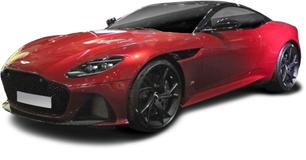
In mid-2018, to coincide with its global launch, CarsGuide was invited to a hush-hush, behind-closed-doors preview of the Aston Martin DBS Superleggera.
Hidden within a maze of black velvet drapes at a low-key, inner-city Sydney location sat the famous British brand’s new flagship, a stunning 2+2 GT with the performance, dynamics and luxurious quality to match its exotic looks and $500K+ price tag.
On that day, for whatever reason, I never thought the opportunity to steer it would come my way. But two years later, almost to the day, the key to this ‘Sabiro Blue’ beauty was mine.
The DBS Superleggera sits at the top performance coupe table, mixing it with Bentley, Ferrari, and Porsche’s finest. But maybe you already have one (or more) of those. Which begs the question, does this imposing V12 machine do enough to qualify for an extra space in your garage?
The idea of a Tesla that can tow sounds about as likely as an astrophysicist with three Olympic gold medals, who also moonlights as a hand model.
The EV brand has blazed a trail for every other mainstream and premium car manufacturer to jump on the electric bandwagon, and today they’ve still got the biggest batteries and most impressive range ratings, while also having the most extensive extensive network of charge stations made up of Superchargers and destination chargers, covering every state and territory.
They’re not perfect though, often displaying niggling build quality issues and production delays for upcoming models. There’s also a degree of uncertainty bred by a founder who flits between the modern-day space race, manufacturing flame throwers and offering to send miniature submarines to rescue stranded children.
But there’s no questioning the overall impact Tesla has had on the automotive industry, along with the incredible brand awareness and aspiration it’s generated from non-enthusiast Joe Average consumers around the world.
The Model X is also rated to tow, with a decent 2250kg braked rating and an integrated tow bar that folds out of sight when not in use, which both fits its SUV character and encourages you to give it a go.
The Aston Martin DBS Superleggera is an instant classic, likely heading over a high-end auction block in years to come with a final price far higher than the 2020 ask. But don’t buy it as a collector's item, although it is a beautiful object. Buy it to enjoy. Stunningly fast, thoroughly engineered, and beautifully made, it’s a phenomenal car.
After nearly 700km of testing with both cars, it’s fair to say that the Tesla is indeed a capable tow vehicle, provided you keep the distances relatively short and plan around charge station locations.
Overall average - Penrith to Bathurst to Penrith
Fuel and energy consumption will always depend on the driving conditions, which is why we chose different routes for each leg of our testing.
Averaged across the two legs, towing the caravan with the Model X used 101 per cent more energy than without, or halved its driving range, which sounds a bit scary.
The LandCruiser by comparison added 63 per cent on average, which is still a big difference, but matters less in the real world when its big fuel tanks would still give you about 760km of driving range, which can be refilled quickly at any diesel-stocked servo.
So you could do a weekend trip with the caravan from Penrith with one supercharge in Bathurst, but it would’ve been highly unlikely to manage the extra 55km if you were leaving from Sydney CBD.
The bottom line is that there’s plenty of things - like smaller camper trailers - lighter than our caravan that will help the Tesla to do the towing job better right now.
Compared to the ‘Cruiser, the Tesla is a lesson in the benefits of a lower centre of gravity and road-focused handling.
As always, bigger batteries and more recharge points will go a long way to rectifying the Tesla’s towing shortcomings, and I'm sure we'll get there eventually.
But no matter what, its acceleration performance under load is simply excellent.
Thanks to our friends at Avida for making this test possible with the use of the 17-foot Avida Wave Tourer Electric Pop-Top single-axle caravan. They can also be reached on 1300 428 432.
Once you dip under three and half seconds for the sprint from 0-100km/h strange things happen to your field of vision. Faced with that kind of acceleration, it instantly narrows, your brain instinctively focusing attention on the road ahead because it senses something borderline unnatural is going on.
Claiming just 3.4sec for the DBS Superleggera to hit triple figures (and 0-160km/h in 6.4sec!) we felt obliged to validate the number, and sure enough peripheral vision blurred into nothingness as this brutal machine delivered its shock and awe performance.
And the aural accompaniment is suitably intense, thanks to the electronically-controlled (stainless steel) exhaust, with active valves and quad tail pipes, orchestrating the brilliantly guttural and raucous ‘sound character.’
Pure pulling power is immense with all 900Nm of maximum torque available from just 1800rpm all the way to 5000rpm. Mid-range urge is prodigious, and Aston claims the DBS Superleggera will blast from 80-160km/h (in fourth gear) in 4.2 seconds. That’s a number I didn’t verify, but I’m not going to doubt it.
It might share essentially the same bonded aluminium chassis, but thanks to its carbon-rich bodywork the DBS Superleggera is 72kg lighter than the DB11, with a ‘dry’ weight (no fluids) of 1693kg. The engine is also set low and far back in the chassis, to the point where it’s actually a front-mid location, delivering a 51/49 front/rear weight distribution.
Suspension is double (forged alloy) wishbone front, multi-link rear, with adaptive damping standard, and there are three set-up stages available via the flick of a switch on the left-hand side of the steering wheel.
On the opposite side of the wheel a similar mode control allows you to cycle through ‘GT’, ‘Sport’, and ‘Sport Plus’ settings, tuning various functions including the throttle map, exhaust valves, steering, traction control, and shift response. Steering is speed-dependent electrically-assisted.
Brakes are professional grade vented carbon ceramics, with thumping 410mm rotors at the front clamped by six-piston calipers, and 360mm discs at the rear sporting four piston calipers.
Managing this car’s phenomenal thrust as it morphs into lateral g-force, is a surprising experience. Of course, it grips like a Trump handshake, with a specific ‘A7’ version of Pirelli’s ultra-high performance P Zero tyre on a 21-inch forged alloy rim at each corner.
The 265/35s at the front are big, and monstrous 305/30s at the rear deliver a strong mechanical connection with the road. But it’s the car’s steering and overall agility that’s unexpected.
It doesn’t feel like a beefy 2+2 GT. And while it’s not in the 911’s league when it comes to response and dynamic feedback, it’s a long way down that road.
I found Sport and the middle suspension setting to be the backroad sweet spot, and with the seven-speed auto in manual mode the lightweight DBS simply lights up.
Shifts on the way up the ratios via proper alloy paddles in manual mode are rapid and precise, and the car remains stable and balanced, yet entertainingly athletic in enthusiastic cornering.
When squeezed hard on initial application carbon ceramic brakes don’t ‘bite’ in the same way steel discs do, but the system’s ability to rapidly wash off speed, while the car remains in a steady state, is exceptional.
At the same time, shifts down through the gears are accompanied by a variety of aggressive pops and bangs (a feature of Sport and Sport Plus modes) and the DBS points accurately yet progressively into a bend.
Road feel is excellent, the sports front seat is grippy and comfortable, and the car’s ‘Dynamic Torque Vectoring’ (via braking) system chips in to ensure understeer is kept in check.
In a more sedate mode, thanks largely to the active dampers, the Superleggera is surprisingly comfortable around town, despite the big rims and low-profile rubber.
Under the heading of ‘random thoughts’, the simple interior layout (including the spot-on digital instrument cluster) is great, the auto stop-start is a little jerky on restart, and including the front air dam, ground clearance under the nose is only 90mm, so be mega-careful in and out of driveways, or prepare yourself for the sound of scraping carbon (happily avoided this time around).
Energy consumption is just one element of a tow vehicle though, with stability, braking and acceleration performance being the most important details.
The big ‘Cruiser is always a safe bet for towing heavy loads, but it's fair to say its off-road ability, tall body and short wheelbase mean it could be better on the road, and the Tesla goes some way to proving that.
With all those batteries mounted nice and low, the Tesla is significantly more stable with 1.7 tonnes on the back than the LandCruiser, in all conditions. It’s also helped by that longer wheelbase.
The Tesla’s airbag suspension is another surprise advantage, and while it can be a bit choppy around town over minor bumps, bigger bumps on the highway are soaked up really nicely and it all settles quicker than with the LandCruiser - even with the caravan on the back.
Tesla is famous for instant acceleration at any speed, and this effect remains when towing. The LandCruiser’s twin-turbo V8 (with max torque available from 1600-2600rpm) has long been a benchmark for tow vehicles, but the Model X makes it feel sluggish by comparison.
You know how caravan vehicles are usually the slow ones up hills? This time, we were the ones doing the overtaking, even up the steep bends heading out of Lithgow. To overtake, it just takes the slightest flex of your right foot.
Clearly there’s a big caveat though when it comes to how much energy it’s consuming while you’re enjoying that performance, and it’s deceptive because it doesn’t make any more noise like a conventional engine when you’re pushing it.
You’d also think the weight of the van would overcome the engine-braking effect of the regenerative brakes, but they are still very effective at conserving your brakes downhill and preventing the car from running away from you, and no doubt giving the batteries a bigger boost at the same time.
On that note, the LandCruiser’s cruise control also does a great job of witholding speed on downhill runs, proactively dropping gears to engine brake enough to keep the Avida Wave in check.