What's the difference?
Dieppe. A pretty seaside community on the northern French coast. Established a mere thousand years ago, it's copped a hammering in various conflicts, yet retained its beautiful 'marine promenade', a handy reputation for top-notch scallops, and for the last 50-odd years, one of the world's most respected performance carmakers.
Alpine, the brainchild of one Jean Rédélé - racing driver, motorsport innovator, and automotive entrepreneur - is still located on the southern edge of town.
Never officially imported into Australia, the brand is virtually unknown here to all but committed enthusiasts, with Alpine having an illustrious rally and sportscar racing back-story including victory in the 1973 World Rally Championship, and the 24 Hours of Le Mans in 1978.
Rédélé was always committed to Renault, with the French giant eventually buying his company in 1973, and continuing to produce brilliant, lightweight road and racing Alpines until 1995.
After a close to 20-year hibernation, Renault reanimated the brand in 2012 with the stunning A110-50 concept racing car, and then the two-seat, mid-engine machine you see here, the A110.
It's clearly inspired by the Alpine of the same name that wiped the rallying floor clean in the early 1970s. Question is, does this 21st century version build or bury that car's iconic reputation?
We are approaching a decade and a half since Toyota dipped into its vault and pulled out an iconic pair of digits, 86, and stuck ‘em on the back of a new car it co-developed with Subaru.
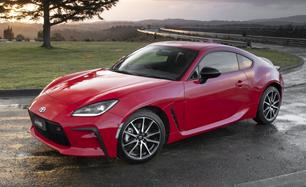
Named for, and loosely inspired by, the rear-drive AE86 Corolla of the mid-1980s which was cemented in the pop culture pantheon by the anime Initial D, the Toyota 86 is in its second generation and wears a ‘GR86’ badge to incorporate the name of Toyota’s sports car division.
The 86 was, when launched, extremely affordable but has since become more expensive, and getting into a top-spec version of the GR86 is a task that’ll sap $20,000 more from your wallet than the original 86 base model.
To find out if it’s worthwhile, we’ve snagged a 2026 Toyota GR86 GTS with optional Dynamic Performance Pack (DPP) to see if Toyota’s accessible sports car still hits the same sweet spot between genuine performance and decent value.
Don't let the overall score fool you. The Alpine A110 is an instant classic. While practicality, safety and ownership costs don't set the world on fire, it delivers a driving experience that makes everything right with the world every time you get behind the wheel.
You’ve reached the end of this review and might be looking at the final score thinking it seems low. If you’re a keen driver and considering a GR86, all you need to know is this: the GT will provide plenty of fun for the money.
But if you’re more serious about your two-door rear-driver, and thinking about track days, the GTS with Dynamic Performance Pack might be worth it. It’s not an obscene amount more, and in a few years the extra cash might not even register.
Plus, there might not be much longer to be able to pick up cars like this new, anyway.
The final example of the original Alpine A110 rolled out of the Dieppe plant in 1977, and despite more than four decades separating it from this newcomer, the 2019 A110 is effectively a new-generation version.
Much more than a tip of the hat to a special predecessor, the new A110 perfectly updates the distinctive, purposeful look of its not-so-ancient ancestor.
In fact, head of the A110 design team, Antony Villain says, "We wondered; if the A110 never went away, if this new car was the sixth or seventh generation A110, what would it look like?"
Appropriately finished in a very French shade of 'Alpine Blue', our test example was one of 60 'Australian Premiere Edition' cars, and the design is full of intriguing details.
At just under 4.2m long, 1.8m wide, and only a touch over 1.2m high the two-seat A110 is compact to say the least.
It's raked LED headlights and round fog lights are recessed into the markedly curved nose in a complete and unabashed reload, with circular LED DRLs accentuating the throwback effect.
The overall look of the carefully scalloped bonnet is also familiar, with a huge under-bumper grille and side ducts creating an air curtain along the front wheel wells to finish off the treatment with a focused, technical touch.
A steeply raked windscreen runs up to a small turret with a broad channel running down its entre, and the flanks are narrowed by a lengthy, aero-influenced indent.
A case study in tightly wrapped surfacing, the rear-end is equally taut, with elements like 'X-shaped' LED tail-lights, tightly curved rear screen, single central exhaust outlet and aggressive diffuser continuing the expressive design theme.
Aero efficiency is a major influence, and as well as the diffuser careful inspection of the rear side window reveals a neat duct at its trailing-edge funnelling air to the mid/rear-mounted engine, and the underbody is smoothed near flat. An overall drag co-efficient of 0.32 is impressive for such a small car.
The A110 also proudly wears its French heart on its sleeve, with an enamel version of Le Tricolore attached to the C-pillar (and various points around the interior).
Eighteen-inch Otto Fuchs forged alloy rims fit the car's style and proportions perfectly with body-colour matching blue brake calipers poking through the delicate split-spoke design.
The interior is all business with racy Sabelt one-piece bucket seats setting the tone. Trimmed in a combination of quilted leather and microfibre (which extends to the doors) they are separated by a floating, flying buttress-style console housing key controls above and a storage tray (including multi-media inputs) below.
Highlights include cool body-colour panels in the doors, a Ferrari-like push-button gear selection set-up, slender alloy manual shift paddles attached to the steering column (not the wheel), matt carbon-fibre accents on the console and around the circular air vents, and a 10.0-inch TFT digital instrument cluster (which morphs to suit Normal, Sport or Track modes).
The A110's chassis and body are made from aluminium, with a brushed form of that material adorning everything from the pedals and perforated passenger footrest to multiple dash trim pieces.
Quality and attention to detail is outstanding to the point that just getting in the car feels like a special occasion. Every time.
The 86 was already an attractive sports car, with a traditional shape and just enough aggressive detailing to be appealing without looking too fussy.
Luckily, the GR86 remains restrained enough and changes are light enough that the lineage is clear. The car now looks a little more aquatic thanks to some rounding at the front, and its tail-lights are even more clearly from the Subaru side of the partnership.
While being less aggressive overall, the GR86 retains the essence of its first-gen forebear.
The interior is also clearly tweaked rather than entirely refurbished. Aside from the red carpeting and highlights in the example we’re driving it’s not massively exciting visually. But function beats form in this case.
Speaking of form and function, the red Brembo brake calipers are for more than show, with twice as many pistons helping stopping power. But given the number of comments from non-enthusiast friends, they’re also doing the job looks-wise.
Oh, and as mentioned, the White Liquid premium paint comes in at $575. 'Spark Red' is the only no-cost colour.
Practicality is the oil to a two-seat sports car's water. If you want day-to-day functionality, look elsewhere. Quite rightly, the Alpine A110 puts driver engagement at the top of the priority list.
That said, with limited real estate to work with the car's development team has made it liveable, with a surprising amount of boot space included, and modest storage options snuck in around the cabin.
The heavily-bolstered, high-sided sports seats, necessitate use of the 'one hand on the A-pillar and swing in/out' technique for entry and exit, which won't suit everyone. And once inside several things are missing.
Glove box? No. If you need to refer to the owner's manual or grab the service book, they're housed in a small satchel attached to the bulkhead behind the driver's seat.
Door pockets? Forget it. Cupholders? Well, there's one, it's tiny, and located between the seats where only a double-joined circus contortionist could reach it.
There is a long storage bin under the centre console, which is helpful, although it's hard to reach in and actually extract things placed in it. Media inputs run to two USBs, an 'aux-in' and an SD card slot, but their location at the front of that lower storage area is tricky, and there's a 12-volt outlet just in front of the unreachable cupholder.
However, if you and a passenger want to head off on a weekend road trip, amazingly, you can take some luggage with you. With the engine located between the axles there's room for a 96-litre boot at the front and a 100-litre boot at the rear.
We managed to fit the middle (68-litre) hard suitcase from our three-piece set (35, 68 and 105 litres) in the broad but relatively shallow front boot, while the wider, deeper, but shorter rear boot is best for soft bags.
Another missing item is a spare tyre, with a neatly packaged repair/inflator kit your only option in the case of a puncture.
For what it is, the GR86 provides enough to make par when it comes to interior convenience, but there are drawbacks to buying a compact four-seater, two-door sports car.
If you’re tall, getting in and out can be a struggle. Even at 180cm you might feel like getting out after a long drive is a bit of work.
The fact there are seats behind the front seats means you’re relatively snug even as far back as they’ll go, but the driver-focused feeling of the cabin is worth it.
The physical switches and buttons are welcome, and the fact the 8.0-inch multimedia touchscreen is only for audio, settings, or nav (if you have phone mirroring plugged in) is a win for minimising distractions.
The materials feel relatively rudimentary aside from the seating upholstery, and the cabin doesn’t escape the cost-cutting presence of plastic, but the layout is functional.
Cupholders can be hidden under a cover just behind where the driver’s elbow might rest, which can be annoying to reach even if its purpose is to be out of the way.
Behind the main seats, there’s room for kids for a decent trip or, if you’re not hugely fond of them, adults for a while. Again, I’m a fairly average height and I don’t feel like I could spend longer than a 15-minute trip there before getting antsy.
It’s good they’re there, because having bad seats is better than no seats in a pinch, but don’t seriously think of this as a car for getting more than two people around.
The 237 litres in the boot is decent for a sports car, enough to get luggage or groceries in, but a limited opening space means stowing bulky stuff is trickier.
At $106,500 before on-road costs the Alpine A110 Australian Premiere Edition competes with an interesting range of similarly specified lightweight two-seaters.
The first that springs to mind is the achingly beautiful, mid-engine Alfa Romeo 4C Coupe at $89,000. For some, its exotic carbon chassis is underpinned by a too-firm suspension and the unassisted steering is difficult to deal with. For others (including me) it offers an exceptionally pure driving experience (and those that can't cop its physical nature need to harden up).
Lotus founder Colin Chapman's engineering philosophy, "Simplify, then add lightness" is alive and well in the form of the Lotus Elise Cup 250 ($107,990), and less than $10k more than the A110's MRRP delivers access to Porsche's thoroughbred 718 Cayman ($114,900).
Of course, part of the A110's substantial price tag relates to its all-alloy construction and the low-volume production techniques required to execute it. Not to mention development of an all-new design and global kick-start of a respected but dormant brand.
So, it's not all about bells and whistles, but for the record, a breakdown of this lightweight screamer's standard equipment list includes: 18-inch forged alloy rims, an 'Active-valve' sports exhaust system (with engine noise aligned to drive mode and speed), brushed aluminium pedal covers and passenger footrest, leather-trimmed Sabelt one-piece sports seats, auto LED headlights, satellite navigation, climate control air, cruise control, rear parking sensors, and electric heated, folding wing mirrors.
The 'Alpine Telemetrics' driving data system provides (and stores) real-time performance metrics including power, torque, temperatures, and turbo pressure, as well as lap times for track day warriors. And you'll also pick up a leather and microfibre-trimmed sports steering wheel (complete with 12 o'clock marker and Alpine Blue topstitching), stainless steel door sills with Alpine branding, dynamic (scrolling) indicators, auto rain-sensing wipers, and a 7.0-inch multimedia touchscreen including 'MySpin' mobile phone connectivity (with smartphone mirroring).
Audio comes from French specialist Focal, and although there are only four speakers, they're special. The main (165mm) speakers in the doors use a flax cone structure (flax sheet sandwiched between two glass fibre layers) and (35mm) aluminium/magnesium inverted dome tweeters sit at either end of the dashtop.
Certainly enough to be going on with, but at more than $100k we'd expect to see a reversing camera (more on that later), and the latest safety tech (more on that later, too).
While inexpensive on the scale of sports cars, the Toyota GR86 GTS with the 'Dynamic Performance Pack' option ticked is relatively pricey for the badge.
The GTS’s starting price of $46,090, before on-road costs (regardless of automatic or manual transmission), is joined by a $2200 bump from the Performance Pack, then in this example’s case there’s a $575 charge for the 'White Liquid' premium paint.
Toyota’s website suggests $53,924, drive-away, for a GR86 specified to match our test car. It’s not a huge ask in today’s world, but a Toyota 86 used to start for less than $30,000, before on-roads (we’re talking more than a decade ago), and the car wasn’t dramatically different.
Compare the top-spec Mazda MX-5 GT RS, the GR86 GTS’s (with the Performance Pack) natural rival, at $51,790, before on-roads, or even the GR86’s Subaru BRZ twin in tS spec at $49,190, before on-roads, and the GR86 looks like decent value.
Other options for little sporty things like the Mini Cooper or Hyundai i30 N start in the low $50,000 range, while $41,990 before on-roads snags you a slightly smaller VW Polo GTI.
For the money, the GR86 GTS packs in enough features to feel decently premium for such a small space. Having said that, the 8.0-inch multimedia touchscreen and 7.0-inch digital driver display are nothing to write home about, nor are the six-speaker sound system or wired Apple CarPlay and Android Auto.
The GTS’s combination synthetic suede and leather (heated) front seats and its sportier trim (sports pedals, door scuff plates and door lamp) are notable however, as is the addition of extra safety kit over the base model. Really, though, rear cross-traffic alert and rear blind-spot monitors should be standard.
The Alpine A110's (M5P) all-alloy 1.8-litre turbo-petrol four-cylinder engine is closely related to the unit found under the bonnet of the Renault Megane R.S.
Alpine has modified the intake manifold, exhaust and overall calibration, but the big difference here is that although it's still transversely mounted, in the Alpine the engine sits in a mid/rear position and drives the rear wheels (rather than in the R.S.'s nose driving the fronts).
Featuring direct injection and a single turbo it produces 185kW at 6000rpm, and 320Nm of torque from 2000-5000rpm, compared to 205kW/390Nm in the Megane R.S. But the Alpine's 356kg weight advantage means it boasts a 169kW/tonne power-to-weight ratio, while the Megane sits at 141kW/tonne.
Drive goes to a Getrag-sourced seven-speed (wet) dual-clutch auto transmission, with Alpine-specific ratios inside.
The GR86’s 2.4-litre flat-four petrol engine remains naturally aspirated (rare for a modern sports car) and drives the rear wheels via either a six-speed automatic transmission or a six-speed manual gearbox - the latter also increasingly rare.
Outputs are 174kW at a lofty 7000rpm and 250Nm at 3700rpm regardless of transmission.
Claimed fuel economy for the combined (ADR 81/02 - urban, extra-urban) cycle is 6.2L/100km, the 1.8-litre four emitting 137g/km of CO2 in the process.
Over close to 400km worth of often 'enthusiastic' driving, taking in city, suburban and freeway running we recorded an average of 9.6L/100km.
Definitely a miss, but not bad when you consider we hit the off switch for the standard stop-start system on a consistent basis and regularly took advantage of the accelerator pedal's ability to move towards the floor.
Minimum fuel requirement is 95 RON premium unleaded, and you'll need just 45 litres of it to fill the tank.
A 50-litre fuel tank provides minimum 98RON petrol to the engine at a rate of 9.5L/100km according to Toyota, that’s here in the manual. The claim for an auto is 8.8L.
On test, we saw 11.0L/100km, which included a spirited mountain drive, a long highway stint and some rather stop-start inner-city commuting.
It’s not a bad figure for a sports car, but you’d be disappointed to see it from just about any other small Toyota.
With that in mind, realistically you’re looking at around 500L to a tank if you’re not pushing things too hard.
Weighing at just 1094kg (target weight was 1100kg), with a 44:56 front-to-rear weight distribution, the all-aluminium A110 is every millimetre the mini-supercar you'd hope it to be.
It only takes two to three rotations of the Alpine's wheels to realise it's exceptional. The Sabelt seat is superb, the chunky steering wheel perfect, and the engine instantly eager to get on with it.
The electro-mechanical power-assisted steering feels just right from the first corner. The rack is quick and road feel is intimate without the crashy feedback penalty paid by the Alfa 4C.
Engage launch control and you're blasting from 0-100km/h 4.5sec, with the engine adding a suitably raucous backing track, a full charge of air rasping through the inlet manifold just behind your ears. Spinning up to the close to 7000rpm rev ceiling is pure pleasure, with peak torque available from just 2000rpm all the way to five grand.
Pressing the wheel-mounted 'Sport' button sharpens gearshifts and holds low ratios for longer, with the already slick dual-clutch really getting its race face on. Hold in the down lever in manual mode and the transmission will instantly shift through to the lowest gear engine revs will allow, the Active-valve sports exhaust chipping in with rude pops and bangs on the over-run. 'Track' mode is even more hardcore, allowing a greater element of slip in cornering. Brilliant.
The engine's mid/rear location delivers a low roll-centre and the double wishbone suspension set-up (front and rear) manages to combine super-sharp dynamic response with a surprisingly civilised ride.
Alpine says the A110's light weight and ultra-rigid chassis mean its coil springs can be reasonably soft and anti-roll bars light so even our truly ordinary urban blacktop doesn't cause too much distress.
The A110 is beautifully balanced, amazingly agile, and satisfyingly precise. Weight transfer in quick cornering is managed to perfection, the car remaining stable, predictable and hugely entertaining.
Grip from the Michelin Pilot Sport 4 rubber (205/40 fr - 235/40 rr) is tenacious, and the torque vectoring system (by braking) quietly keeps things pointing in the right direction if an over-zealous pilot begins to overstep the mark.
Despite the A110's modest kerb weight braking is professional grade. Brembo provides ventilated 320mm rotors (front and rear) with four-piston alloy calipers at the front and single-piston floating calipers at the rear. They're progressive, powerful and consistent.
The only downsides are a clumsy multimedia interface, and the annoying lack of a reversing camera. But who cares, this car is amazing.
This is where the biggest question lies regarding the GTS’s value proposition. Is it worth paying several thousand dollars more for a GTS with the Dynamic Performance Pack when a GT might be all you need?
The GR86 sticks to the basic formula that made the previous 86 a gem, and just slightly improves areas where there was ‘feedback’ from buyers.
The biggest one is the torque dip that used to plague the middle of the 86’s rev range. If you looked at a dyno chart (which the 86 had built in, funnily enough) you could see the little drop where the torque fell away, so driving in either a lower of higher gear was sometimes necessary to dodge it.
No more with the bigger 2.4-litre engine. It’s more powerful, if thirstier, but still feels like a tool rather than something to really enjoy. It’s not the most characterful of things, and its fake engine sound through the cabin can feel a infantile.
The gearbox is also not at the forefront. The shift feel is decent but there could be a little more clutch feel, getting into it after driving an old manual might see you stall and embarrass yourself once or twice.
The steering and handling, though, is sublime. The steering feel is sharp and tactile, you know what’s happening at the front tyres and you’re given the right information to make adjustments accurately. It’s well-weighted, and doesn’t have a big numb spot on-centre.
If you were so inclined, at a track, this is a relatively easy car to slide and let the tail hang just a smidge.
If you find yourself making a mistake, the traction control is very good at catching errors before they become problems, but without stopping the fun while also letting you feel where it went wrong.
When it comes to the tweaked brakes and suspension included in the DPP, the GR86 is never going to be truly comfortable and unless you're tracking the car it’s not heavy enough to overwhelm the brakes on a public road.
The suspension on bumpy inner-city roads, even with the Sachs sports dampers which Toyota says “improve both on-road ride comfort and handling in dynamic situations”, don’t soak up the rough stuff particularly well. But they do stop it from feeling properly crashy.
Spoiler alert. Aside from the upgraded interior features, the GT’s $43,940, before on-road costs, price tag is some of the best-value motoring around, even if it’s much more expensive than the 86 was a decade ago.
The GTS’s asking price with the DPP at $48,290 isn’t atrocious, but it’s probably worth asking yourself whether the extra few thousand dollars is necessary, especially when the Sachs sports dampers don’t exactly make the car magically comfortable.
You’re going to have fun with this car in any form, so spending the extra on the GTS is optional, and the DPP is something you’ll probably get the most out of on a track.
In terms of active safety, the A110's sheer dynamic ability will help you avoid an unfortunate incident, and specific tech includes ABS, EBA, traction control, stability control (disconnectable), cruise control (with speed limitation) and hill-start assist.
But forget about higher order systems like AEB, lane keeping assistance, blind spot monitoring, cross traffic alert or adaptive cruise.
And when it comes to passive safety you're protected by an airbag for the driver and one for the passenger. That's it. Weight-saving, eh? What can you do?
The Alpine A110 hasn't been assessed for safety performance by ANCAP or EuroNCAP.
The car we tested, despite costing the most it possibly could, still lacked some safety kit.
There are two ways to miss out on some safety features in the GR86 - buy the GT, or buy a manual.
If you opt for the GT, you don’t get rear cross-traffic alert or blind-spot monitoring. If you have a manual, you forgo a parking support brake and rear parking sensors.
There’s also no ANCAP rating for the GR86 though we aren’t marking it down for this. Toyota and ANCAP seem to think buyers of small sports cars are aware there might be safety drawbacks and understand what they’re getting into.
The GR86 has seven airbags, a seat-belt warning, auto high-beam, AEB in all variants, lane departure warning, and hill-assist. Nothing intrusive and a lack of annoying beeps and chimes which is welcome in a car focused on letting the driver be in charge.
If you're determined to fit a child seat (or two!) in the back there are top tether points and ISOFIX anchors for both positions.
The Alpine A10 is covered by a three-year/100,000km warranty with a twist. According to Alpine, the first two years are covered for unlimited kilometres. And if at the end of the second year total kilometres remain less than 100,000, the warranty continues into a third year (still to an overall cap of 100,000km).
So, you can sail over the 100,000km mark in the warranty's first two years, but that means you won't get a third.
Complimentary roadside-assist is provided for 12 months, continuing for up to four years if your Alpine is regularly serviced at an authorised dealer.
There are currently three dealers only – one each in Melbourne, Sydney and Brisbane – and service is recommended every 12 months/20,000km, with the first two costing $530 each, and the third ramping up to $1280.
You'll also need to factor in a pollen filter ($89) at two years/20,000km and accessory belt replacement ($319) at four years/60,000km.
Toyota offers a five-year, unlimited kilometre warranty, which increases to seven years if you keep your servicing within Toyota’s network.
It’s a step-up from what has been the standard mainstream warranty for some time, but other brands are pulling ahead with eight- or even 10-year warranties.
There’s also a capped-price servicing plan for five years and the first five services are limited to $335 at the time of writing.
Finding somewhere for that should be a breeze, Toyota has so many dealerships it simply lists ‘over 275 locations’ as its latest count.