What's the difference?
The 2022 Mitsubishi Eclipse Cross has a new high-tech powertrain that allows it to run as an electric car, or run using the petrol engine, or even use both at the same time.
But the new hybrid SUV is not like a Toyota hybrid - because this one can be plugged in at home to recharge the batteries, and you should be able to get at least 50 kilometres of EV driving out of just a few dollars worth of electricity.
We’re talking about the new 2022 Mitsubishi Eclipse Cross Plug-in Hybrid EV, or PHEV as we’ve called it in the past. The brand has renamed it to include both ‘Hybrid’ and ‘EV’ in the name because, well, it reckons those terms have a bit more cut-through today than when the company first launched its Outlander PHEV back in 2014.
But with the new Eclipse Cross PHEV variants attracting a huge premium over the regular petrol-turbo models, does the extra money buy you a better car? Let’s find out.
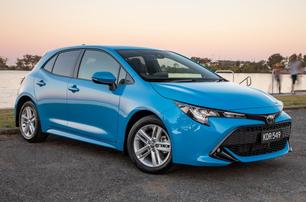
Up until 2024 when its title was nabbed by the Tesla Model Y, the humble Toyota Corolla has been the world’s best-selling car for quite some time.
A reputation for reliability, affordability, efficiency and in its current guise, being fun to drive, the Corolla has seen off all comers to retain the title of the most popular small car on Earth.
The current twelfth-generation Corolla is now seven years into its life cycle having landed in mid-2018. In that time scores of buyers have moved across into small SUVs, and the Corolla’s competitor set has shrunk dramatically as car brands pull out of the small passenger car segment.
But as we gear up for the next-gen Corolla, is the existing one still worth considering against some newer rivals? And should you look at this instead of a small SUV?
I lived with the mid-range Corolla SX hatchback for a week to find out.
The Mitsubishi Eclipse Cross Plug-in Hybrid EV is an interesting inclusion for the brand, especially as it is typically considered a ‘value player’ in the market.
But with negligible real-world fuel consumption benefits if you drive beyond the limited EV range and a high price premium over the non-PHEV models, it’s important you see if the sums add up for your particular needs.
Primarily going to use the car for running around town? Cool. Think the 50-ish-kay EV range will work for you and make you happy? Amazing. Sold on the look of the car? Hat tipped.
But let me say this - if you are considering the Eclipse Cross PHEV, there are some alternatives you should also have on your list, including the MG HS PHEV, the Hyundai Ioniq PHEV, Kia Niro PHEV, and - the one I’d buy - a Toyota RAV4 Hybrid. For me, plug-in hybrid tech is a bit of a halfway house, in most instances offering too high a price premium for the range you’re getting to drive electric. Heck, a Kona Electric isn’t much more than the top-spec Exceed PHEV, and I’d have that if I wanted a real day-to-day EV experience.
The final score for this review makes it look as though the Corolla is a middling effort. The scores for each individual section of the review are well considered and fair. The Corolla does lack the practicality of some of its rivals. A lack of an ANCAP rating isn’t great and the powertrain is just okay. But it remains one of the most fun-to-drive hatchbacks on the market today, even seven years into its life, and I would wholeheartedly recommend the Corolla to anyone looking for a small car. If you can forgive some of the quirks, it is a reliable, adorable, fun and efficient small car favourite.Â