From
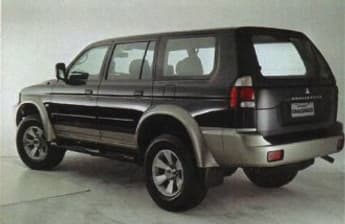
The Mitsubishi Challenger 2005 prices range from $3,410 for the basic trim level SUV Challenger Ls (4X4) to $5,940 for the top of the range SUV Challenger (4X4).
The Mitsubishi Challenger 2005 comes in SUV.
The Mitsubishi Challenger 2005 is available in Unleaded Petrol. Engine sizes and transmissions vary from the SUV 3.0L 4 SP Automatic 4X4 to the SUV 3.0L 5SP Manual 4X4.
Read More
| 2005 Mitsubishi Challenger | Specs | Price |
|---|---|---|
| (4X4) | Specs: 3.0L, Unleaded Petrol, 4 SPEED AUTOMATIC 4X4 | Price: $4,070 - $5,940 |
| Ls (4X4) | Specs: 3.0L, Unleaded Petrol, 4 SPEED AUTOMATIC 4X4 | Price: $3,410 - $5,280 |
| (4X4) | Specs: 3.0L, Unleaded Petrol, 5 SPEED MANUAL 4X4 | Price: $3,850 - $5,720 |
Transmission fluid should be quite red in colour and very translucent. Any time it’s not, you almost certainly have something going on inside the transmission. When transmission fluid turns brown or black, that usually indicates wear inside the transmission from either being overheated or from what’s called slippage.
The bands and clutches that create the flow of power in the different gears of the transmission are covered in friction material that gradually wears out (like a conventional car’s clutch plates or brake pads). These bands and clutches get hot enough to either 'burn', or slip when they should grip. In the case of overheating, the transmission fluid gets 'cooked' as well, turning it a darker colour. And if there’s slippage inside the unit, the friction material on the bands and clutches can be shredded (like sanding a piece of wood) and the abraded material (sawdust) collects in the fluid, turning it black.
Overall, black transmission fluid suggests internal wear and that a change of fluid and a transmission service is required immediately. This should return the fluid to its correct colour, but you need to monitor it over time to ensure the same problem isn’t continuing.
Fluid will darken over time (as the bands and clutches wear normally) but if the fluid has suddenly gone from normal to black, then you very possibly have internal wear starting to make its presence felt.
Show more
Some Mitsubishi models in the past have had problems with a rough surface on the head-gasket sealing surface of the crankcase,. This has led to head gaket failures and coolant loss. This was fixed by about 2014 with a different machining process at the factory, so this could be your problem.
At the time, Mitsubishi issued a service bulletin for this problem and was modifying cars to fix them. However, whether this bulletin would still apply in 2025 is the big question. However, it would certainly be worth contacting Mitsubishi Australia’s customer service department to see if there’s still assistance available.
Show more
Most factory roof bar systems are only designed for light duty stuff and will have a maximum capacity of between about 50kg and 100kg. So, by the time you add your 75kg tent plus whatever humans are going to be sleeping in it, you’d be way over the limit and in real danger of collapsing the whole deal onto the car’s roof panel.
Most people who fit roof-top tents or use that real estate to store things like spare tyres, fuel cans and camping gear, opt for an aftermarket roof-rack system which is much better able to cope with higher loads. Try a four-wheel-drive accessories store in the first instance and remember that to make a roof-top tent as safe as possible, you’ll also need to find a ladder that fits the car properly to get in and out safely.
The good news is the Challenger was and is a popular choice for campers, so you should be able to find what you need on the aftermarket.
Show more
* Price is based on Glass's Information Services third party pricing data for the lowest priced Mitsubishi Challenger 2005 variant.
The Price excludes costs such as stamp duty, other government charges and options.Disclaimer: Glass's Information Services (GIS) and CarsGuide Autotrader Media Solutions Pty Ltd. (CarsGuide) provide this information based on data from a range of sources including third parties. Whilst all care has been taken to ensure its accuracy and reliability, GIS and CarsGuide do not warrant or represent that the information is accurate, reliable, complete, current or suitable for any particular purpose. You should not use or rely upon this information without conducting an independent assessment and valuation of the vehicle.
To the maximum extent permitted by law, GIS and CarsGuide exclude all liability for any direct, indirect, special or incidental loss, damage, expense or injury resulting from, arising out of, or in connection with your use of or reliance upon this information.