What's the difference?
The first two things any new starter who arrives in the design department of Jeep’s headquarters in Ohio is told are, 1) The bathrooms are here and, 2) Don’t change the Wrangler.
Okay, I made that up, but it’s probably not far from the truth, because the Wrangler isn’t just iconic for Jeep, but iconic for the entire car world in a similar way to the Porsche 911 and the Ford Mustang.
The Jeep Wrangler is the equivalent of a Hollywood superstar - the Clint Eastwood of the car world - with its design that stretches all the way back to the iconic little off-roader purpose-built for the US Army in World War II.
So, how do you make changes without changing the recipe? Well, the Wrangler has been updated and we went to the Aussie launch to see what’s changed.
Chevrolet’s Corvette Z06 supercar is an all-American answer to European rivals Lamborghini and Ferrari, but it’s not just this that makes it so appealing.
Spending a week with the most potent Corvette you can get in Australia has left me with a list of notes on this beast I want to hand over to you. Maybe it will help make your mind up about it or change your mind.
What makes the Z06 the flagship of the Australian Corvette range isn’t little luxuries, but seriously upgraded mechanical hardware, much of it track focussed.
Our test car was also fitted with the Z07 Performance package which adds a carbon-fibre aero kit to pin the Corvette down at high speed while also drawing everybody’s attention to it.
Oh, and then there’s the sound of the largest flatplane crank V8 ever to go into a production car… and look out for your ankles - let me explain…
The changes to this updated Jeep Wrangler are small but meaningful. The inclusion of airbags, the updated media screen, and a feisty engine which suits the plucky nature of this off-roader make it a better Wrangler than ever.
Note: CarsGuide attended this event as a guest of the manufacturer, with travel, accommodation and meals provided.
The Chevrolet Corvette Z06 is truly a supercar offering outstanding dynamics for a lot less money being asked by European rivals - just make sure it's not your only car for those times when you're in a hurry.
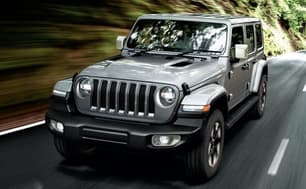
The Jeep Wrangler looks like a cartoon of a four-wheel drive, that’s how familiar and well-known the design is. It’s almost generic, like the word Jeep.
You could say the design is iconic, given that the roots of this SUV stretch back to the little Willys off-roader built for the US army in World War II. And to this day the slotted grille, pronounced wheel guards, short and upright windscreen, even the removable doors are still with us in this latest incarnation.
That’s why each generation of the Wrangler only sees very subtle tweaks to famous shape and look, in much the same way a Porsche 911’s design changes at the rate of dripping water reshaping a rock.
Changing the styling completely would destroy the look which connects the Wrangler to its past and the nostalgic appeal would be over.
So, this update sees more than subtle styling changes in the form of a tweak to the grille with the addition of a metallic-look trim around each of the slots while the mesh insert now has larger openings.
Along with this there’s a new front bumper. The Wranglers we tested had the optional heavy duty steel front bumpers.
There’s also some interior changes in the form of a new dashboard trim, horizontal air vents and then there’s the 12.3-inch media display which goes a long way to making the cabin look more modern.
Still, the interior is busy with buttons and switches in a design that seems to mix the look of heavy machinery controls with a prestige car. The Nappa leather of the Rubicon grade lifts the quality feel higher.
All Wrangler interiors also have an internal roll-over cage which covers the entire cabin, for the fixed metal roof and removable roof body style which are standard on the Overland and Rubicon.
Only the Rubicon is offered in a two-door and a four-door, while the Overland and Sport S are four-door only.
The Rubicon two-door looks cute and fun to my eyes, while the four-door versions look a bit more serious and beefy, but both definitely still give off tough and adventurous vibes.
The wheelbase difference between the two is as giant as it looks. The Rubicon two-door’s wheelbase is 2459mm while the four-door Rubicon’s, along with the Sport S and Overland, is 3008mm.
The Wrangler ranges in length from 4334mm for the Rubicon two-door to 4882mm for the four-door Wranglers. Width is the same for all Wranglers at 1894mm and the height ranges from 1879mm in the Rubicon two-door to 1901mm in the four-door versions.
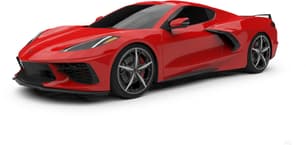
We’re talking about the closest thing to a real-life Hot Wheels car here. See, while Ferraris look elegant to me like expensive jewellery, Lambourghinis like cheese graters and McLaren’s look like slippery alien spacecraft, the Corvette Z06 looks exactly like an American supercar should - an unapologetic, ludicrous beast. And I love that.
Dialing up the wild is that enormous carbon wing and front splitter with dive planes thanks to the Z07 package. Just a word of warning, though, the front splitter and dive planes stick out not just visually, but in the sense that I walked into them often and my ankles still have the scars.
I can’t recall the last time I drove a car with carbon-fibre wheels either - these are the biggest rims fitted to a Corvette and they’re wrapped in Michelin Pilot Sport Cup 2R ultra performance tyres (275/30ZR20 front and 345/25ZR21 rear) that they look like oil drums on their sides.
The best angle? The rear - straight on. Those headlights.
Wait, no, it’s from above - so you can see the V8 through the glass hatch.
Or it could be front-on looking like a giant shovel..
OK, there are no bad angles..
The Corvette Z06 is long at 4734mm end-to-end, broad at 2024mm wide and its height is a both a sitting-on-the-road-low and numerically pleasing 1234mm.
The plainness of the cabin might be a let down to some people after all the exterior wildness. Ferraris and Lambourghis offer extravagant and exotic interiors, but the Corvette’s innards are almost completely void of flare.
The media screen is small (8.0 inches), switches and controls for windows and air vents are basic, and the huge dividing ‘wall’ between the pilot and passenger might be a bit much for some.
That ‘wall’ is dotted with buttons and while it may look very 'fighter jet cockpit', they’re just climate control switches. Sitting in the passenger seat is a lonely place with no screen visibility nor easy access to controls - I'd actually call this out as a bit of a fail compared to the interiors from Porsche, Audi and Lamborghini with their screen-filled cabins offering co-pilots something to do.
Yes, it feels a bit premium with the Nappa leather and the sports seats, but it could feel more special.
All of this plainness, however, is saved from boredom by the glass window behind the seats allowing you to peer into the engine bay at the V8 like at a reptile enclosure at the zoo.
When we review most SUVs practicality is scored on things like legroom, storage space and boot size. But in the case of a vehicle with removable doors and roof, and a cabin that has one-way drainage valves so you can hose the interior out, practicality takes on a different meaning.
The Wrangler’s practicality seems focussed on serving adventurous folks in search of a muddy off-road expedition and, so, while there is storage it’s mainly nets for door pockets, moulded wells on top of the dash, and smaller hidey holes to makes sure loose items don’t get flung around the cabin.
Given the roof can be removed there’s also a lockable glove box and centre console storage box.
When it comes to cabin space the Wrangler’s interior feels a bit cramped. The footwells up front don’t offer much space and headroom throughout is restricted by the roll cage which stretches from the front to the boot.
The four-door Wrangler has five seats and good legroom in the second row, even for me at 189cm tall. As mentioned above, headroom is limited in places because of the safety structure. Boot space behind those rear seats is 898 litres.
The two-door Rubicon has four seats. The back ones aren’t the most spacious and the boot behind them is almost too small to mention at 365L, Two pieces of carry-on luggage wouldn’t fit back there and we had to put our bags on the rear seats.
The rear tailgate for all Wranglers is side-hinged (opening left to right) and splits to allow just the window section or lower part to open separately.
For charging and powering devices all Wranglers have two USB ports up front (one -A and one -C) and four USB ports in the second row (two -A and two -C). There are also two 12V outlets on board (front and rear).
There are two cupholders, seatback map nets and directional air vents for the second row.
The Wrangler sits high and climbing into the rear seats might be a challenge for smaller kids or even fully-grown humans, but there are chunky handholds at the pillars for extra help.
So, the Wrangler has excellent practicality, but this is geared more to its intended purpose of adventuring off-road rather than the city commute and school pick-up.
Supercars don’t tend to be built with practicality as a priority but this two-door, two-seat beastie is spacious enough even for me at 185cm tall with plenty of room in the footwell and loads of elbow-, knee-, and headroom.
Cabin storage is limited to a glove box, door pockets, two cupholders, and a wireless phone charger on the bulkhead behind the seats.
As you can see from the images there’s a boot at the rear which will fit smaller bags and a small boot in the front.
I did the school run in the Corvette a few times (I know, lucky kid) and I can tell you a bass guitar in its case and a school bag, plus my own large handbag make for a cramped cabin. A Kia Carnival the Corvette ain’t, but it’s not trying to be one and compared to its rivals it does well for practicality.
The Jeep Wrangler range comes in three grades. There’s the entry-grade Sport S which can only be had with four doors, the Overland which is also a four-door and the top-of-the-range Rubicon comes as a shorter wheelbase two-door and the four-door.
The Sport S replaces the Night Eagle as the entry-point into the Wrangler range and with a list price of $75,950 it’s $5500 cheaper, too.
Above this is the Overland for $84,950 and at the top of the line-up is the hardcore Rubicon which is $83,950 for the two-door and $90,450 for the four-door.
This update sees all Wranglers now coming with a (damage and scratch-resistant) 'Gorilla Glass' windscreen and a 12.3-inch media screen. But each grade also comes with its own new features.
The Sport S has been given heated front seats, a heated steering wheel and ambient cabin lighting. Meanwhile, the Overland now has power front premium 'McKinley' seats and soft spare tyre cover.
And finally the range-topping Rubicon receives Nappa leather seats and a forward-facing 'Trailcam'.
There are mechanical upgrades across the range, too, especially for the Rubicon and we’ll get to those in the engine and driving sections of this review.
As for the rest of the features, coming standard on the Sport S are LED headlights, 17-inch alloy wheels, proximity key and push button start, sat nav, Apple CarPlay and Android Auto, a nine-speaker Alpine sound system and dark tint windows.
Along with its new features the Overland also comes standard with all of the Sport S’s equipment plus a three-piece removable hardtop, 18-inch wheels and a leather-wrapped shifting knob and hand brake handle.
Then there’s the Rubicon which has all the Sport S features, but 17-inch wheels instead of the 18s and an enormous amount of engineering hardware that makes this grade the off-road king of the Wranglers, which we’ll get to.
Almost never does a car with a list price of almost $400K get full marks, but here we are and I’ll tell you why. The Corvette Z06 in its standard form lists for $336,000 and this is outstanding value compared to its supercar rivals such as the Ferrari F8 Tributo for $484,888, or a McLaren 750S for $585,800 or even an entry-grade Lamborghini Huracan, the EVO, for $383,187.
Australia gets the top 3LZ trim, with the local standard features list for the Corvette Z06 including Nappa leather upholstery, GT2 bucket seats, a 12-inch digital instrument display, a 14-speaker Bose sound system, red seat belts, wireless phone charging, carbon-fibre and suede microfibre trimmed steering wheel, a media system with sat-nav plus wireless Apple CarsPlay and Android Auto, power seats, heated steering wheel, dual-zone climate control, heated and ventilated seats and a head-up display.
Our test car was fitted with plenty of options including the Z07 Performance Package that brings carbon-fibre everything. We’re talking the enormous carbon-fibre rear wing and aero kit with side skirts and a front splitter with dive planes –and there are the carbon-fibre wheels (20-inch at the front and 21-inch at the rear).
The Z07 package also brings a more hardcore suspension tune and carbon ceramic brakes for ridiculously good stopping power.
The Z06 has the most powerful V8 engine in the Corvette range, too, and we'll get to that soon.
One of the biggest changes Jeep could make to the Wrangler without causing complete mayhem for fans is to the engine and even then there will be folks who don’t like what they’re about to read.
Deep breaths, okay? Right, so, in this update the V6 petrol engine has been replaced by a 2.0-litre turbo-petrol four-cylinder.
At 200kW the new four-cylinder makes a smidge less power than the V6 but more torque at 400Nm. An eight-speed automatic transmission shifts gears and sends the drive to all four wheels.
If you’re a Wrangler fan you’ll most likely know about this engine swap, but you’re wondering how this four-cylinder feels.
The answer is, really good. Jeep has got it right. It’s a torquey, responsive engine that feels energetic and suits the Wrangler's personality well.
In the short time I’ve spent on and off the road I’m convinced this turbo-four will be a good companion wherever you decide to go.
And go pretty much anywhere you can, with all Wranglers being ridiculously capable off-road thanks to their ladder frame chassis, high- and low-range gears, outstanding ground clearance (233mm-257mm, depending on variant ), excellent approach angle (41.4 to 44 degrees, depending on variant) and a departure angle to match (37 degrees for the both Rubicons; 36.1 for the Sport S and Overland).
The Rubicon comes standard with Jeep’s 'Rock-Trac' on-demand four-wheel drive system and this update adds a full float rear axle. Sport S and Overland grades have Jeep’s 'Selec-Trac Active' on-demand 4WD set-up.
The 5.5-litre naturally aspirated V8 in the Z06 makes 475kW and 595Nm. That’s a lot more power than the Corvette Stingray’s V8, which produces 369kW. The GT3 racecar version of the Z06 uses a derived version of the 5.5-litre V8, and actually it shares 70 per cent of the engineering components.
Revving to a high 8600rpm the Z06’s V8 lets out a high-pitched scream when pushed hard, much like a Ferrari because like many Ferraris the Z06 has a flatplane crank V8 - actually it’s one of the largest flatplane V8s to go into a production car.
Corvettes are now mid-engined cars and the Z06 has an eight-speed dual-clutch transmission that changes gears quicker than I can blink, sending all that mumbo straight to the rear wheels.
Acceleration comes hard, fast and loud with the Z06 able to boot itself from 0-100km/h in 2.9 seconds. That beautifully linear acceleration with no turbos will pull you all the way towards its top speed of 313km/h.
The new turbo-petrol, four-cylinder means better fuel economy than the V6 it replaces. We have yet to test Jeep’s claims that after a combination of open and urban roads the four cylinder uses 9.2L/100km in the sport S and Overland grades and 9.9L/100km in the Rubicon.
In comparison, Jeep says the previous V6 uses 10.1L/100km in the Rubicon and 9.9L/100km in the Overland. Our own testing saw consumption closer to 13L/100km.
We’ll have the new Wrangler in our garage soon and we’ll be able to put the fuel consumption claims to a real world test.
In terms of range, the two-door Rubicon has a 61-litre fuel tank and in theory a range of up to 680km. The Sport S and Overland have an 81-litre tank and can get up to 880km, while the four-door Rubicon’s 81-litre tank should manage 830km.
Of course if you’re off-roading you’ll use more fuel and the range will drop accordingly.
As with practicality, fuel efficiency isn’t the Corvette’s priority and after driving it daily for a week in the suburbs, city and a few dashes out to more open country roads the Z06 was using an average of 23.8L/100km, according to the trip computer.
Luckily the fuel tank is pretty big at 70 litres and with an official combined fuel consumption of just under 16L/100km you have a range of 438km… in theory.
Every one of the Jeep launches I’ve attended over the past 15 years has involved a pretty decent off-road component and it’s clear the company has a lot of faith in its product.
This Wrangler launch’s off-road test had been scaled back due to days of flooding rain beforehand, but the section that was passable was enough to remind us of what we already know and that is the Wrangler is formidable.
A Queensland bush off-road course full of steep, muddy hills, ruts, rocks, dirt and slippery descents was still all there for us to test the Wrangler Rubicon four-door.
Fun and comfortable are the first words that pop into my head when recalling how the Rubicon fares. This is a super-capable beastie that feels planted, secure and adept at all times.
We tested low- and high-range four-wheel drive, locked the rear differential and let the hill descent mode do its thing and get us down the sides of hills that felt so close to vertical all we could see through the windscreen was the ground.
What's also clear is the new turbo-petrol, four-cylinder feels well suited to the job, with plenty of torque along with a feisty and responsive nature that fits the Wrangler better than the old V6.
There was also plenty of time spent on the road in the four-door Rubicon and its smaller two-door sibling. And was here it was also super clear the Wrangler felt like we’d taken it out of its natural habitat.
At 110km/h on the motorway the two door Rubicon feels light and floaty in its suspension, with steering adjustments having to be made constantly, like actors pretending to drive cars in movies, as the Wrangler wanders around in its lane. The Wrangler wander is a known trait and isn’t specific to this updated car.
And even though our launch drive took us on some great winding country roads which would have been perfect for a Mazda MX-5, the Wranglers found the fast tight turns difficult to handle.
I’m sure I heard a sigh of relief from our Rubicon as we pulled off the road and selected low-range four-wheel drive before bouncing up what looked to be a sheer cliff, with ease.
Of course, our Adventure Expert Marcus 'Crafty' Craft will put the Wrangler though its paces once we have one in the CarsGuide garage.
What the Corvette Z06 is like to drive really depends where you drive it. Our suburb has a ridiculous number of speed humps, which are like the Corvette Z06’s Kryptonite thanks to its very limited ground clearance and a carbon front splitter that almost skims the road at the best of times.
This made the Z06 one of the slowest fast cars I’ve ever piloted. My son would beg me to drive him to school in it, but the journey would take twice as long as we slowly eased over each hump while holding our breath. A lift system does raise the front of the vehicle but even then, don't breathe out.
The width and poor visibility made inching down narrow streets of parked cars a stressful exercise, too.
The Corvette Z06 is almost too much of a racecar to live with and then you let it free on an open country road and its purpose is clear - it runs like you wouldn’t believe and screams in delight all the way, while clamping itself to the road with sticky tyres, perfectly set up suspension and proper downforce.
Steering feels mainlined though to your nervous system, the pedals under your feel like your actual feet, and it all feels like a dream until you wake up again when you reach the city limits and round abouts, and traffic and yes, speed humps.
The Corvette Z06 clearly is a car that needs to be joined by other cars in your driveway, ones that don’t even notice speed humps.
The Jeep Wrangler has a three-out-of-five star ANCAP rating from testing in 2019. This isn’t an adequate safety score for a modern vehicle and the relatively modest advanced safety tech compared to other new SUVs and its structural integrity in crash tests caused ANCAP enough concern to award it lower scores.
Surprisingly the ANCAP report scored its child occupant protection at 80 per cent which is excellent.
This update to the Wrangler now adds curtain airbags which cover the front and second rows. Along with these there are dual front airbags plus safety tech which includes AEB (city and inter-urban) and blind spot warning. There’s also adaptive cruise control and front and rear parking sensors.
For child seats you’ll find two ISOFIX and three top tether mounts across the second row of the four-door variants.
The standard full-sized spare wheel is mounted on the tailgate.
Along with four airbags, the Corvette Z06 has AEB, forward collision alert, lane-keeping assistance, rear cross-traffic alert, blind-spot monitoring, auto high beam headlights and adaptive cruise control.
An ANCAP safety rating doesn't exist for any member of the Corvette and will likely never due to low volume.
The Wrangler is covered by Jeep's five-year/100,000km warranty, which is off the mainstream market standard of five years/unlimited km.
Service intervals are recommended every 12 months and 12,000km and service prices are capped at $399. Jeep also offers lifetime roadside assistance if you service your Wrangler though Jeep.
GMSV covers the Corvette with a three-year/100,000km warranty which is short by current standards where carmakers typically offer a duration of five years/unlimited kilometres.
One of the appealing sides to the Corvette is that it’s made by a down-to-Earth American car company and a longer warranty offering peace of mind would seem more appropriate.
Service intervals are every 12 months or 12,000km, with capped-price servicing sadly unavailable.