








.jpg)

.jpg)


Here’s a perennial one for the conspiracy theorists out there: Is there such a thing as a water-powered car?
Let’s face it, the thought of cars zapping us to our destinations running on nothing but water is an appealing one. And filling up our water-powered cars from a garden tap rather than a service station?
Sounds good. But what’s the reality? Can it work? And if it can, why haven’t we seen it yet? Has Big Petroleum managed to keep the lid on this technology for decades to keep us addicted to its fossil-based products? And is a water-powered car possible in the first place?

Well, it kind of all depends on how you define water-powered. For instance, is a competition darts player fuelled by beer and pies? Or do we accept the more conventional theory of how human beings work and include beer and a hot Four'N Twenty within that science?
And what of the conspiracy theories? For the purposes of this, perhaps we should stick to conventional, accepted science and leave the arcane branches of orgone energy and its ilk to the keyboard warriors out there.
So, having laid down the ground rules, is there such a thing as a water-powered car? The short answer is no. The science says that water is an inert compound and it simply won’t burn in a car’s engine.
Pure water won’t even conduct electricity. Physics holds that there is no way to derive chemical energy from water alone, and that’s pretty much that. Okay, so maybe you knew that much. So, where do the theories and the speculation come from?
Perhaps it’s humanity’s tendency to make stuff up that’s behind it all. Perhaps the dream of a water-powered car has been the work of a handful of persuasive fast talkers who, by donning lab coats and serious expressions have convinced some of us that we’re being held back by our own ignorance.
History is full of this stuff, from alchemy to the Brock Polariser and all the way back to UFOs and 9-11 deniers, there have always been people willing to take the opposing view to that which we call conventional scientific wisdom.
So, when was the first water-powered car invented, and who invented the first water-powered car? Both questions are kind of loaded, because as far as science is concerned, the concept is a non-starter. It can’t work, in other words.
That fact is that all the well-known attempts to convince the world that a car powered by water exists have since been debunked as flawed science or, worse, as scams and investment frauds. But who did what, and who – aside from science - allegedly killed it off?
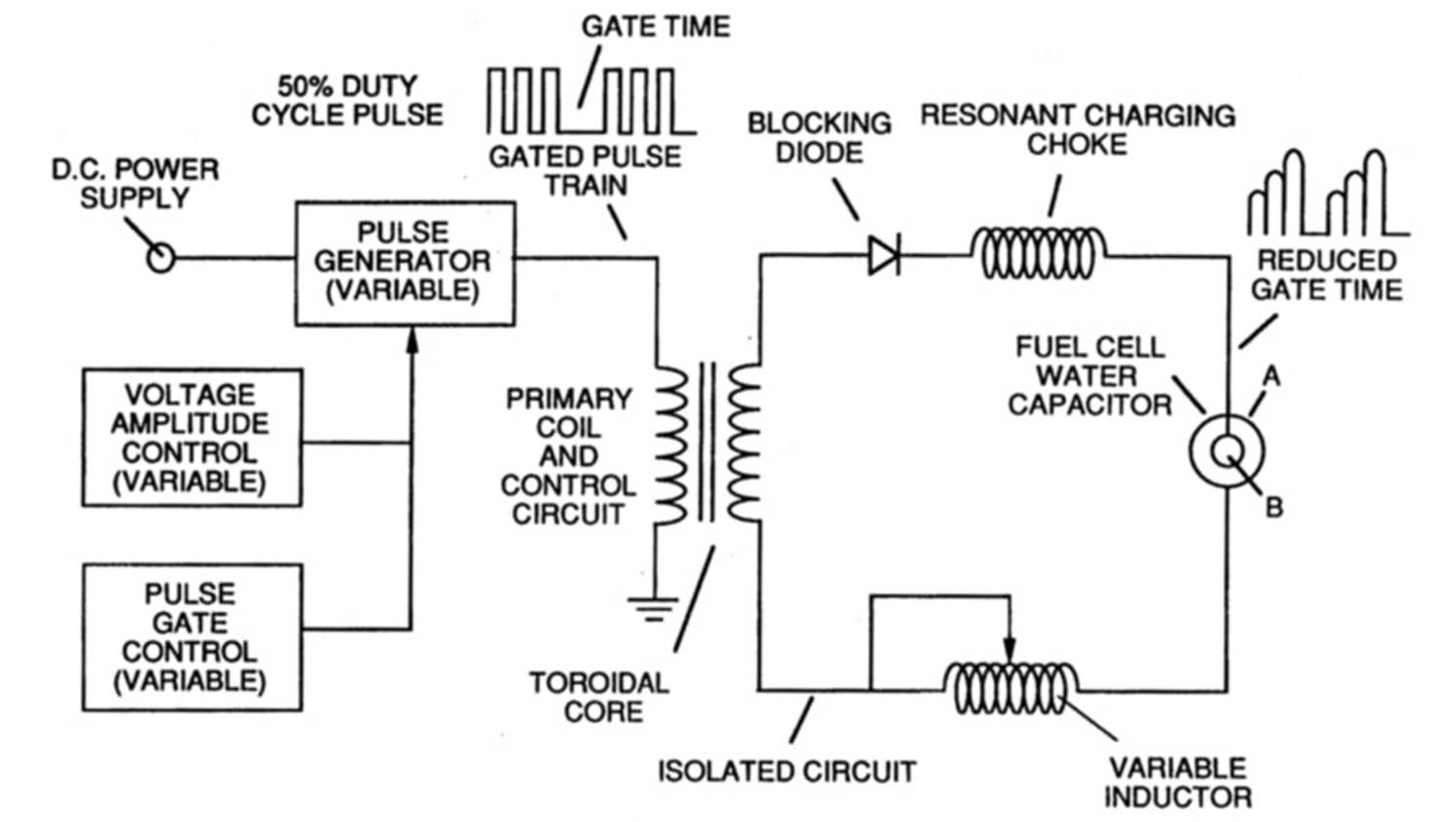
Let’s take the well known example of Stanley Meyer’s water-powered car. Back in the '90s, Ohio-based Stanley Meyers was touting his device that he claimed could be retrofitted to a conventional car and allow the result to run on water. He claimed his test car had made it from Los Angeles to New York City on just 83 litres of water.

Stanley didn’t actually attempt to make a water-powered car for sale, but he did try to sell franchises for the technology. He began selling dealerships but in 1996 was sued by two of those dealers who claimed the science was flake.
An Ohio court agreed and in that year, Stanley was ordered to refund the dealers’ investments. It seems even in a courtroom, Stanley couldn’t prove to anybody’s satisfaction that his car runs on water.
Stanley died suddenly in 1998, leading his supporters to claim he was murdered to keep his water-powered car project and its technology secret. The state coroner said otherwise.
Interestingly, nobody has since bothered to take up Stanley’s theories, even though his water-powered car patent has expired and is now in the public domain.

Another name that keeps popping as a water-powered car creator is that of Bob Lazar. Born in 1958, Bob Lazar claimed to be a physicist, but this distinction now appears to be one, he, rather than any university or college, bestowed upon himself.
The Bob Lazar water-powered car was based on a C5 Chevrolet Corvette and Bob claimed you could convert your own car with his kit and make your fuel at home and run for free.
So, let’s look at the rest of Bob’s CV. No university can confirm his claim of having studied physics, nor does the US government claim him as an Area 51 employee of any note, despite Bob’s claims that he helped the US government reverse engineer some of the alien space-ships that landed there. This experience (allegedly) led him to become an Area 51 conspiracy theorist.
In the real world, Bob was charged and convicted of such things as aiding and abetting a prostitution ring, and transporting restricted chemicals across state lines.
If you didn’t know better, you’d maybe think Bob and his water-powered car were nothing more than a scam artist and his prop. Certainly that’s the conclusion drawn by both the science and justice communities.
To be fair to Bob, he didn’t claim the car ran on water, but on hydrogen which was derived from water. In this sense, Bob’s science was sound; you split a water atom to get hydrogen and oxygen and burn the hydrogen in an internal combustion engine.
Yes, this technology as still in its infancy in a automotive sense back then, and had Bob’s car worked as claimed, it would have been a cutting edge piece of gear.

The controversial bit was his home hydrogen-production plant that used restricted chemicals. Bob also claimed that with solar power, you could make enough hydrogen in about three days to power your Corvette for about 600km.
Perhaps in 2025 when home solar is a thing and the idea of running an ICE car on hydrogen is far from far fetched, Bob’s ideas make a bit more sense, but if it was such a wonder, why didn’t it take off? One guess would be that his previous tenuous relationship with the truth tainted everything else he did.
The conspiracy theorists will claim the government and 'Big Oil' shut Bob down. But when you look at what is actually known about Bob’s project, the whole thing is light on detail and seems to fail to address some of the issues with a hydrogen conversion.
Things like hydrogen storage and handling, refuelling protocols and safety concerns. Given Bob’s track record in telling the truth, shadows were inevitably cast.
But the reality is something we still don’t understand fully. Which is another way of saying you’re welcome to your opinions, but nobody knows for sure. Apart, maybe, from Bob Lazar himself.
So, where is the water-powered car in 2025?
See, here’s where it gets interesting: If you take a broader view of water-powered cars other than plain old tap water fuelling an engine of some type and turning the wheels, there are ways a car can be deemed water-powered. Again, you need to broaden the definitions of powered, but it is possible.
The first would be a battery-electric car that runs on electricity created by a hydro power station. In this case, it’s water that spins the turbines, produces the electricity and charges the car’s battery.
In some places, that technology is already a reality, so maybe water-powered cars have been around for years after all. But certainly, a water mill where a river or stream turns a wheel which in turn drives the milling process, is 100 per cent water-powered, so while the scientific definition is a step or two removed, it’s still a valid view.
Of course, if you accept that scientific approach, then you also have to admit that electric cars in, say, Iceland where geo-thermal power is central to making electricity, are steam powered. It’s up to you.
And what about a steam locomotive? It’s steam that drives the pistons and turns the wheels, but it’s water that’s being boiled to create the steam and the steam itself is still made up of H2O.
In which case, a steam engine is water-powered, too, although the counter argument is that it’s the coal the thing burns to boil the water that is the real fuel. Scientists would agree with the latter.
The other technology for creating kinetic energy from water is to use the principles of the school-project standard, the bottle rocket. By pumping air into a chamber (usually a plastic drink bottle) that also contains water, the bottle rocket uses water to eject the container at some considerably velocity when the compressed air is allowed to escape.
But while it’s the equal-but-opposite reaction of the relatively heavy water that punches the bottle to the other end of the playground, it’s actually the compressed air that is providing the potential – and then kinetic – energy to achieve this.
And for the sake of the argument, how is the air compressed? Usually by a physics teacher with a bike pump. So is the bottle rocket human powered? To some extent, yes.
In a modern car sense, the bottle rocket theory would indeed make a car move, but probably not very fast or very far and only or a very short space of time. You’d need a huge amount of compressed air in a very strong storage tank and at the end of each short drive, you’d need a mop and bucket to clean up the water.
But it’s not as far fetched as it sounds. In some industries where machines have to move in an indoors environment where an internal combustion engine would soon poison or deafen every worker in there with it, the air-powered fork-lift has make a name for itself.
It still uses an engine with a crankshaft and pistons (or, in some cases, a more radical rotary engine design) but instead of burning fuel to force the pistons down each cylinder, the air-powered fork-lift uses compressed air to achieve the same result. Again, you need a large enough air tank and the means to bring it up to sufficient pressure to gain enough performance for a whole shift.
Could it work in a car? Yes, but again, you’d need a huge tank and plenty of high-pressure air inside which raises the question of how that air is compressed. And in any case, the constant development of electric machinery such as fork-lifts is threatening the viability of every other type, although some manufacturers are still dedicated to the air-powered theme.
Right now, there’s a fair bit of media noise about a Toyota water-powered car. And, when you think about it, if anybody was going to crack the secret to how to make a car powered by water, it’d be somebody like Toyota with its massive research resources.

Despite the clickbait headlines, however, what Toyota really did recently was develop an engine that runs hydrogen and is water cooled. Yes, it’s great tech, but it’s a long way short of a car that you can fill from the kitchen sink.
Porsche is another company investigating new ways to power cars, and has a huge investment in synthetic petrol (and all other hydro-carbons). But a Porsche water-powered car? Even the Porsche engineers would be laughing at that one.
But in an age where 'alternative facts' and 'one’s own truths' are somehow regarded as valid points of view, can it be long before we see other headlines touting a new Ford, Chevrolet, Mercedes, BMW or Hyundai water-powered car or (perhaps from Elon himself) a Tesla water-powered car?
And what of the Chinese makers? As disruptors, wouldn’t news of such a thing be a boost to their stocks, even if the only thing science can see is an investment black hole.
You get the feeling this is one urban myth that isn’t going anywhere.
Notes:
Stanley Meyer water fuel cell diagram full image attribution:
Image 1: Public Domain, https://commons.wikimedia.org/w/index.php?curid=294316
Image 2: Public Domain, https://commons.wikimedia.org/w/index.php?curid=294315
Bob Lazar full image attribution:
Bob Lazar image: By Gene Huff, Bob Lazar - This image has been extracted from another file: File:Gene Huff, Bob Lazar - ufo.webm. The source file was deleted for reasons that do not affect this image, like a derivative work which is not a part of this cropped image., CC0, https://commons.wikimedia.org/w/index.php?curid=130440439

.jpg)