What's the difference?
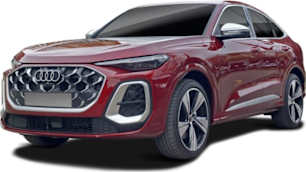
Audi’s latest Q5 Sportback brings mild-hybrid power, updated underpinnings, more technology and a genuinely impressive interior glow-up.
It’s clearly aimed at buyers drawn to a more athletic take on the mid-size SUV, where style plays a bigger role than outright practicality. We're testing the base petrol spec to see how it sits alongside the BMW X4 xDrive20i, Genesis GV70 2.5T and Mercedes-Benz GLC300 Coupe.
For off-road adventurers, having the flexibility to be able to tow your camper-trailer off the beaten track, out bush and along a beach, opens up a whole new realm of fun and possibility – and that's why Jayco's Outback versions of the company's mainstream camper range have a growing legion of fans.
But the question for camper buyers is: should they upsize? Bigger is often better, but does that hold true in the camper-trailer world? Is a big camper actually worth the extra cash? And is it more difficult to tow?
We take the Jayco Swan Outback (from $30,490), the biggest camper in the Outback range, on a trip into the bush to answer these questions and plenty more.
The updated Audi Q5 Sportback TFSI is a strong example of a luxury base-grade SUV, ticking most of the boxes in styling, comfort and features. It may not always outperform its rivals on paper, but it delivers where it counts, offering a refined, practical and engaging package that will satisfy.
The Jayco Swan Outback is a nice solid camper, packed with features and suited for most trips away.
Sure, it's not the roomiest or flashiest camper around and – you've been warned – it is definitely not up to hard-core 4WDing, but it does come from a company responsible for sharply priced units with plenty of flexibility regarding optional add-ons so that counts for a lot.
Up front, the cabin feels spacious and comfortable, with plush (heated) electric seats, while the driver also benefits from a two-position memory function, which is a plus if the car is shared. My main gripe is the short seat bases, which become noticeable on longer drives.
In the rear, comfort largely holds up, though space is better suited to two adults due to the high transmission tunnel. The 40/20/40 split-folding rear seat is a practical inclusion and helps when juggling passengers and longer items.
Storage is mostly well considered. There’s a generously sized glove box and a couple of useful storage bins in each door, although the centre console is on the smaller side. The dedicated phone tray is a highlight, housing the wireless charging pad, two USB-C ports and a 12-volt socket. Both rows get cupholders and bottle storage, while rear passengers also benefit from USB-C ports, climate control, directional air vents and map pockets. Overall, there’s just enough space and amenity for adults or teens to remain comfortable.
Technology is handled by the updated media display, which features a responsive touchscreen and a menu system that’s easy enough to navigate. Wireless Apple CarPlay and Android Auto are quick to set up, and the built-in satellite navigation is clearly laid out. That said, the near-total absence of physical buttons may frustrate some, with functions like climate control buried within the touchscreen. The number of pop-up disclaimers on start-up also feels excessive.
Boot space is where the Sportback’s sloping roofline has the biggest impact. Load height is limited, and capacity tops out at 515L with all seats in place, making it the smallest in its segment, albeit only by around 10L. I like the deep underfloor storage, along with the cargo cover, net and hands-free powered tailgate. However, the lack of a spare tyre, replaced by a repair kit, is a deal-breaker for me as a country driver, though it may matter less to those with easier access to repair services.
Correct me if you reckon I'm wrong, but no camper-trailer from any company will ever be in the running for a 'Gorgeous Temporary Home' award. But that's part of this camper's appeal; it's highly practical and functional, not pretty and useless.
The forward bed is to the left as you step inside; the rear bed is to the right. Its kitchen is in front and to the right of the door as you enter the camper.
Interior height is a standard 2070mm and inside is spacious, but tempers will likely fray if all four adults and two kids are standing or sitting around inside at the same time. Hope for no rain.
The interior includes a four-burner stove, Dometic 95-litre fridge (Touring models get the 90-litre fridge), stainless-steel sink, dinette seat, table, club lounge, and the two beds plus the dinette-convertible bed.
If you can't find some places in which to stow away your gear in this Outback, then you're not looking hard enough.
The 'Ezi glide' pull-out drawers include room enough for your large pots, cutlery, kitchen gear and numerous other bits and pieces.
Interior lighting includes overhead LEDs for the dining/entertainment area and reading lights for the beds. There’s a fan for the beds.
There’s enough power in the base grade to keep things engaging on the open road, whether overtaking or maintaining pace, with a reassuring sense of reserves and smooth, punctual delivery.
Despite the firmer suspension, ride comfort remains high thanks to the newly tuned damping system, which absorbs bumps without sacrificing road feedback. The cabin is quiet at speed and at low speeds the car can switch to its hybrid system for extra refinement.
I’m not a huge fan of the adaptive steering assist, particularly on winding roads, as it can overcorrect at times. Overall, though, the Q5 Sportback delivers enjoyable, sporty dynamics.
Visibility is good from the front and sides, while the rear window is a little on the small side. It’s easy to get accustomed to the car’s dimensions and a clear 360-degree camera view comes standard across all grades, providing a clear view that automatically activates during low-speed manoeuvres. Parking this car is straightforward and stress-free.
Jayco campers are easy to tow and the Swan Outback is no different. It towed steady and stable – no worries – behind our long-termer 2019 2.0-litre four-cylinder bi-turbo Ford Everest 4WD (157kW/500Nm).
We did decent stretches of highway, country back-road and gravel track, deeply rutted in places, with no strife.
The extra length (305mm) over its top-tier stablemates – Hawk and Eagle – was hardly noticeable and only took a little adjustment and increased vigilance when turning in between trees on pinched bush tracks.
With a 130kg towball weight, it feels marginally livelier than Hawk (145kg) and Eagle (150kg), but nothing drastic – again, as long as the driver pays attention there's no issue.
Visibility back along both sides and over the top is good without need for towing mirrors.
The single-axle Swan Outback has a hot dip galvanised 'Endurance' chassis on Jayco’s 'JTech' coil-spring suspension with a little extra ground clearance over road-focussed Touring models. (Note: Jayco’s Outback models are made for dirt tracks and gravel roads, not 4WD-only tracks. They are not built for hard-core off-roading.)