What's the difference?
It has been a while since we’ve seen a Mitsubishi Express van on sale in Australia, and the one that has just launched here is a very different offering to its predecessor.
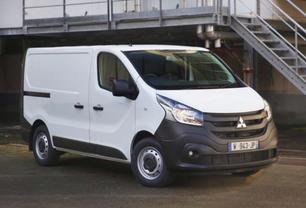
That’s because you could cover the tri-diamond badges on the grille or back door of the new 2020 Mitsubishi Express and be fooled into thinking that you’re looking at a Renault Trafic. Because you are.
The Express is a direct bi-product of the Alliance between Renault and Mitsubishi, and just like the Trafic, it’s made in France, at Renault’s Sandouville plant.
This isn’t a comparison - the headline isn’t Mitsubishi Express vs Renault Trafic - but the question is: why would you choose one over the other?
You’d be correct in assessing this as an exercise in badge engineering - Mitsubishi calls it “branded product” - but it could well be that you’d choose an Express because Mitsubishi has a broader network of dealers (186 at the time of writing, versus Renault’s 56), not to mention the potential for major fleet discounts and an upstream ute alternative in the Triton that helps the brand “offer the complete LCV solution”. Renault, you could counter, has a smaller and larger van for its own “LCV solution”.
There’s more to consider, including ownership, safety and value for money - read on for all the details.
Renault Australia has recently launched the first all-new Master commercial van in more than a decade, with its fourth-generation featuring new aerodynamic styling plus more power, torque, safety equipment and load-carrying capacity than the model it replaces.
We recently spent a week aboard one of these new variants, which competes in the ‘3501-7500kg GVM’ segment of Australia's 'Heavy Commercial' vehicle market, to assess its workhorse credentials from a tradie’s perspective, particularly for those thinking about upsizing from a ute or mid-size van.
The Mitsubishi Express is an impressive return to the market for the brand, albeit one that won’t suit every buyer’s needs or wants. If you need to personalise your van, or if you value the safety technology offered by rivals like the HiAce, then you may need to shop elsewhere.
But if you do choose the Express, you will be getting a value-packed and very comfortable van that is backed by a broad dealer network and decent ownership prospects.
The first Renault Master was launched in 1980 and its evolution through four generations and almost half a century of commercial service has resulted in the latest model winning numerous European industry and media awards. It combines practical payloads, tow ratings and load volumes with good driver comfort, energetic performance and thrifty fuel economy, making it worthy of consideration for those wanting a large commercial van that can meet a multitude of job requirements.
The badges are different, and so is the front bumper and bonnet. But you might otherwise struggle to tell what’s changed between a Trafic and the Express.
One thing Mitsubishi is offering, though, is a standard three-seat cabin on all models, plus dual side sliding doors and rear barn doors across every variant in the line-up. That’s a win for hard workers.
Here’s a table of dimensions to help you size up which might be best for you:
As you can see, the extra size on offer in the LWB model is strictly nose to tail, with no other compromises to consider apart from, understandably, the larger turning circle. But Mitsubishi claims even the smaller version can cope with two pallets in the back.
As for cargo zone dimensions, here’s how the two body styles compare:
It’s worth noting that there is no high-roof option available, where you can get a taller body in most competitor vans.
And while it is a bonus that there are barn doors (still not available on the HiAce), you can’t option a liftback tailgate. Plus, while the dual side sliding doors is an advantage as many OEMs charge extra for a driver’s side slider, you can’t option glazing for the rear door from Mitsubishi.
The company says that it is simply offering what it can get as part of the Alliance with Renault, but if you need to tailor a van to suit your specific needs, you might end up going with the French van (or the VW Transporter, which is the most configurable on the market).
Check the engine specs section below for more specs on weights and capacities. Next, let’s take a look at the cabin, starting with some interior images.
Our test vehicle rides on an expansive 4215mm wheelbase with external dimensions of more than six metres in length (6315mm) and more than two metres in width (2080mm) with a height of almost 2.5 metres (2498mm). Its turning circle is 14.9 metres.
The latest Master features new wind tunnel-developed body styling to optimise aerodynamic efficiency (and therefore fuel economy). There’s also ample use of unpainted dark grey plastic in all the usual areas prone to bumps, scrapes and wear in hard-working vans including the grille, bumpers, door handles/mirror-shells and along each lower side.
The latest interior design brings a larger multimedia screen and the e-shifter for the automatic transmission has been relocated to a stalk on the steering column, even though the prominent dash protrusion which previously housed the auto’s shift lever remains (repurposed here with a small storage bin) to accommodate the base model’s manual shifter.
Although seating for up to three occupants is standard issue, a two-seat configuration (with or without the steel bulkhead) is available for MWB Mid-Roof/LWB Mid-Roof automatic models as a $400 option.
With a three-seater cabin as standard, the Express is already at an advantage over a HiAce. You can’t get a three-seat HiAce, and if you’ve got apprentices or workmates that always need a lift - but you don’t want the space sacrifice that comes with a crew van - it could be a crucial decision-maker for you.
And there are decent amenities for the occupants, too, with three cup holders and ample storage options across the dashboard, as well as large bottle holders in the doors. In fact, all told, Mitsubishi claims there is 43 litres of loose item storage in the cabin.
The driver’s seat gets manual height adjustment, lumbar adjustment and an armrest, as well as steering wheel rake and reach adjustment, so getting a comfortable driving position should be a cinch. Unlike the Trafic, there’s no driver’s seat heating option, but the clever “Load Through” cavity - for loading items up to 4.14m long - under the passenger seat is fitted on all models (but unlike the Trafic, which has a bulkhead, there’s no porthole, and the vehicles we tested with cargo cages didn’t have an opening to make the best use of this).
It’s set up for hard work, with rubber floor mats and a “hard wearing” poly trim on the steering wheel, though that finish is a bit coarse, and not as pleasant to hold as a leather wheel. The seat trim is fabric, and feels to be made of a durable material.
Ergonomically, it is no different to a Renault Trafic. Most important controls fall easily to hand, though people unfamiliar with Renault switchgear may need to pay attention at the dealership when the positioning of the cruise control and speed limiter buttons are explained. The buttons are between the dashboard and steering wheel.
And if you’re looking for the volume button, it’s on the weird little stalk behind the wheel itself. That has tuning and phone controls too, and it takes some getting used to. Further, if you’re used to the blinkers being on the “right” side of the steering wheel in Japanese cars, the Express is the exception.
When it comes to media and infotainment, there’s a lot left to be desired. There is no touch screen at all, and you can’t option one, either. Some drivers will appreciate that, but others will lament the lack of smartphone mirroring tech (Apple CarPlay and Android Auto), and likewise there is no sat nav available, either. There’s not even a CD player, but as standard the Express gets a smartphone holster with USB port on top of the dash, so there are two USB ports to keep things charged, plus a 12-volt below if you need it.
But the simple media system does offer a USB port to connect your phone or MP3 player, and Bluetooth phone and audio streaming, as well as DAB digital and AM/FM radio. The sound system has just two speakers, but it’s okay.
The cargo zone is, as you’d expect, a big, largely empty space. There’s no steel bulkhead option to separate the two zones, which could be frustrating for some customers - though if you can deal with the noise reverberation but just want to make sure things don’t fly from front to rear, there is a mesh cargo barrier available.
There are 14 tie-down points in the SWB (eight floor mount, six wall mount) and 16 tie eyelets in the LWB (10 floor, six wall). Plus there’s a rear-mount 12-volt outlet near the back doors to keep things charged.
Our test vehicle’s 2108kg kerb weight and 4000kg GVM results in a payload rating that’s nudging two tonnes (1892kg).
It’s also rated to tow up to 2000kg of braked trailer and with its substantial 6000kg GCM (or how much weight it can legally carry and tow at the same time), it can tow its maximum trailer weight while carrying its maximum payload. And that’s a practical set of numbers for tackling a multitude of jobs.
The cargo bay, with its cavernous 13 cubic metres of load volume, measures 3857mm in length and 1537mm in width with 1885mm of internal load height. And with 1380mm between the rear wheel housings, it can carry up to three standard 1165mm-square Aussie pallets or up to four 800 x 1200mm Euro pallets.
Alternatively, if kitted out with a work bench, cabinets and shelving it could serve as a spacious mobile workspace for a variety of trades.
The cargo bay is accessed via a large kerbside sliding door with a class-leading 1312mm opening width (allowing side pallet loading) or through the twin-swing rear doors which open to a full 270 degrees (with body-mounted magnets to hold them there) for optimum forklift and loading dock access.
It doesn’t come standard with a load floor-liner (ours is fitted with a thick rubber mat) which we’d recommend to avoid scratches and dents, but all walls and doors are lined from floor to roof. There are also internal lights, a 12V power socket and large handles in the side and rear entry points to assist climbing aboard.
Cabin storage includes full-width overhead shelving, two tiers of storage in each door plus three open bins across the top of the dash with cupholders on each side. There’s a small glove box on the passenger side plus more dash storage and another 12V socket.
The hinged passenger seat base cushions also tip forward to reveal a large hidden compartment beneath. And, given our example is fitted with the optional Business Pack, the centre seat backrest folds forward to reveal a large multi-function work station (see image) for those needing an office on wheels.
Its starting price is cheaper than a VW Transporter, Hyundai iLoad, Toyota HiAce, Ford Transit Custom and Mercedes-Benz Vito. That could be all you need to know, but here’s the detailed info on the spec of the 2020 Mitsubishi Express range.
There is just one trim level - GLX - but it is available with two body lengths, short-wheelbase (SWB) and long-wheelbase (LWB), and a choice of two powertrains.
The 1.6-litre manual SWB model opens the line-up at $38,490 (RRP), while the 2.0-litre automatic SWB is a hefty $4000 more, at $42,490 (RRP). You can read more about the engines in the relevant section below, but just note those prices are before on-road costs, and therefore not driveaway deals. But keep in mind, Mitsubishi Australia promises “very competitive” fleet pricing.
Need a long-wheelbase model? You’ll have to stretch the budget by $2000. As such, the 1.6L manual LWB is $40,490 (RRP), while the 2.0L auto LWB costs $44,490 (RRP).
As mentioned, GLX is the trim level. But the 2.0-litre auto models get a bit more kit to justify their cost.
As standard on all models: 16-inch steel wheels with a full-size spare wheel, halogen headlights and daytime running lights, grained plastic bumpers, dual side sliding doors, barn doors at the rear, rear parking sensors, three-seat capacity, a stereo with Bluetooth phone and audio streaming plus two USB ports, a digital speedometer, cruise control with speed limiter, and single zone air conditioning.
The 2.0L auto models add a reversing camera which is integrated into an auto-dimming rearview mirror, plus rain-sensing wipers, dusk sensing headlights and front and rear fog lamps.
Interested in knowing what safety spec is standard, and what’s missing? Read the safety section below.
There are four colours to choose from, and they don’t have fancy names, either. You’ve got the no-cost options of White Solid and Red Solid, or the added-cost ($740) Silver Metallic or Black Metallic. If you want a bigger range of colours, be sure to have a look at the Ford Transit Custom, which has more than 100 options to choose from.
There is a range of accessories available as dealer-fit options as well, including: roof racks, roof rails, a roof platform with rear ladder, a cargo net, mesh cargo barrier, rubber floor mat for the load space, wooden panelling for the rear (floor, wall and wheel-arch), bumper protection, barn door protectors, a rear bumper step in galvanized steel, and towbar kits with or without electronic brake controllers. Ask your dealer for pricing.
Australia’s MY27 Renault Master range consists of four diesel models comprising Mid-WheelBase (MWB) and Long-WheelBase (LWB) with a choice of Mid-Roof (aka standard roof) and High-Roof body styles.
Our test vehicle is the LWB Mid-Roof (L3H2) finished in standard solid white paint (premium paint options available) which comes standard with a 2.0-litre turbo- diesel engine, nine-speed automatic (only the entry-level model is manual) and front-wheel drive for a list price of $61,990 plus on-road costs.
That pricing compares well with numerous European rivals including the Fiat Ducato 2.2L LWB Mid-Roof Auto ($60,500), Iveco Daily 35 S14V H2 LWB Auto ($75,447) and Mercedes-Benz Sprinter 315CDI LWB Auto ($86,107).
It comes standard with numerous work-focused features including:
Our example is also equipped with the optional Business Pack ($1000) which includes a fold-down work station (see Practicality), climate control air-conditioning, LED cabin lighting, card-type sensor key with automatic walk-away locking and push-button start.
There are a couple of options available in the Express range.
Elect for a six-speed manual transmission and you get a 1.6-litre twin-turbo four-cylinder diesel engine producing 103kW of power (at 3500rpm) and 340Nm of torque (at 1500rpm).
Choose the six-speed dual-clutch automatic transmission and the engine is a 2.0-litre four-cylinder single-turbo diesel motor, with 125kW of power (at 3500rpm) and 380Nm of torque (at 1500rpm). This engine meets a stricter emissions requirement than the other (Euro 6 vs Euro 5) because it has a 25-litre AdBlue urea treatment tank, though both have a diesel particulate filter (DPF), too. Depending on what side of the fence you sit, that’s either an advantage or an added cost and burden.
The Express is only available in front-wheel drive (FWD/2WD), so there’s no rear-wheel drive (RWD) or all-wheel drive (AWD/FWD) options available.
Of course, you’ll need to consider weight if you’re buying a van like this. And it comes down to more than just engine specs - you need to consider payload, towing specifications, gross vehicle mass (GVM) and gross combination mass (GCM).
Here’s a table with the figures you need to know:
Wanting a petrol, hybrid, electric, plug-in hybrid or gas version of the Express? No can do… well, not in Australia, and not yet.
You will have to stay tuned for our full-scale Tradie Review on the Mitsubishi Express, where we will load it up to its GVM limit. But for day-to-day driving impressions, see the driving section below.
Our test vehicle is powered by a turbocharged 2.0-litre four-cylinder diesel engine which complies with Euro 6 emission standards using AdBlue and produces 125kW of power at 3500rpm and 380Nm of torque at 1500rpm. Those outputs represent gains of 15kW and 30Nm over the previous model.
It drives the front wheels through a nine-speed torque converter automatic which offers the choice of sequential manual-shifting using the steering wheel-mounted paddles.
Fuel consumption for the Mitsubishi Express depends on the engine/transmission combination you choose.
The 1.6-litre twin-turbo manual version is the more frugal according to official combined cycle consumption figures, at 6.2 litres per 100 kilometres. Opt for the 2.0-litre single-turbo auto and the fuel consumption is claimed at 7.3 litres per 100 kilometres.
Those figures are based on a driving loop that doesn’t incorporate loaded testing, so you can expect your real world consumption to be higher - but even so, the claims are lower than the likes of the HiAce (7.5L diesel manual, 8.2L diesel auto).
On test, for instance, I saw a return of 7.9L/100km in the SWB auto, which experienced a few traffic snarls in Sydney. The LWB auto with 200kg of ballast over the rear axle - in which I did 100km of mixed urban, interurban and freeway driving with free flowing traffic for the most part - had a displayed return of 7.8L100km.
The fuel tank capacity is large, at 80 litres. That means theoretically excellent range on a single tank - up to 1290km if you can manage the claimed consumption in the manual model.
Official consumption figures issued by manufacturers are not mandatory in commercial vehicles above 3.5 tonnes GVM, but for the record we completed a total test distance of 306km in mostly metro driving, of which about one third was hauling a one-tonne-plus payload. We also had the engine’s auto stop/start function switched off for the duration.
When we stopped to refuel, the dash display was claiming a thrifty 8.3L/100km which was close to our own figure of 8.8 calculated from fuel bowser and tripmeter readings.
That’s outstanding sub-10L/100km economy for a vehicle of this size (better than many utes), which should deliver a real-world driving range of around 900km from its 80-litre tank.
If you’ve never driven a modern-day mid-size (2.5-3.5 tonne) van, you will be amazed at their road manners. There’s not a bad one in the class, in round terms, and the Express builds upon the Renault Trafic’s reputation as being among the best in the class for comfort and drivability.
It really is a pretty sweet appliance, with a ride quality that is mostly excellent whether you’re in the SWB or LWB model. It offers decent comfort and control at low speeds and high speeds, and is really only upset when the potholes are deep or have sharp edges.
The SWB model has a slightly more pitchy ride when unladen, but we didn’t get a chance to put any weight in it just yet. The LWB model had 200kg of ballast over the rear axle, and that weight - combined with the extra 400mm of wheelbase - made for a very comfortable drive. Not too mushy or slushy, but actually nicely cushy.
Aside from the low-speed electric whirring sound from the power steering, the steering is terrific - it is nicely weighted and pivots well, even the LWB model. Sure, it definitely feels its size, but it’s easily manageable and surprisingly agile for such a big rig, and easy enough to park as well, thanks to the split side mirrors and reversing camera (which pops up in the rear-view mirror and is quite small, but there are rear parking sensors to help out, too).
Because I sampled both automatic models, that meant I only had the chance to sample the 2.0-litre four-cylinder single-turbo diesel engine - and it’s a very strong performer.
I never once felt like I needed any more pulling power with this - admittedly small - amount of weight on board.
And the dual-clutch transmission is decent as well. You get away from a standing start pretty well, with just a little bit of turbo and transmission lag to contend with. It’s never annoying, even in traffic jam drudgery - unless the engine start stop system activates, and then it can be a little bit sluggish to get moving again.
However, as is the case with plenty of dual-clutch transmissions in commercial vehicles, it’s not quite as measured or linear in its progress when there’s no load on-board, tending to lurch away a little more when unladen.
And while we were hardly pushing the GVM limits with only 200kg in the back, the brake pedal of the LWB did feel at times like the push was a little longer than it should have been.
It is a decently refined van, especially considering there’s no steel bulkhead to shield you from the noise intrusion at the rear. One thing, though - our test vans both had optional rubber mats fitted, and they were quite odorous.
As mentioned the visibility is pretty decent, but I couldn’t help but feel jealous of a HiAce I overtook that had its blind-spot monitoring system flicker on the mirror. It would just add a little bit of extra piece of mind, as there’s no vision over your shoulder, and if you do have a load in the back it’s hard to see in the rearview mirror. And unlike other vans in the market, you can’t option rear windows, either.
It has a commanding driving position with ample headroom, large glass areas and good vision along both flanks courtesy of its large truck-style mirrors with their lower sections offering wide-angle views.
The height/reach-adjustable steering wheel feels nice in your hands and the driver’s seat offers ample comfort with its fold-down inboard armrest and adjustable lumbar support.
However, some rake adjustment in the base cushion would be welcome as it can feel like you’re sliding forwards at times, given there’s no dedicated left footrest to brace against like the one in the passenger footwell (which of course is the driver's footwell in LHD models).
Unladen ride quality is firm, as you’d expect given its big GVM rating, but supple enough for acceptable driving comfort. The diesel powertrain is impressively quiet which combined with strong braking and responsive steering makes it easy to manoeuvre in busy metro traffic.
Ample torque ensures spirited acceleration from standing starts, combined with efficient gearing that keeps the turbo-diesel engine mostly within its peak torque zone at typical urban speeds.
Although sequential manual-shifting is available using the steering wheel paddles, we found the nine-speed auto’s snappy but smooth shifting optimised the engine’s performance. It’s also a low-stressed highway cruiser requiring only 1800rpm to maintain 110km/h, at which speed the cabin bulkhead blocks most of the cargo bay noise.
To test its GVM rating we forklifted 975kg into the cargo bay which combined with our crew of two equalled a total payload of just under 1200kg, which was still about 700kg short of its payload limit.
There was minimal compression in the leaf spring/solid beam rear suspension and although acceleration was slightly subdued it hauled this one-tonne-plus load with competence, including our 13 per cent gradient, 2.0km set climb which it easily cleared in fourth gear.
Engine-braking on the way down, in a manually-selected second gear, was not as robust as it overrode our manual selection when the engine reached 4000rpm on overrun (tacho reads to 7000rpm with no redline) and self-shifted up to third, which is an engine-protecting protocol commonly found in European vans we’ve tested.
Although the four-wheel disc brakes proved capable of maintaining the speed limit to the bottom of the descent it’s important to be aware of these engine-braking limits in commercial vans, particularly when hauling heavy loads in hilly terrain.
At the time of writing there is no ANCAP crash test rating for the Mitsubishi Express. In fact, no safety authority on the planet has done a crash test score on the new-generation model - but the Renault Trafic on which it is based copped a nasty three-star score in Euro NCAP testing back in 2015. Ouch.
The Express doesn’t have an overly generous safety offering. No model is equipped or available with autonomous emergency braking (AEB), nor lane departure warning, lane keeping assistance, blind spot monitoring, front or rear cross traffic alert, or rear AEB. It’s sparse. There is a blind-spot mirror on the passenger side sun visor, but it’s not nearly as effective as a sensor.
You do get a reversing camera fitted as standard in the auto models, but not the manual variants (and it’s a rearview mirror for the autos) - even the extremely affordable LDV G10 has a reversing camera range-wide. Auto models also score rain sensing auto wipers, auto headlights and an auto-dimming rearview mirror, while manuals miss out on all of that good stuff.
Reversing sensors are standard range-wide, as is stability control with rollover mitigation, ABS, Electronic Brakeforce Distribution with load sensing, hill start assist and Emergency Stop Signal (flashing tail-lights under hard braking). There’s also an Extended Grip driving mode, which allows the van to better manage available traction on slippery surfaces.
The airbag count is odd, too, at five: you get dual front airbags, curtain airbags for both sides, but only a side airbag on the driver’s side.
For a brand-new van, the safety spec is frankly disappointing, and goes against Mitsubishi’s strides in its other models in its range, where it often has class-leading or equivalent safety tech.
Want a better equipped van when it comes to safety technology? Check out the Toyota HiAce, Mercedes-Benz Vito and Ford Transit Custom, all of which leave the Express (and Trafic) in the dust.
ANCAP safety ratings do not apply to large commercial vans in Australia but the latest Master did earn a premium Platinum safety rating from Euro NCAP. Comes equipped with standard driver and passenger front airbags plus active safety features including:
Mitsubishi is constantly dabbling in the long warranty promotional deals, but the standard warranty on offer for the Express is five years/100,000km.
The brand also has a capped price servicing plan for the first three years/45,000km of ownership. With intervals set at 12 months/15,000km, the costs are low, at $250 per visit.
And if you service your van with Mitsubishi’s dealer network, you will also get roadside assistance for up to four years.
If you’re wondering how that compares with the Renault plan? It’s a three-year/unlimited km warranty (but promotional five year/200,000km warranty plans are available until 31 August 2020). The Trafic has capped price servicing every 12 months or 30,000km intervals, or as determined by the oil sensor, at $599 per visit - but as of July 1 2020, it spans five years/150,000km, and is available with up to five years’ roadside assistance when maintained in-network.
You might be curious about Mitsubishi Express problems - but it could be worth taking a look at the Renault Trafic problems page to find out if there have been issues around reliability, engine or transmission problems, recalls and common complaints.
The Master comes standard with a five years/unlimited km warranty plus five years' complimentary roadside assistance if serviced within the Renault dealer network.
Scheduled servicing is 12 months/30,000km whichever occurs first. Capped price servicing for five years/150,000km totals $4125 or an average of $825 annually which is at the higher end of service pricing among its European rivals.
Renault Australia has a national network of 50-55 dealerships across most states and territories and most provide vehicle servicing.