What's the difference?
Jayco is Australia’s most prolific builder of camper-trailers, caravans and motorhomes. Many of its models are the cheapest options in their class and represent decent value for money.
The company’s cheapest little camper-trailer – the Swift – is the perfect example of that: functional, versatile, packed with features and it costs less than $20,000.
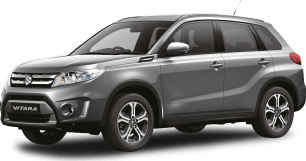
Suzuki invented the modern compact SUV. It’s funny how quickly people forget.
Yes, the pioneering Vitara of 1988 rode on a ladder-frame chassis so was not car based, but it was successful enough to show the way for others to follow. Chiefly, Toyota, with the seminal Corolla-derived first-gen RAV4 of 1994.
Fun fact: this earliest Vitara was also known as the Suzuki Escudo (Japan) and Sidekick (North America), as well as the GMC/Geo/Chevrolet Tracker and Pontiac Sunrunner (USA), Asüna Sunrunner (Canada), and perhaps most evocatively, Wanli WLZ5020XLD and Guangtong GTQ5020XLZ (China).
So, respect to the Vitara, especially since it has evolved over four redesigns, eight different badges and 33 years, from fashionable 4x4 leisure machine to 4x4 off-roader (1998 FT and 2005 JT Grand Vitara) to 2015’s monocoque-bodied JY-series small SUV.
How does the 2021 JY Series II Vitara 1.6 auto stand up? Keep on reading.
Overall, the Swift is pretty good value. It’s got a sensible layout, a clever process to set up and offers quite a lot of comfort within a cosy package.
Given the price and the layout, it’s worth considering if you’re also shopping for a forward-fold camper-trailer, which likewise offers an internal living area.
The Vitara still looks great, offers impressive real-world fuel economy, possesses a sporty chassis bringing sharp steering and involving handling and roadholding characteristics, and is expertly packaged. No wonder it has remained a consistently strong seller for Suzuki.
But its lack of driver-assist safety equipment, lethargic low-rev performance and stiff, loud ride speak of a small SUV of another era. In too many key areas, it’s rapidly dating and falling behind most rivals nowadays, and can no longer rely on low pricing anymore now that the cheapest base auto is $27K plus ORC.
Still, if you don’t care about the lack of AEB… or a digital speedo, digital radio, rear cupholders or highway quietness, then there’s still a fair bit of fight left in the plucky little Vitara.
Suzuki’s been building them for over 33 years now and such experience shows.
The camper’s interior is quite cosy, but there’s room to move around or to relax in the dinette, and the beds will become de-facto play areas for young children.
The dinette converts into a small bed, but if you’re thinking about using it as a full-time bed for a child, opt for one of Jayco’s larger campers.
There's still plenty to appreciate the instant you slide yourself on to those lofty cushions.
The Vitara is packaged to transport a smaller family (and include much of their clobber) with ease, from the moment the big doors open. An excellent driving position that inspires confidence, heaps of storage in the doors and centre console, good vision and a light and airy ambience are further drawcards.
And while the seats may seem a bit wide and flat to begin with, they're amply supportive over an extended time in them, with a softness to their shape and texture that makes them quite cosy. No lumbar support for the driver is disappointing, though.
Still, it’s easy to see why the Suzuki remains such a consistent seller after all these years without change.
In 2021, the dash has held up pretty well, mainly due to clear instrument dials and Suzuki’s ever-present 7.0-inch touchscreen multimedia system that is ridiculously easy to operate. Never mind the hard and cheap-looking lower-lying plastics, the cabin is beautifully screwed together as well. And it's likely to stay that way for a very long time.
But there are annoyances, beginning with the lack of digital speedometer, especially now that the cheapest Vitara is a near-$30K proposition; for the same reason we’d have hoped for a DAB+ digital radio, auto lights on, rear-seat cupholders and more than just one USB port (located under the climate control system).
Getting in and out of the rear seat is simple, aided by wide doors and lofty seating, again on flat but ultimately comfortable cushions and backrest, though they neither slide or recline as with some other small SUVs. There's heaps of headroom; the raised rear cushion promotes a natural posture which is good for longer journeys, and enough room for three smaller adults to squeeze in. Larger feet can be tucked underneath the front seats too.
However, besides there being no device-charging facilities, you’ll also notice the lack of reading lights, rear air vents (though the front outlets' outputs do reach back OK) and beverage storage. At least the doors have space for a one-litre bottle and the overhead grab handles include coat hooks. And, like the front, it's all light and airy, with good sight lines for bored back-seat riders to stare out from.
Beyond that, the boot is fairly big and square, with a bi-level floor that’s good for hiding smaller items, while there are hooks, a light and 120V outlet for rear-seat occupants to snake some hapless charger cord to.
Cargo capacity is rated at 375 litres – raising to 710L with the 60/40 rear backrests lowered. It’s nice to see a good old-fashioned luggage board instead of the flimsy mesh items some rivals foist upon us nowadays.
All in all, a big, spacious and inviting interior that’s big on practicality and ease, but also showing its age in a few places.
Because the Swift Touring is so small and light, modern utes and SUVs are able to tow it pretty comfortably. With the Ford Ranger, for instance, as a tow vehicle I can see over the top of this camper-trailer to the traffic behind, and because it is so narrow, vision back along the side is quite generous, too.
The Swift’s weight has little impact on a dual-cab’s performance, and there’s only a slight rise in fuel consumption as the Swift doesn’t have similar aerodynamics to a large caravan.
Also, as its ball weight is so light, the Swift doesn't cause too much rear-end sag in the tow vehicle, even if it’s behind a passenger car.
Another advantage of the Swift’s slightness is that it’s easy to move around at camp, or drag onto the tow-ball if you have to hitch solo or don’t have a reversing camera.
For its role shifting a small and light SUV around town, the 86kW/156Nm 1.6-litre twin-cam 16-valve four-cylinder petrol engine provides sufficient if unexciting performance, and a big part of that is the fast-acting and responsive six-speed torque-converter automatic gearbox.
While the Vitara will never be victorious in the traffic lights grand prix, there’s a substantial amount of flexibility within the engine’s rev range, with maximum power coming in at just 200rpm shy of the 6200rpm red line. So, you need to really prod that pedal down if extra muscle is required, and with that there’s quite a lot of mechanical noise coming through, but it isn’t coarse.
Using the big and well-placed paddle shifters helps to draw out a few extra morsels of oomph, but the fact is, compared to the CX-3’s 2.0-litre or HR-V’s 1.8-litre engines, the Suzuki’s has to work hard – and for longer – to cover the same ground at anywhere near approaching the same time. The aforementioned rivals' effortless, torquey response just isn't available to be enjoyed. For that, you'll need the terrifically muscular Turbo.
That’s a pity really, because the Vitara’s chassis is one of the more involving and fun ones in the small SUV class.
Thanks to a light helm, tight turning circle, rear camera, large exterior mirrors and an appreciable amount of all-round vision afforded by the large glass areas, nipping in and out of small traffic gaps or slotting into tight parking spots just isn't an issue in the Suzuki. It feels bred for the urban jungle.
Equally, the Vitara's fast and eager steering provides quick and crisp handling out on the open road as well, with the front end feeling light and agile yet nicely balanced as well. Even through ragged turns, the Suzuki remains on track. Over gravel surfaces it can be driven with reassurance that the traction and stability controls are always there to reel any slides in. It’s very easy and rewarding to punt the Vitara along at speed and with lots of confidence.
But the ride is a little firm in some places, there’s far too much road and tyre noise intrusion and – after a while – the engine’s constant revvy nature becomes a little tiresome.
Note that the fact that Suzuki did not bother engineering this powertrain to take AEB is reason to believe that there probably isn’t much life left for the M16A engine beyond this generation of Vitara.