What's the difference?
People with camper-trailers are increasingly looking to push their travel boundaries and so they head off the bitumen, onto dirt roads and go bush.
But on-road camper-trailers are not suited to cope with the extra stresses that dirt-road or gravel-track driving bring, which is why campers better equipped for light-duty bush driving, such as Jayco’s Outback versions of its models, are finding favor with buyers.
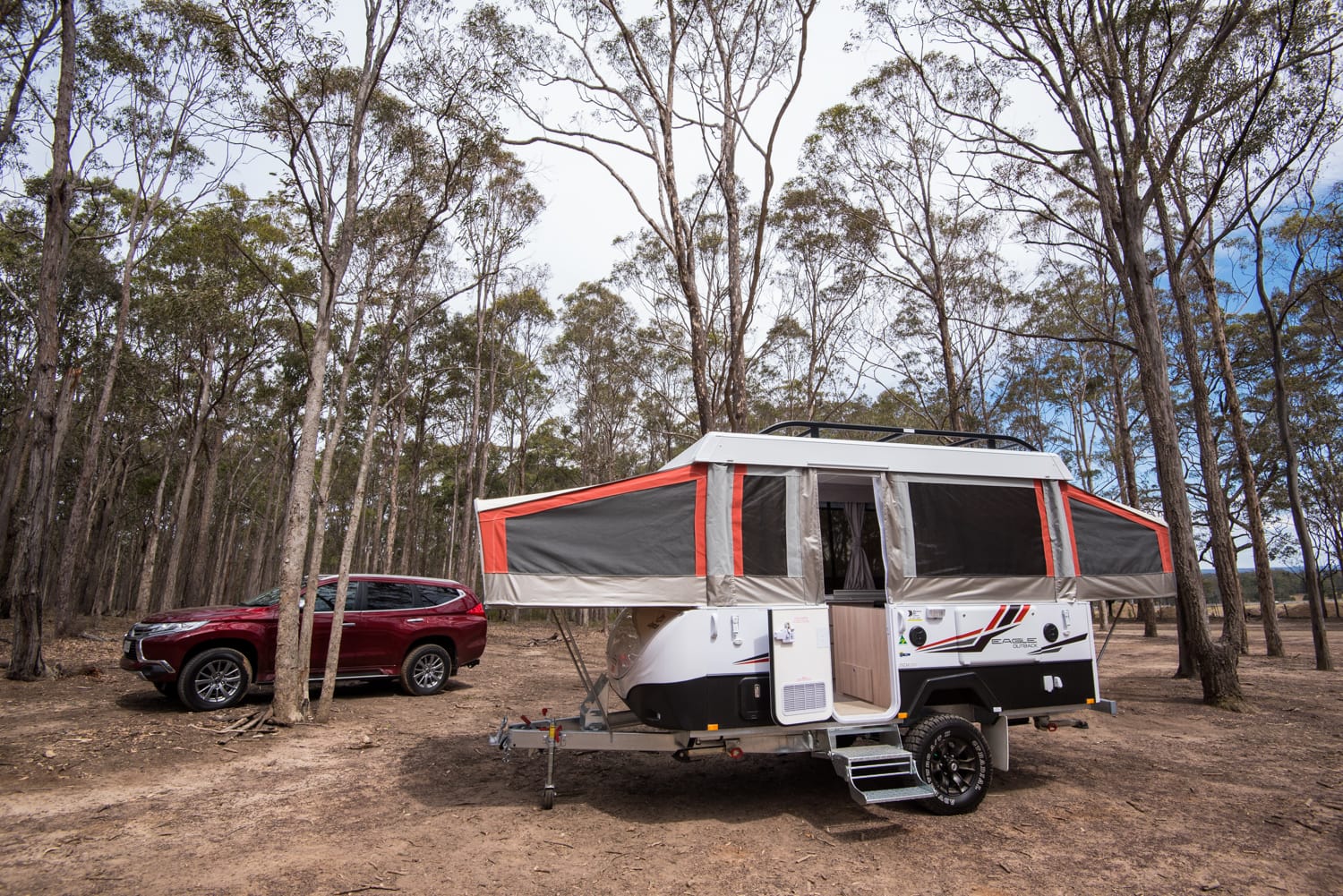
We took an Eagle Outback into the bush to check it out.

The Mini Countryman is the not-so-mini cousin to the iconic and smaller Mini Cooper.
The new generation offers a larger body-size, fun new interiors and a whole suite of updated technology.
We're in the flagship John Cooper Works grade in Favoured trim to find out if this small SUV is still urban-friendly and fun after all of these changes.
The Jayco Eagle Outback, for me, is an example of a camper-trailer getting closer to what I reckon a truly off-road-capable Jayco camper will be like.
There's nothing in Jayco's current line-up that offers comfort and full functionality and is also capable of tackling decent off-roading, so we're looking forward to testing Jayco's first line-up of dedicated off-road campers, including the JTrak Outback and Outback X.
The new Mini Countryman John Cooper Works in Favoured trim offers everything you’d expect it to - the iconic Mini styling, a powerful driving performance and a well-equipped cabin. It’s a wonderfully quick urban dweller that you can park anywhere but is just as happy on the open-road. For me, this is pure fun and offers more personality than a lot of its rivals.
These Jayco camper-trailers have a familiar touring-friendly floor-plan – check out the accompanying photos for proof of that – and most adhere to a similar approach to interior functionality – neat and simple – and that’s well suited to those who venture off the blacktop and hit the dirt.
Interior height is 2070mm, standard for campers of this type, so there’s plenty of stretch space for those of us not gifted with the vertical inches of Collingwood’s Mason Cox. Bench height, also standard for a camper-trailer, remains just lower than an average bloke’s hip so stooping to work in the kitchen is still an issue, but that’s part and parcel of the lifestyle, so stop whinging and get used to it.
Looking from the door, to the left is the front bed and club lounge; along the wall is the kitchen area (replete with four-burner stove, Dometic 95-litre fridge*, storage drawers and pantry); and to the right is the rear bed and dinette area. (* Outback models get the 95-litre fridge; Touring models get the 90-litre fridge.)
Overhead interior lighting includes LEDs for the main area and reading lights for the beds; there’s a fan for the beds.
There are also power points and USB port.
The cabin of the Mini Countryman doesn't feel like it belongs in a small SUV. The legroom is still best up front but the second row offers more than enough space for taller adults. It will be most comfortable for four rather than five adults, though.
The electric front seats have large side bolstering and decent padding but they are on the firmer side. You get a little bit of fatigue on a longer trip but around town they’re great and the massage function on the driver's seat is strong.
The rear seat is even firmer than the front and set like a stadium seat, so it won't be as comfy for adults on a longer trip. The fold-down armrest adds some bolstering.
While the storage looks a little odd at first, all of the cubbies are quite functional. There's a lot of them, too, and the dual shelves underneath the starter-knob are particularly handy for your larger 'small' items, like phones and sunnies case. This is where the wireless charging pad is, too.
The glove box can fit a manual and the little centre console is kind of adorable but still fit all of my keys and wallet.
The sliding armrest is a nice touch and there's a couple of USB-C ports underneath it. There are two large cupholders, two drink holders and small storage bins in the doors.
In the rear you get a drink bottle holder in each door, two map pockets, two USB-C ports and two cupholders.
The circular multimedia screen looks great and once you get used to how the menus are accessed and the little shortcuts, it’s a fairly simple system to use while on the go.
The touchscreen is fairly responsive but you'll need to do wide swipes across to switch the menu screens.
I’m not a massive fan of having to access a screen for most of your functions but do like the way climate control remains on the screen at all times and it's just the fan function that needs a couple of extra toggles.
The multimedia system is run by Android Automotive and has wired and wireless phone mirroring. The Apple CarPlay maintained a steady connection this week with my iPhone 15 Pro Max and the built-in sat nav is easy to use.
Rounding out the interior is the large 505L boot and if you want more storage options, the back row has a 40/20/40 split-fold.
The loading space has a small lip, and a handy storage compartment underneath the floor which holds the tyre repair kit and other items you don’t want rolling around. JCWs get a hands-free powered tailgate, which is always handy after a big shopping trip.
This single-axle camper – at 5060mm long (including drawbar), 1910mm high, 2240mm wide, and with a 1270kg tare weight – towed smoothly behind the Mitsubishi Pajero Sport we used on this review.
It sat snug and steady on the towball (with a 150kg download) during open-road driving, as well as during short sections of slightly bumpy gravel track and undulating dirt road.
The Eagle Outback has a hot dip galvanised Endurance Chassis riding on Jayco’s own JTech coil-spring suspension set-up.
Please note: Jayco’s Outback models are designed and engineered for, at worst, dirt roads and gravel roads, not 4WD tracks. Do not think that because these campers have been branded ‘Outback’ that they are actually able to tackle hard-core off-roading.
Even if you don’t love the design, the power and performance of the turbo-petrol engine will win you over. It’s just pure unadulterated fun on the open road and in the city. You get a total hot-hatch experience, despite the Countryman being an SUV.
The adaptive suspension feels a little stiff when you’re going over uneven road surfaces at higher speeds and road noise also creeps in, but around town this is a comfortable ride.
Visibility is great, even in heavy rain with a child's car seat installed in the rear (we had a mix of weather on test). Thanks in no small part to the all-wheel drive system it felt sure-footed in the wet and I felt confident this car would do everything I asked of it.
The firm steering makes for a nimble on-road experience no matter the situation and you have gear-shifting paddles on the steering wheel.
There’s also a 'Boost' mode that wrangles the top performance out of the suspension, steering and engine for when you want more control.
You can park the Countryman just about anywhere and the 360-degree camera view system is excellent quality. It’s easy to park, even in small, tight car parks.