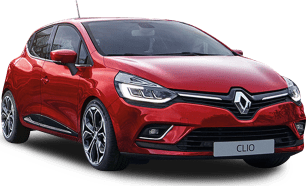
What's the difference?
I'm going to reveal something of myself here - I used to be a RenaultSport Clio owner. This is what the purists call what we now know as Clio RS, and I find myself constantly corrected yet unrepentant. It was a 172 - a nuggety three-door with wheels that looked too small, a weird seating position and a 2.0-litre naturally aspirated engine that was big on torque as long as you belted it.
It was a classic and you could still see the links back to the epoch-making Renault Clio Williams, that blue and gold Mk 1 Clio we never saw in Australia that redefined the genre. The current Clio has been around for four years now and I even drove this current RS Clio at its launch in 2013, memorable for the sudden bucketing rain that drenched the circuit and made things very interesting indeed.
This Clio was a big change from the cars that went before - slimmer-hipped, less aggressive-looking and with a 1.6-litre turbo engine, five-door-only body and (gasp!) no manual, just Renault's twin-clutch EDC transmission. It was a hit, at least with enthusiasts. Back then it was the dawn of a golden age in small hot hatches. But that was then, this is now. With a small power bump and a couple of features thrown in, is the ageing RS still at the pointy end?
It is highly unusual to drive around in a bed, but that’s what it felt like we were being asked to do with the new and terribly exciting Tesla Model 3 Performance.
Tesla doesn’t do media launches, nor traditional marketing, so everything about this event was predictably peculiar, but when we were told this new car was causing so much excitement that we should pull a sheet over it every time we stopped, to avoid people photographing it, or touching it (“if someone tries, just politely ask them to stop” as we were advised) we hit peak weirdness.
Eventually, they did agree to pull the sheet off one and let us have a look at the most exciting car Tesla has ever made that’s not a Cybertruck.
The Performance is the Model 3 Tesla engineers and designers always wanted to make. Clearly, it was going to be called the 'Ludicrous', because some staff kept stuffing up and calling it that. It’s a shame the name wasn’t used, but at least it still gets an 'Insane' mode.
They really wanted to go all out with the original Performance version, but “a guy called Elon” didn’t want to add all the complexity that required at the time - he was focused on quality issues and ramping up production - but this go around he has let them have their heads, and encouraged them to go hog wild.
That means an entirely new power unit at the rear, staggered 20-inch wheels for sportier turn-in, aerodynamic changes for more downforce and less lift, new seats and the fitting of active dampers to a Model 3 for the first time, to help provide proper, track-ready handling.
We set out into the embrace of the adoring Los Angeles public (truly, no city on Earth boasts so many Tesla owners, they are everywhere) to find out if all the fuss is worth it.
The Clio RS is still a ton of fun and in Cup spec, probably the best compromise between price and livability. Despite its advancing years (it turns five this year, so ready to start kindy) and big brother Megane hogging the limelight with a fancy new model on the way, the Clio is a stayer. It's missing some frustratingly obvious things like CarPlay, AEB, rear airbags and rear cross-traffic alert, but it's hardly alone in the segment.
With the departure of the Fiesta ST, though, the Clio returns to the top of the list of best small hot hatches on sale today.
The Model 3 Performance is one of those cars that’s undeniably impressive in almost every way, and hugely fast in absolutely every way, and yet can somehow still leave you feeling slightly cold. Or at least damp with fear sweat.
It’s not my kind of sports car, but if you love speed, and EVs, and Tesla, you’re gong to think it’s the Queen Bee’s knees.
Publishers: Please place the following in BOLD after the verdict:
Note: CarsGuide attended this event as a guest of the manufacturer, with travel, accommodation and meals provided.
The Clio is a handsome small car but nothing out of the ordinary until you apply the very cool Liquid Yellow paint. That hue really is quite something and works even better with the black alloys of the Cup chassis.
The car has some lovely surfacing and in a recent-ish refresh, the slightly odd headlights were reworked, as were the front and rear bumpers which now link to the RenaultSport Megane. Sorry, Megane RS. The RS flag signature lighting is a nice touch, acting as DRLs at the bottom corners of the front bumper.
The lovely organic shapes of the Clio's sides still look good and the rather tough rear end with the chunky diffuser leaves you in no doubt that it's the proper RS not the halfway-house, 1.2-litre GT-Line.
Inside is starting to look its age, but graceful, a bit like Jamie-Lee Curtis' or George Clooney's embrace of grey hair. There are still some of the sharp edges I didn't like. It's certainly a Renault to look at and ergonomically works pretty well. One thing that has been fixed at some point is the switch on the gear selector - it won't bite you if you curl your finger underneath when you press it. You might think that's a small thing, but when you did it, damn it hurt.
Tesla’s design folks waxed long and loud about how they’d finally been able to visually lift and separate this Performance Model 3 from the basic one and they point to the new front and rear fascias, more aggressive styling, aerodynamic flicks, integrated cooling ducts, rear diffuser and carbon-fibre spoiler, which are there not only to look good, but to to “optimise lift balance and high-speed stability”.
Now, I’ll grant you it’s better than a normal Model 3, and that we were regularly approached by excited Tesla fans asking “is this the NEW PERFORMANCE OH MY GOD I WANT ONE NOW?!?"
But honestly, I still think it’s a bit subtle, and that includes the strange little 'Performance' sticker/badge on the rear, which does look a lot like the Ludicrous symbol that Elon loves, from the awful movie Spaceballs, but Tesla staff insist it’s not, nor is it Plaid.
Clearly, the design tweaks are there for a reason, and train spotters will note the differences immediately, but it’s still just not the most exciting car to look at, nor is it anywhere near as exciting to behold as it is to drive.
The Clio's interior is certainly snug. Rear seat passengers do okay for legroom but headroom is a mite marginal with the falling roofline for six footers. There are no cupholders out back, that curious French habit of supplying just a couple of cup receptacles of different and weird sizes persists. The front doors have space for bottles, the rears do not.
The boot is class-competitive at 300 litres (worth knowing the Trophy loses 70 litres to the Cup) and with the seats down stretches to a claimed 1146L.
Inside, the big news is the new seats. Tesla was happy to admit the pews fitted to the previous Performance just weren’t up to the job of holding humans in place when applying so much G force.
The new 'Sport Seats' feature enhanced side cushioning and side bolsters for better lateral support during dynamic driving. And they can also be heated and ventilated.
Elsewhere, there’s some carbon-fibre trim on top of the dash, with a Tesla-first weave pattern to further help the Performance stand out within the Model 3 line-up.
Other than that, it’s pretty standard Tesla sedan, which will be familiar if you’ve ever caught an Uber in Los Angeles. Spartan, minimalist, slightly cheap-feeling.
As for the practicality of the tech, I'm still against the giant 15-inch tablet-style touchscreen, for everything, the replacement of an indicator stalk with buttons and not having a speedo right in front of your eyes, where you need it.
The iconic 'Liquid Yellow' ($750 option) Clio I had for the week was the Cup spec chassis. The Clio RS 200, as it is officially known, comes in two specs - Sport and Cup - and there's a Trophy 220 at the top of the range. I had the Cup, which retails at $32,490 (plus on-road costs). The RS220 Trophy, with a bit more poke and stuff, weighs in at $38,990 if you're interested.
The Cup spec is heavily based on the more affordable ($30,990) Sport, which means you get 18-inch alloy wheels (painted black, so watch those kerbs), climate control, four speaker stereo, keyless entry and start (the "key" is still that unwieldy keycard style thing), reversing camera, cruise control, front and rear parking sensors, fog lamps, LED daytime running lights, sat nav, auto LED headlights, auto wipers, launch control, leather bits and pieces and a tyre inflation kit instead of any kind of spare.
The 7.0-inch 'R-Link' touch screen software runs the four speaker stereo with DAB digital radio, Bluetooth and USB. If you get the optional RS Monitor, there is a full-on telemetry system from which you can save your, er, "track day" data and overlay in Google Maps to compare with your mates' or past efforts. You can also change the piped-in engine sound to various different sound effects which are delightfully silly.
Android Auto is part of the breathtaking $1500 'Entertainment Pack' option that includes RS Monitor (which used to be standard) and no, there's no Apple CarPlay. Leather is a further $1500.
Bottom line is that you do get a decent spec bump from the $30,990 Sport along with the more capable (and less comfortable) Cup chassis.
Tesla says the price for the Model 3 Performance will be "starting at" $80,900, plus on-road costs. There's no word on whether there will be different spec levels and the company does not like answering questions or providing information.
What we also know about Tesla is that the price quoted could move down, or up, at any time, quite randomly, so if phrases like "residual value" or "depreciation" are of interest to you, it can be a challenging brand.
That side swipe aside, this sounds like astonishingly good value for this much performance from your Model 3 Performance. A Hyundai Ioniq 5 N would give it run for fun and involvement, if not brand fans, but it's $111,000, while a Porsche Taycan kicks off at $164,000 (it is a lot more car for the money, but it might struggle to keep up with this Tesla, at least in base model form).
In terms of equipment, it's pretty much standard Model 3 fare, other than the fast bits and a spot of carbon here and there.
You get 'Autopilot' included, of course, but you can't use all of its 'Full Self Driving functionality' on Australian roads. Not yet, anyway.
The 200-equipped RSes pony up 147kW/260Nm, which is pretty much bang-on the obvious competition (Peugeot 208 GTI and the outgoing Fiesta ST), driving the front wheels through Renault's six-speed EDC twin-clutch. Unlike those two, there is no overboost function.
Dieppe's finest sprints from 0-100km/h in a claimed 6.7 seconds, pulling along a kerb weight of 1204kg.
If you’ve ever driven the previous Model 3 Performance you’ll know that it could well have come with Space X badging (arguably Elon’s more impressive engineering achievement), because it really did thrust rather than accelerate.
But this time the engineers wanted to go all out. Customers appreciated the incremental performance they got from the last Model 3 Performance version, but they told Tesla they wanted more.
With many enthusiasts among Tesla's engineering and development team, they looked to unlock the performance potential of the platform.
So, that meant a whole lot more madness and torque thump. It comes from a new Performance 4DU, an all-new drive unit - featuring an entirely new rear motor that uses bar-winding technology - unlocking 22 per cent more continuous power, 32 per cent more peak power and 16 per cent higher peak torque delivery.
Overall figures are 380kW and 740Nm, but looking at them written down, they seem big, yet not as big as they feel in this car, as it’s shoving you from a standing start to 100km/h in three seconds flat.
It feels faster. Sick-making fast, even.
Renault claims 5.9L/100km on the combined cycle but, yeah, nah. My week was admittedly filled with plenty of horseplay and spirited driving, yielding 11.4L/100km. If you were careful you may fare better - but not that much better.
The fuel tank is a fairly standard 45 litres. It requires 98RON premium unleaded.
Despite being heavier and gruntier, Tesla claims the new Performance Model 3 manages to be more efficient than the one it replaces, albeit delivering just a two per cent reduction in energy consumption. Claimed energy usage is 16.7 kWh/100km.
Tesla claims a total range of 528km on the WLTP, which is obviously going to drop if you drive it the way its makers clearly intended.
Using a Tesla Supercharger, you can add 228km in 15 minutes and... that's all Tesla will tell us. There are no official figures available for how long a full charge takes, on either a Tesla charge or a home wallbox of your own.
The RS has always had a belter of a chassis. The Cup chassis became a thing just over a decade ago and is lauded by the fans as The One To Have. I've not always been convinced of this as my earlier drives of the Cup-equipped machines have usually been in close proximity to the Sport chassis.
The Cup is slightly lower than the Sport, with 15 per cent stiffer springs and dampers and perhaps more importantly it scores 18-inch wheels with Dunlop Sport Maxx RT2 tyres, which you can reasonably expect to be a bit firmer than the 17s with Goodyear F1s on the Sport. And they are.
However, in most situations, the Cup chassis is perfectly benign. You certainly feel the bumps and lumps, but you haven't bought a Cup chassis for Lexus-like isolation. It's certainly sharper than the Sport chassis and when you're really giving it a go around the bends, the comfort deficit is more than made up for by the extra grip and poise.
The RS has always had a belter of a chassis.
The chassis is aided and abetted by a torquey 1.6-turbo that cheerfully...no, gleefully spins to the redline which could do with another thousand revs, but that's forced induction for you. The aluminium shift paddles need a good positive pull to get a gear, but that gear is delivered quickly and effortlessly. The Clio is a great deal of fun in Sport and Race modes, with throttle mappings and gearshifts becoming more aggressive as you switch through the modes.
The brakes are tremendously effective and the electronic limited slip diff (*cough* brake-based torque vectoring) ensures you'll hit your apexes and the tyres spend more time gripping than spinning.
But it's not all hairpins and off-camber left-right-lefts, is it? Plenty of owners have to live with the car in traffic day to day. Driving the Cup in isolation, I've changed my mind about it. I reckon it's the best of the two chassis settings. The city ride is better than decent, with the hard edges potholes chamfered off by the dampers and decent compliance. It's not too noisy, either.
Very occasionally, one drives a car that makes the human body feel inadequate to the task. I would have worried that I’m getting old, that my body is simply too flubby and my brain too broken, to cope with the kind of wild acceleration and brutal g-forces the Model 3 Performance delivers.
But, fortunately, I had a videographer in the passenger seat, a much younger man who loves fast cars, and he kept threatening to vomit when I drove it hard, too.
I’ve driven quite a few cars that you can use make your passenger sick, or hurt their necks - one obvious competitor in the shape of a Porsche Taycan Turbo S comes to mind - but it’s very rare that a vehicle is so intense it can make you, the driver, feel bilious.
Yes, you do bring this on yourself, by choosing to push this Performance anywhere near its limits through particularly sharp and intestine-shaped roads like the canyons outside Malibu Tesla chose to launch it on.
On longer, sweeping bends it was far more of a joy, and less physically punishing, but in the tight stuff it often felt like corners were being thrown at you, as if you were driving behind the Millennium Falcon and being pulled along in its wake.
The brakes, special new sporting ones with track-ready pads, were up to the task, even though it often felt like they couldn’t possibly pull you up from the speeds you were doing.
And yes, it was entirely my fault that the very first time I even gently prodded the throttle and it launched me ahead past a California Highway Patrol officer, that was my fault too. Three minutes into the drive, holding an American fine, I had already deduced that perhaps this car was too fast for my own good.
But lots of EVs are fast in a straight line, you’re really comparing the length and depth of your “oooophhh” sounds at this point, but where this one succeeds is by being a lot better in the handling and ride and cornering departments than most.
Tesla’s stated goal with this car was to move beyond straight-line speed, to become more than a one-trick pony, and to do that it’s given the Performance a stiffer structure overall and updated the springs and stabiliser bars.
Aerodynamic changes have reduced drag by five per cent, delivered a 36 per cent lift reduction, and a 55 per cent improvement in front-to-rear lift balance.
Tesla’s own, in-house version of adaptive dampers, not an option but included in every Performance, work with the car’s 'Vehicle Dynamics Controller' through its various modes - 'Insane' and 'Track' being the most… ludicrous - to immediately respond to driver inputs.
The Performance rides well on LA’s awful concrete freeways but feels absolutely nailed down when you attack even a bumpy driver’s road.
This version also has a lot more power going to the rear wheels, to help it feel more sports-car playful and to fire out of bends the way an enthusiast’s car should. And make no mistake, I met them, the people behind this car are serious driving enthusiasts (although they demur, slightly, on whether their boss is one).
Track mode will allow some serious adjustability, drifting ability and fun, so the kind of people who want to hurl around a racing circuit in silence will love it.
Perhaps the only let downs are that it still feels a bit austere inside, just not very special, and that the steering is just a bit digital, soft and uninvolving, compared to the cars they clearly benchmarked against - BMWs and Porsches.
On board the Clio is four airbags (no curtain coverage for those in the rear), ABS, stability and traction controls, a reversing camera and two ISOFIX points along with three top-tether anchors.
The Clio was awarded a five-star ANCAP rating in November 2013.
Tesla provided no information about safety for the Performance Model but it is assumed it will be unchanged from a standard Model 3.
Aside from Autopilot that means auto emergency braking, lane keep aids, and instead of blind-spot monitoring, it gets the surround radar view and blind-spot cameras when you indicate.
The latest Model 3 has an additional centre airbag for a total of seven, as well as additional bolstering where the doors meet the body in response to requirements in its American home market.
It should be able to carry its maximum five-star ANCAP safety rating, which the original version achieved in 2019.
Renault says it was the first European maker to offer a five-year/unlimited kilometre warranty in Australia, and who are we to argue? The package also includes up to four years of roadside assist and three years of capped-price servicing.
Renault expects to see you just once a year or every 20,000km, which gives you a bit more headroom than some similar service plans, at least on the mileage. The first three services will cost no more than $369 unless you need a new air filter ($38) or pollen filter ($46). At 60,000km or four years you'll cop $262 for a set of spark plugs. The company's website also suggests if the Clio doesn't like the state of its oil, it will beep at you until you have that attended to.
Again, we've been asked to assume the Performance will come with Tesla's standard four-year/80,000km warranty and roadside assistance. And that the battery and drive unit will fall under an eight-year/192,000km warranty, whichever comes first.
Tesla says it monitors its cars to ascertain when they need servicing, and so it is based on a case-by-case situation. Every 12 months/20,000km is recommended for a general check-up, and includes tyre rotation.
Wiper blades, brake fluid and cabin air filters need replacement every two years while the air-con service is every six years.
Of course, there are no oil changes, filters or spark plugs to replace, and even brake pad wear is less than on an ICE vehicle because of the regenerative braking system. Although it will likely be higher in the Performance variant.