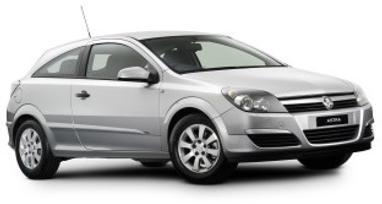
Used Holden Astra review: 2004-2009
By Graham Smith · 26 Feb 2018
Before the Global Financial Crisis triggered a move by Holden to source cars from Korea the German designed, Europe-built Astra was one of its most popular small cars. It arrived here in 1996 and quickly established its credentials against the leading small car models. The all-new AH Astra was a stylish, small front-wheel drive car with a range of models, including a sporty coupe, a practical hatch, a wagon, a hot turbo, and a convertible. With its European roots the Astra delivered on the expectations of a dynamic drive for those who wanted to enjoy the journey. An extensive range of body styles promised a model for everyone, no matter their needs and wants. High on practicality, the five-door hatch and wagon were the family choices. The coupe was aimed at those who sought a stylish ride and didn’t have a tribe to transport; it had the looks to impress, but would only take four adults. For those who wanted a more thrilling ride when they got behind the wheel there was the SRi, which came with a regular four-cylinder engine and a turbocharged version as well. There was also a good choice of variants, with the CD kicking things off and the CDX and CDXi offering plenty of features, and the SRi hot hatch with all you could want plus the performance punch of the turbocharged engine. Given its position at the entry-point to the model range the CD was quite well equipped. Included in a relatively long list of standard features was a CD player, MP3 compatibility, and seven-speaker sound, air conditioning, tilt and reach adjustment for the steering column, remote keyless central locking, adjustable headlights, multi-function control panel, multi-function steering wheel, power mirrors, power front windows, speed dependent stereo volume, and cloth trim. Metallic paint was available as an option. The CDX was even better equipped, adding 16-inch alloy wheels, cruise control, CD stacker, a leather-trimmed steering wheel, power rear windows, and a trip computer to the CD’s list. It was a similar tale with the CDXi, which in addition to the features of the CDX also had climate control air conditioning, sports front seats, sports steering wheel, and specific trim. A diesel option was added in 2006 with the arrival of the CDTi, which was similarly equipped to the CDXi. The hot SRi was also added to the range in 2006. Available as a hatch or coupe it was powered by a 2.0-litre turbo four and had either a six-speed manual gearbox or four-speed automatic transmission. In keeping with its sporting pretentions the SRi came standard with lowered sports suspension, a leather sports steering wheel, sports pedals, roof-mounted rear spoiler, premium sound system, leather trim, and a space-saver spare tyre. Fresh air fiends were able to get into a convertible in the form of the 'Twin Top' in 2006. It had a folding steel roof for the convenience of a hardtop and the fun of a soft-top, and came with a 2.2-litre engine and manual gearbox or automatic transmission. Being of an age before the digital revolution the AH Astra didn’t have many of features regarded as essential today. Missing from its kit of tricks were things like Bluetooth, it wasn’t possible to sync an iPhone or Android device, sat nav wasn’t offered, and while there was a control panel it wasn’t a touch screen. Similarly you wouldn’t find a reversing camera, parking sensors, a park assist system, or a sunroof. Being European the cabin was well laid-out and all controls fell readily to hand. The basic trim was cloth, but some higher level models had leather as standard. There was good head and legroom in the front, the driver’s visibility was good, and even those if the rear found themselves quite confortable. Overall the cabin was comfortable, appealing and quiet, with little road noise to bother the inner calm. Depending on the model, cupholders were provided in the front and rear. With 350 litres of cargo space when the rear seat was up, and 1270 litres when it was down there was plenty of space to carry luggage in the hatch. The bulk of the AH range had a 1.8-litre fuel-injected double overhead camshaft four-cylinder engine. It ran on regular 91-octane unleaded petrol, and at the time of introduction put out 90kW at its power peak and 165Nm of torque at its maximum. That was increased to 103kW/170Nm in 2007. Holden answered the call for a diesel in 2007 and released the option of a 1.9-litre overhead camshaft four-cylinder engine. At its performance peaks it put out 88kW (118 horsepower) and 280Nm of torque. The SRi came complete with a choice of the regular 2.2-lire four-cylinder engine with 110kW (147 horsepower) and 210Nm, or the sizzling turbocharged 2.0-litre engine with 147kW (197 horsepower) and 262Nm. The downside of the turbo engine is that it ran on 95-octane premium unleaded. When the convertible arrived in 2007 it had the 2.2-litre four-cylinder engine. The transmission choices were a five-speed manual gearbox or a four-speed automatic transmission, and all were front-wheel drive. Diesels and the SRi had a six-speed manual gearbox. Europeans place a high regard on handling and performance and the AH Astra didn’t disappoint on either front. With MacPherson strut front suspension, and also independent rear suspension, the AH handled well exhibiting good grip and balance when cornering, and the ride was comfortable without being soft or soggy. The SRi Turbo hot hatch set the mark for performance in the range, but even the lesser, smaller engine cars were impressively speedy. The CD and CDX had a good array of safety features, with lap/sash seats belts in all five seating positions; the front belts had pretensioners and load limiters as well. There were also front and side airbags for the driver and front passenger. Active safety features included ABS braking and emergency brake assistance. The CDXi and CDTi had the additional safety of head airbags for those in the front and rear seats, and traction control. Electronic stability control was a feature of the SRi Turbo. Lap/sash seat belts in the rear allow the use of a baby car seat, but there were no ISOFIX mounts. The earliest examples of the AH are now 14 years old, which makes them old and more likely to have problems from normal wear and tear. When buying an older car it’s important to understand that it is just that, old, it’s not new, so it will have problems a new car won’t Anyone buying an AH Astra with the 1.8-litre petrol, or 1.9-litre diesel engine needs to be aware that the engines have cam timing belts, which need to be changed regularly. Ignoring the change is risking serious engine damage should a belt brake, as many did in the previous model. Check for signs of a hard life when driving a turbocharged SRi, smoke from the tailpipe under hard acceleration is a good indicator of wear. A service record is a must. It gives a good indication of a caring owner, and alternatively if the servicing has been neglected one that doesn’t care. Capped price servicing didn’t apply to the AH, but service costs are not excessive. The service interval is 15,000 km or 12 months. The Astra was generally well built and shouldn’t squeak or rattle to any major degree. If squeaks and rattles can be heard it could indicate the car has been in a crash. Being a relatively old model now it’s a good idea to look for the external signs of crash repairs in the form of misaligned panels or mismatched paint. Shop around for one that hasn’t done a lot of kilometres, has been regularly serviced, and appears to have been well looked after. The new car warranty on the AH was three years/100,000 km, but that’s well and truly expired. MORE: If anything crops up, you’ll probably find it on our Holden Astra problems page. Allan Caplan: Our AH wagon was 10 years old when we bought it in 2016 and had done 160,000 km. It’s been a good car, reliable, and cheap to run. Phil Ward: We’ve had our 2007 CDX wagon for more than 10 years. It’s easy to park, handles well, has a large boot space, and in that time it has been very reliable. Nicole Jenner: I’ve got a 2007 CD hatch and find it zippy, reliable, and economical. It’s a great car. Sarah Roberts: We bought our 2005 CD hatch new. It’s the best little car we’ve ever had, it handles like a dream, is economical, and its reliability has been commendable. The only problem is the paint, which is sunburnt and patchy. Honda Civic A small car class leader with quality, reliability, and performance. Hyundai Elantra Good value for money and standing the test of time well. Mazda3 Perennial class favourite. Ticks all the boxes. Safe, sound and reliable, but it must be in good condition.







.jpg)