



Mitsubishi Triton News
Major HiLux rival scores hidden upgrades
Read the article
By Jack Quick · 02 Apr 2026
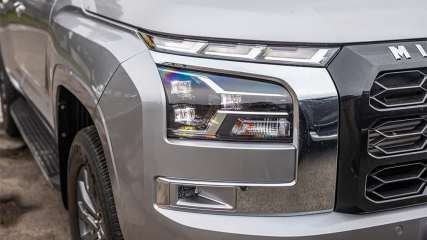
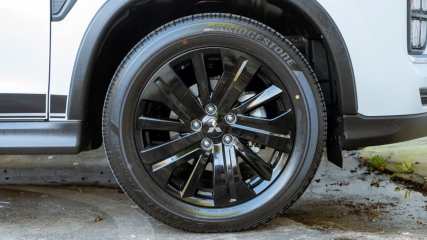
Mitsubishi has detailed the 2026 model year (MY26) update for its Triton dual-cab ute line-up ahead of its arriving at local dealers in May.A highlight change is a range of the entry-level manual Mitsubishi Triton GLX variants have been axed.As a result, the entry price has climbed to $37,090 before on-road costs for the GLX 4x2 single-cab chassis automatic.Only one manual trim is left, the GLX 4x4 dual-cab chassis which is priced from $47,940 before on-road costs.Pricing for carryover variants is up by up to $1000, depending on the variant, meaning the range now extends all the way to $65,590 before on-road costs for the GSR trim.However, it’s expected the forthcoming Triton Raider, as previously reported, will cost more than the GSR.Mitsubishi has redesigned the front and rear suspension systems for the MY26 Triton. The front has a lower spring rate and rubber body mounts, while high-response ‘Various Performance Setting’ valves have been added to the front and rear shock absorbers.Additionally, the rear shock absorbers have increased in diameter. This allows the ute to have improved ride comfort and reduced harshness, while maintaining agility.It’s worth noting that the GLX and GLX+ trim retain a heavy-duty four-leaf rear suspension set-up, while the GLX-R, GLS and GSR continue with a standard-duty three-leaf set-up.The flagship Triton GSR in particular picks up Yamaha performance dampers which are fitted horizontally across the front and rear of the chassis.These are claimed to improve straight-line and high-speed stability, while reducing noise, vibration and harshness (NVH).The Triton GSR also picks up the Mitsubishi Connect online telematics system. Using a Telstra 4G cellular modem, it allows for SOS emergency calling, plus remote connectivity features with the smartphone companion app.2026 Mitsubishi Triton Australia pricing:2026 Mitsubishi Triton Australia powertrain and efficiency:2026 Mitsubishi Triton Australia standard equipment:GLX highlights:17-inch steel wheelsAll-terrain tyres (4x4 variants)Halogen headlights7.0-inch digital instrument cluster9.0-inch touchscreen multimedia systemWireless Apple CarPlayTwo-speaker sound system (single-cab models)Four-speaker sound system (club- and dual-cab models)Manual air-conditioning (single-cab models)Climate control (club- and dual-cab models)Fabric upholsteryGLX+ adds:17-inch alloy wheelsRear differential lockFront fog lightsPrivacy glassSide stepsTailgate assist (pick-up only)Two rear USB portsDAB+ digital radioGLX-R+ adds:Black 18-inch alloy wheelsSuper Select 4WD-II (full-time four-wheel drive)Standard-duty suspensionBlack sports barCarpet floorLeather-wrapped steering wheelGLS adds:18-inch grey alloy wheelsBedliner (pick-up models)LED headlightsBlack exterior highlights (NEW)Electric folding side mirrorsDual-zone climate controlAuto-dimming rear-view mirrorKeyless entry and push-button startWireless chargerDashbound-mounted cupholders (NEW)Soft-touch interior trimGSR adds:Yamaha Performance Dampers (NEW)Black 18-inch alloy wheelsBody-colour grilleBlack lower front bumper accent (NEW)Wheel arch mouldingSailplane (pick-up inly)Roof railsLeather upholstery with orange accent stitchingUnique floor matsPowered driver’s seat2026 Mitsubishi Triton Australia optional equipment:The $1500 Deluxe option pack on the GLS adds:Leather upholstery with silver stitchingPowered driver’s seatHeated front seatsThe Terrain Pack (GLX, GLX+, GLX-R and GLS dual-cab models) adds:Steel front protection barSide protection barRear protection barTow barTow ballThe Electric Roll Top Plus Accessory Pack (GLX+, GLX-R, GLS and GSR dual-cab pick-up models) adds:Electric roll top tonneau coverTow barTow ballElectric trailer brake controller and harnessDuster and water defence kitCargo tie townBlack grille emblemA wide range of other option packs and genuine accessories are also available.2026 Mitsubishi Triton Australia safety:The Mitsubishi Triton received a five-star ANCAP safety rating based on testing conducted in 2024.Standard safety highlights:Six airbagsAutonomous emergency braking (AEB)Rear AEB (pickup models only)Blind-spot monitoringRear cross-traffic alertFront cross traffic alert ($NCO)Lane-keep assistAdaptive cruise control (automatic models only)Traffic sign recognitionDriver attention monitorFront and rear parking sensorsReversing camera2026 Mitsubishi Triton Australia warranty and servicing:The 2026 Mitsubishi Triton is covered by a 10-year, unlimited-kilometre warranty provided you service it at Mitsubishi dealers when required. If you don’t meet the schedule the warranty coverage drops to five years.There’s also 10 years of roadside assistance and 10 years of capped-price servicing.Logbook servicing is required every 12 months or 15,000km. Mitsubishi hasn’t provided servicing costs just yet.
Game over for diesel utes
Read the article
By Tim Gibson · 24 Mar 2026
Diesel utes have been the dominant forces in Australia for the past decade, but that could be about to change.The Ford Ranger and the Toyota HiLux have been the top two sellers in the past 10 years, and they combined for more than 100,000 sales in 2025.The pair have carried on this popularity into 2026, sitting at the top for January and February this year. Other diesel ute rivals such as the Isuzu Ute D-Max and Mitsubishi Triton are selling well. That could be all be about to change sooner than we thought. It could be the case that a perfect storm of external factors will wipe out the diesel in ute in Australia.There is a new factor is emerging that could accelerate the diesel ute’s seemingly inevitable decline. The price of diesel fuel has increased substantially more than petrol, approaching the $3 mark per litre.I went to fill up my diesel car the other day.As I pulled into the service station, a man had just finished filling up his V8 diesel LandCruiser 200 Series. $287 for 99L - he had not even brimmed the tank. You’d get a better rate when topping up your light aircraft with aviation fuel. He asked if I wanted to swap. I politely declined.No doubt big fleet buyers will be watching closely as the costs of purchasing and running these diesel utes shoots up, along with the potential increase in costs as NVES pressures creep in. Fleet sales are crucial to the success of the Ford Ranger and the Toyota HiLux, with them also contributing heavily to other ute brands.Fuel prices will also be an increasingly big head turner for private buyers. Alternatives such as the petrol plug-in hybrid BYD Shark 6 offer superior fuel efficiency when charged as well as being cheaper to fill up.Toyota announced its all-electric HiLux ute recently, which has been met with a mixed reception due to concerns over driving range and towing capacity, but it at least shows brands are already looking away from diesel. Chery’s incoming KP31 ute will debut in Australia this year with a diesel plug-in hybrid set-up, which is expected to have the 3500kg towing capacity. Something the Shark 6 currently lacks.The popularity of diesel hybrid set-ups will be an indication of the survival chances for the diesel ute in Australia. It could be argued the longer diesel prices continue to rise, the shorter the diesel ute's lifespan will be.Compounding this is new emissions laws.The Federal Government's National Vehicle Emissions Standard (NVES) delivered a rude awakening for some. The NVES sets emissions targets based on CO2 gram-per-kilometre limits. Vehicles sold that fall over the limit subsequently incur liabilities, which will attract hefty fines in the future for brands. Brands incur fines on vehicles sold, which have an interim emissions value of more than zero. Mazda, which sells its BT-50 ute in Australia among an internal combustion heavy lineup, accumulated a whopping more than 500,000 liabilities. Subsequently many brands, including Honda and Mazda have introduced priced increases across key internal combustion models this year.There appears to be two routes for brands. Either pass on the extra costs, or ditch diesel. Diesel utes could be about to skyrocket in price and brands scramble to account for fines on sales.In a more extreme example, Ford CEO Jim Farley recently threatened to axe the brand’s local engineering program responsible for the best-selling Ford Ranger.“Something your government, or any government, has to be very sensitive to around the CO2 glide path. We want to reduce our CO2 footprint, but there’s a level that the customer can’t afford, and not all duty cycles can be electrified,” Farley told CarsGuide.“It’s a completely open market and also pushing CO2 , arguably way beyond the customer requirements.“ needs to decide if they want to help us equalise the cost differential … because this is among the most expensive places to have engineers on the planet.”We have already seen somewhat of a winding back of Ford’s Ranger line-up Down Under, with the brand discontinuing sale of its bi-turbo diesel engine, in favour of a cleaner single turbo variant.
Shock Raptor rival appears
Read the article
By Tim Gibson · 20 Mar 2026
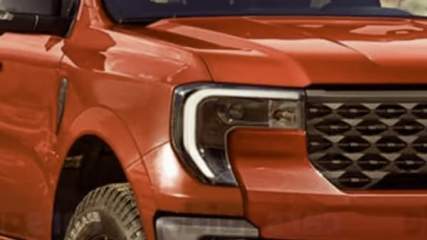
Mitsubishi Australia has announced the Triton Raider ute, which will launch in Australia this year as a new high-end off-road hero.There are no specification details about the vehicle at this stage, but we will learn more about it at the end of this month when it makes its full debut.On the face of things, it us shaping up as a direct rival to the Ford Ranger Raptor, which sits at the top of the Ford ute's range with 3.0-litre twin-turbo six-cylinder petrol engine producing 292kW and 583Nm.Whether the Triton Raider will have some sort of powertrain upgrade remains to be seen, with the brand thus far only saying the new variant has been "inspired by rally raid competitions" and will "have a focus on Australian engineering."The current 2.4-litre four-cylinder diesel found across the current Triton range produces 150kW and 470Nm.The Raider is likely to top out the Triton range, with the current most expensive version of the ute starting from $64,590, before on-road costs. The Ranger Raptor, for comparison, starts from more than $90,000.Mitsubishi also said the Triton Raider recently went through the Flinders Ranges in South Australia, demonstrating its rigorous pre-launch testing program.From the image provided, the ute keeps most of the Triton signature design points, but has several blacked out elements, such as the roof rails and door mirrors.It has exaggerated fenders to highlight its more rugged capabilities, suggesting upgrades to track or tyre width and suspension.The Triton is one of Mitsubishi’s best-selling models, only trailing the Outlander SUV for sales as of February 2026.It comes at a time when Mitsubishi is preparing to reintroduce its Pajero four-wheel drive this year, which is expected to be based on the current Triton ute like its Pajero Sport predecessor.This will give the Japanese brand two new models as it looks to snatch back sales from rivals such as Ford and Toyota, which still dominate the sales charts.
Internal combustion smashes electric in Oz
Read the article
By Tim Gibson · 06 Mar 2026
Internal combustion power is still by far the most popular type of car in Australia, the latest sales data has revealed.
It's official: China is winning
Read the article
By Andrew Chesterton · 04 Mar 2026
China is now the biggest country of origin for new-car sales in Australia, leapfrogging Japan in what is a seismic shift in the Australian automotive industry.
Two new big name utes compared
Read the article
By Tim Gibson · 14 Feb 2026
The incoming new-generation Nissan Navara is mechanically identical to the Mitsubishi Triton, but carries a sizeable price jump in comparison.It adds another rival to a compact ute market, so how does the more expensive Navara shape up to its cheaper Triton sibling? Nissan said money and time has been invested into its ute’s suspension, receiving assistance from Australian specialists Premcar.The brand said this local tuning offers improvement to driving and handling with and without load. The Navara has three different suspension set-ups across the range, with lower grades tuned for carrying loads, while SUV-like suspension is fitted to higher grades. Nissan’s ute also has a locking rear differential as standard on all grades, unlike on the Triton. Here is a breakdown of the difference between the Navara and the Triton.Pricing Australia (before on-road costs) Noting the Triton’s current drive-away offering, it comes in substantially cheaper than the Navara across the range. DimensionsBoth have the same braked towing capacity of 3500kg. Things start to change when we look at payload, with the Triton offers superior carrying capacity across the range. When it comes to cargo bed size, the pair share the same-sized space. Engine and efficiencyThe Navara and Triton are nearly mechanically identical and use the same engine and transmission, so there is no difference between the two. Standard featuresNext grade adds or replaces: Next grade adds or replaces: Next grade adds The Navara does have more standard equipment than the Triton in a comparison between the pair.As standard, the Navara gets a digital driver display, unlike on the Triton, while it also gets a bigger central touchscreen. There is digital DAB+ radio, LED lighing front and back, tailgate assist and a rear diff lock as standard on the Navara, while that is only available on higher grade Tritons. There are areas where the Triton matches the Navara, including all-terrain tires and basic cloth trimmed manually adjustable seats.On the top-spec grades, the Triton has bigger alloy wheels, but they both have leather seats. The Navara’s top grade has a towbar fitted, but the Triton does not.Safety The Nissan Navara adopts the same five-star ANCAP safety rating awarded to the Mitsubishi Triton in 2024. Both get all the safety gear you would expect, such as eight airbags, lane keep assist and auto-emergency. As standard, both cars get a reversing camera and front and rear parking sensors. VerdictThe Mitsubishi Triton appears to be the value buy here as it gets most of the gear as on the Navara, but for a cheaper price. The Triton's special drive-away price makes it more compelling for now, but the price gap will close once that offer is removed.The Triton may be the budget pick, but the Navara’s benefits are not obvious from the spec sheet. Its Aussie-tuned suspension and rear-differential lock could give it the edge on the off-roading scene, while also aiding the on-road driving experience.
Australia's favourite utes revealed
Read the article
By Tim Gibson · 19 Jan 2026
Utes are seemingly not going anywhere as they once again featured heavily at the top of the sales charts in 2025.This is despite many models experiencing sales drop-offs year-on-year as the ute market continues to increase in competitiveness.Here are the top five best-selling utes heading into 2026. The Ford Ranger was not just the best-selling ute, but the best-selling car in Australia in 2025. It managed 56,555 sales last year, as it topped the charts, starting from $37,130 (before on-road costs) for the base single-cab chassis.The Ranger is mainly available with a 2.0-litre four-cylinder turbo-diesel engine, producing 125kW and 405Nm or 3.0-litre six-cylinder turbo-diesel engine with 184kW and 600Nm.However, the once-popular 2.0-litre twin-turbo diesel will be cut from the lineup soon.The range-topping and ever-popular Raptor meanwhile has a twin-turbo 3.0-litre V6 petrol engine, producing 292kW and 583Nm, with a starting price more than $90,000.At the other end of the spectrum, the brand now offers a plug-in hybrid, with 207kW and 697Nm, starting at $71,990 - whether it will go on to be a hit with buyers like one of its rivals on the list remains to be seen.The Toyota HiLux is second on this list and came second overall in the car sales standings for last year, with 51,297 units registered.The base manual single-cab chassis HiLux starts from $33,990, before on-road costs and the range goes all the way up to $71,990 for the range-topping dual-cab variant. All HiLux models are powered by a 2.8-litre four-cylinder turbo-diesel engine that produces 150kW and 420Nm or 500Nm, depending on whether has a manual or automatic transmission. Toyota will also be expanding on its range, launching an all-electric version of the HiLux in the first quarter of 2026.Isuzu’s D-Max is the next best-selling ute in Australia, with 26,839 sales in 2025.Its price ranges from $36,200 to $80,900, before on-road costs, and it comes with two engine choices which are both turbo diesels. There is a 2.2-litre four-cylinder option, producing 120kW and 400Nm, and a 3.0-litre six-cylinder engine, producing 140kW and 450Nm. The 2.2-litre turbo-diesel engine was introduced last year to replace the less efficient and smaller 1.9-litre option.Despite being one of only two products offered by Isuzu Ute, the D-Max and its related MU-X SUV are enough to propel the brand into a top-10 position in the Australian market.Mitsubishi’s ute offering, the Triton, earned its spot in the top five with 18,900 sales. The Triton was the only ute on this list that experienced a sales bump in 2025 compared to 2024, up for 4.6 per cent year-on-year. It starts at $34,740 and goes up to $66,140, before on-road costs. All Triton utes get a 2.4-litre turbo-diesel engine, which produces 150kW and 470Nm. Rounding out the list is the only plug-in hybrid exclusive ute in the top five. The Shark 6 burst onto the scene in 2025, and achieved a flurry of early sales, guiding it to 18,074 units throughout the year - a decisive success story. It only comes as a dual-cab in a single trim level, which is powered by a 1.5-litre turbo-petrol engine paired with electric motors, combining for a total output of 321kW and 650Nm. The plug-in ute starts at $57,900, before on-road costs, and is set to be joined by cheaper cab-chassis variants later this year.
Popular ute gets Aussie upgrades
Read the article
By Tim Gibson · 19 Jan 2026
This popular ute has just received a specialist Australian boost.
Best Ute Under $85K shortlist announced
Read the article
By Andrew Chesterton · 16 Jan 2026
Is there a more important vehicle category in dual-cab-devoted Australia than utes? I’m not sure there is. And I’m also sure that, in a segment that has sat stagnant for years, there has never been a more exciting time to be picking the best and brightest in the country.Where do we start? Maybe with China’s full-throttle assault on the segment? Or with the rise of plug-in hybrid petrol in a diesel-dominated market? Or Kia turning its hand to a ute for the very first time? Or BYD, for that matter?See what I mean? It’s an exciting time to be picking the best ute in Australia as part of the ongoing 2026 CarsGuide Car of the Year (COTY) awards, and the days of it being a two-way battle between the Toyota HiLux and Ford Ranger are well behind us.But to pick a winner, we first need to choose the best of the best that will be battling for the top prize. So without further adieu, this is the CarsGuide Car of The Year top-10 shortlist for sub-$85K Utes.This category's winner and two runners-up will be announced on February 6, 2026.Perhaps no other ute has been quite as surprising as the barnstorming BYD Shark 6, which has not only taken the fight to the established giants of the ute segment, it has done it without a diesel engine in sight.Instead, a plug-in hybrid powertrain does the heavy lifting here, with BYD arguably doing more to electrify the ute segment than any model to come before it. Our reviewers love the on-road refinement and the value-packed feature list, but concede its towing capacity lags its major rivals.It’s also on our shortlist because of its segment-altering drivetrain, which has forced several mainstream ute makers to follow its lead.A classic and the best-selling ute in the country for a reason. The Ford Ranger is on our shortlist for its driving dynamics (it’s among the most car-like utes on our list), which takes nothing away from its ability to get down and dirty in terms of towing or off-road capability.What really drew praise from our judges, though, is the breadth of the Ranger’s offering, with worksite-ready versions, family friendly versions, hardcore off-road versions, and a choice between several diesel engines or plug-in hybrid powertrains.That said, some pointed to the PHEV solution offering little in the way of real-world range.The unsung hero of Australia’s automotive world (it is, after all, often one of our top five best-selling vehicles), the Isuzu underwent a fairly major update that ironed out some of its more agricultural qualities with some design, cabin and technology updates.The D-Max was praised by our judges for doing exactly what it says on the tin, and delivering exactly what many ute buyers are looking for, with little fuss or fanfare. But some wonder whether it feels new and fresh enough.The entry-level cars also get a bigger smaller engine, if that makes sense. With the old 1.9-litre diesel swapped out for a 2.2-litre unit that’s both more powerful and more efficient. Tick and tick.Kia burst onto the ute scene with the boldly designed Tasman, a ute that really does look like few others on the road.Our judges were unanimous in praising the Tasman’s delightful and tech-filled cabin experience and its road manners, and reports of its off-road prowess are impressive, too.Its looks seemingly remain controversial, at least among the buying public, but there’s little doubting Kia’s first ute has plenty of substance, no matter what you think of its style.Sure, the BYD Shark 6 has been getting a ton of attention, but the LDV Terron 9 has been quietly plugs away as one of the biggest, and thus most practical in terms of tray, utes in the segment.And with 520Nm of torque at its diesel-powered disposal, it’s pretty punchy, too (as a vehicle this size probably needs to be).Our reviewers praised the space on offer in its tray, the strong value-for-money argument and its imposing street look, but were less sold on the lack of a power outlet in its tray and a sometimes lumpy power delivery.The BT-50 tends to stick out a little bit, both in the ute segment (where rough and tough is the design order of the day), and in Mazda’s own lineup, where the dual-cab ute rubs shoulders with mostly premium and polished SUVs.Early last year, Mazda addressed both those issues, deploying an Australia-led design overhaul intended to make the BT-50 “sportier and tougher”, clearly separating it from the rest of the brand’s lineup, and appealing more to traditional ute buyers.Our reviewers loved the look, the diversity of the range and the lux feel of the top-spec models, but didn’t love the too-firm suspension and the lack of a true hero model.The Chinese brand’s first-ever ute isn’t strictly its own, or at least not entirely. The MG U9 is a sibling to LDV Terron 9, which also appears on our shortlist.Our reviewers loved the U9’s interior space, especially in the impressive backseat, the ute’s sharp pricing against the established competition, and the nifty automatic step that deploys beneath the tailgate — described as “the nicest and definitely the easiest” way to climb into the tray.The active safety tech, however, impressed us less.The Mitsubishi Triton is a household name, albeit one that’s been left behind by the HiLux, Ranger and D-Max in recent years. A new generation arrived in 2024 that aimed to fix that, delivering more space, more power, more practicality and more space in the cabin.We loved the smoother drive experience, its warranty coverage (provided you service with Mitsubishi), its more modern-feeling cabin and its workhorse credentials.The less-positive notes included a clunky stop-start system and over-active safety tech.A new HiLux is big news in Australia, and while Toyota has opted to carry over a lot of key ingredients from the outgoing HiLux, they've also moved to address key complaints, like ride comfort and cabin technology, and to introduce a new look.And while our reviewers praised the updates, they also wondered whether Toyota had gone far enough in the face of new and stiff competition.The Volkswagen Amarok hasn't made quite the sales splash in Australia that its Ford Ranger relative has, but the German brand's ute has attracted plenty of praise from our reviewers, who love its style, its interior packaging and materials, and its on-road manners.Less positive is the sticker price of the high-end variants, and the sparse backseat amenities in the more affordable models.
2025 sales show diesel's not going anywhere soon
Read the article
By James Cleary · 14 Jan 2026
To torture a well worn Mark Twain reference, if Australia’s 2025 new vehicle sales numbers are anything to go by, reports of the diesel engine’s death are greatly exaggerated.According to Federal Chamber of Automotive Industries VFacts registration data, for the full calendar year of 2025 diesel-powered vehicles across passenger, SUV and light commercial segments totalled 364,605 units, only 1.7 per cent lower than 2024’s overall number (370,818).In fact, sales of diesel-powered passenger cars were up 1.3 per cent year-on-year (10,372 vs 10,242) with diesel SUV sales rising no less than 6.0 per cent (122,603 vs 115,670).Diesel light-commercial sales were down 5.4 per cent (231,630 vs 244,906) while plug-in hybrid commercials went from zero in 2024 to 20,634 last year.A coincidence that 18,073 examples of BYD’s Shark 6 PHEV dual cab ute found homes last year? We think not.The Ford Ranger was the best selling vehicle in 2025, but it wasn't alone at the top.Traditional diesel-heavy sellers the Toyota HiLux, Isuzu D-Max, Ford Everest and Toyota Prado filled the third to sixth slots on the 2025 overall sales leader board with others such as the Mitsubishi Triton lifting year-on-year volume, too. Only the second placed Toyota RAV4 Hybrid managed to break up diesel's dominance atop the new car sales charts last year.Of course, nothing stays the same forever and given the rapidly shifting form of the Australian new vehicle market and the increasing impact of the federal government’s New Vehicle Efficiency Standard (NVES) regime there’s a chance the diesel engine’s status may have changed dramatically by the end of 2026.But for now, it appears diesel power isn’t headed for the automotive graveyard just yet. Australian diesel vehicle registrations: