What's the difference?
The small van segment (Under 2.5-tonne GVM) is one of the smallest in Australia’s light commercial vehicle market, as it currently caters for only three contenders, the Volkswagen Caddy Cargo, Peugeot Partner and Renault Kangoo.
Although total sales in this category are a fraction of those achieved in the mid-size (2.5-3.5-tonne GVM) van division, these compact commercials are ideal for buyers not requiring the big one-tonne payload ratings and cavernous load volumes of their larger siblings.
Petrol and diesel-powered models are typically equipped with small displacement engines offering excellent fuel efficiency, combined with cabin ergonomics and driving dynamics which are the most car-like of any LCV offering.
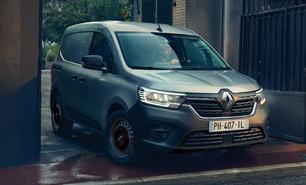
French manufacturer Renault released its third generation Kangoo range in Australia in 2024, comprising a mix of petrol and full-electric variants. We were recently handed the keys to one of the petrol models to see if it has what it takes to win costumers in this three-way fight.
In a camper-trailer market seemingly in danger of being swamped by cheap products of dubious build quality, it is refreshing to see a local mob, Australia’s Cub Campers, persisting with well-built and highly functional camper-trailers packed with standard features and with plenty of optional extras.
The company's 2.2m rear-fold* line-up includes the Weekender, Explorer and Brumby; its 3.6m line-up includes the Traveller, Escape and Longreach. (* When the trailer is static, its roof can be unfolded to the rear to become the hard floor of the camper’s entry-way. Check out the accompanying photos to better understand the process.)
Our test Brumby was a standard model (from $29,490) with an Adventure Pack ($1300) and draught skirt ($225), giving it a $31,015 price-tag.
The latest petrol-powered Kangoo has the pricing, practicality and performance to win friends in Australia’s small commercial van class. If you can afford an option pack or two, like those fitted to our test vehicle, it's even better.
The Brumby is a fine example of top-notch design and manufacturing at a reasonable price.
It looks great, tows well, is very easy to set up and take down and does everything Cub Campers claims it’ll do – with no fuss.
Any issues in this camper are really only a matter of nit-picking and can easily be rectified with Cub options or adjustments.
The attention to detail is superb and, as a built-for-purpose camper, the Brumby certainly hits the mark.
Our test vehicle’s 1447kg kerb weight and 2010kg GVM results in a useful 563kg payload rating.
It’s also rated to tow up to 1500kg of braked trailer and with its 3510kg GCM (or how much it can legally carry and tow at the same time) it can carry its maximum payload while towing its maximum trailer weight for optimum versatility.
Cargo bay access is through asymmetric rear barn-doors which can be opened to 180 degrees for forklift and loading dock access, or sliding doors on each side with (according to our tape measure) 625mm openings. The walls and doors are lined to mid-height and there’s internal lighting.
The cargo bay’s load volume is a competitive 3.3 cubic metres and with more than 1.8 metres in length, almost 1.6 metres in width and more than 1.2 metres between the rear-wheel housings, it can easily swallow one standard Aussie pallet or two Euro pallets.
The load floor, which does not include a protective liner as standard equipment, offers a choice of six load-anchorage points.
The solid bulkhead doubles as a sturdy cargo barrier and insulates the cabin from cargo bay noise, most of which comes from the tyres emanating through the rear-wheel housings.
Given its compact dimensions, the cabin is surprisingly spacious and accommodating even for someone my height (186cm), thanks to front doors that open to a full 90 degrees, generous leg and elbow room plus a high roof relative to the seating position that adds to the airy feel.
Storage includes a large-bottle holder and bin in the base of each door, single glove box, full-width overhead shelf, large open tray in the centre of the dash-pad and (in standard form at least) a centre console with two cupholders and trays for small items.
However, given our test vehicle is equipped with the optional Business Pack, the standard console is replaced with a more elaborate version, which in addition to a pair of cupholders has a wireless phone-charging dock up front and a box with hinged lid at the back.
There’s also a sizeable clamshell-lid compartment set into the dash-pad ahead of the driver, which includes a smartphone holder on a stalk that can be easily moved to either side of the compartment depending on driver preference.
Our only criticism is the lid on the optional console box. Although it’s been thoughtfully angled downwards at the front to provide the driver with comfortable elbow support, there’s no mechanism on the hinge to hold it in the open position.
This makes it awkward to access the box, as the angled lid naturally wants to keep closing on your hand, so a detent in the hinge would be useful.
And, in a similar context, we’d also like to see hinge detents (or struts) to firmly hold the rear barn-doors open in their 180-degree positions, given their propensity to slam shut if hit by wind gusts during loading/unloading.
This can potentially injure the operator, so these devices should be standard issue, not only for Kangoos but all barn-door vans.
It’s big and airy inside and really is a basic but functional space.
The Brumby’s kitchen, fridge, pantry and more storage spaces are accessed via the camper’s exterior so there’s not a lot going on inside this camper, but the storage ideas and solutions in here – including under and alongside the bed – are well suited to camping life.
The floor of the entry-way could be used alternately as a children’s bedroom and eating area, if you don’t bother setting up your awning for dining purposes.
The main bedroom is open and easy to access from the entry-way, and the bed has storage space underneath and along each side.
Apart from the huge and unavoidable solid-walled blind-spot over the driver’s left shoulder, the Kangoo feels more like a nippy small car than a commercial van.
The driver’s seat has no adjustments for lumbar support or base-cushion rake and the backrest angle is restricted by the bulkhead close behind it, but there’s still enough room even for tall people to find a comfortable driving position.
Its leather-rimmed wheel feels nice in your hands and the unladen ride quality is excellent, with nicely weighted and responsive steering feel, reassuringly strong braking and suspension settings that combine good handling response with supple bump absorption.
The turbocharged 1.3-litre four is a refined and willing performer, albeit with softer response below its peak torque band which is tapped at 1600rpm.
From there it happily spins its way to maximum power at 5000rpm, with the dual-clutch auto getting the best out of this engine in all drive modes, when either unladen or hauling a heavy load.
Its diminutive size and agility are well suited to zipping through heavy city traffic, squeezing into tight loading zones or negotiating narrow and crowded city lanes for delivery work.
Manual sequential-shifting allows more direct control if preferred when hauling heavy loads, or for those simply wanting a more engaging drive experience (particularly in Performance mode).
It's impressively quiet up to 80km/h in city and suburban use, but at highway speeds tyre noise becomes more intrusive (particularly on coarse bitumen surfaces) and some wind noise is evident.
The engine requires only 2000rpm to maintain 110km/h cruising speeds and the (optional) adaptive cruise control is resolute in maintaining its speed settings, even on long and steep descents.
To test its GVM rating, we forklifted 415kg into the cargo bay which with driver equalled a payload of just over half a tonne, or about 50kg under its legal limit.
The rear suspension compressed 55mm, which engaged the long cone-shaped jounce rubbers positioned inside the rear coil springs to provide a second stage of load support.
The Kangoo coped commendably with this payload, floating smoothly over bumps and with minimal effect on handling, braking and engine performance.
It also made light work of our 13 per cent gradient, 2.0km-long set climb at 60km/h, quickly self-shifting down to fourth gear to easily reach the summit.
Engine-braking on the way down was not as robust, as you’d expect from such a small engine with more than half a tonne on its back, but still within expectations for small vans.
Our only gripes are the absence of a full-width driver’s left footrest and that the thick panel separating the bulkhead windows almost completely blocks the central mirror’s view through the LHS barn-door. You can option a smart digital mirror with rear-facing camera to resolve this issue, but that’s another $800.
At 885kg (with 139kg on the tow ball), this is a nimble and easy-to-tow trailer.
It has a galvanised steel chassis and is equipped with Cub Campers' own independent coil-spring suspension set-up, which helps the Brumby ride through undulating terrain with supreme ease, maintaining composure all the way.
Its AL-KO 50mm off-road ball hitch, which affords a greater range of motion for the coupling – up and down, and side to side – than a standard one does, gives the Brumby an extra level of flexibility and manoeuvrability on rough tracks.
Another boost to its ease of towing is the fact that, due to the Brumby's compact size, the driver is able to constantly monitor the trailer’s position as you can see over it, along its sides, and behind it, with no need for towing mirrors.
The Brumby rides on 17-inch six-stud alloy wheels, shod with Goodyear Wrangler Duratrac tyres.
It has two rated recovery points (2400kg) at the rear, which are a bonus for those who tackle decent off-roading.