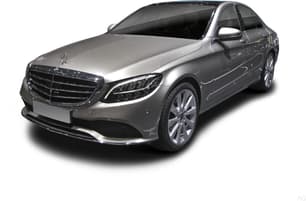
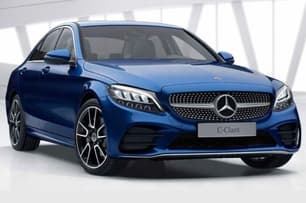
What's the difference?
Do you know how many bones you have in your body? Stop counting, there are 207. And if say half those bones were replaced with different ones would you consider yourself to still be the same? Well that’s what Benz has done with the new C-Class – sort of. Of the roughly 13,000 parts which make up a C-Class car, 6500 of them have been modified or changed.
You don’t need to know every change to the new C-Class, but at the end of this review you will be across the differences that you can see, feel and hear.
Just a note before we start. The top-of-the-range Mercedes-AMG C63 S arrives in early 2019 and wasn’t available to drive at the Australian C-Class launch. That’s why we’ll focus on the other grades here - the C 200, C 220 d, C 300 and C 43. We’ll test drive and review the Australian C 63 S when it arrives – promise.
Think of a Mercedes-AMG and the first words that spring to mind are probably not - understated, efficient and restrained. And yet those are probably the best words to describe the all-new C 43.
Of course, before we go any further it’s important to note that the C 43, even in its previous six-cylinder guise, was never meant to be as wild, raucous or powerful as the C63 flagship - that’s simply not its role in the AMG line-up.
But even so, this new model is a dive into fresh territory for the brand and puts a very different spin on the AMG sports sedan as we know it.
This is a four-cylinder model, complete with a Formula One-derived electric turbocharger, so it lacks the sound and fury you expect from something carrying the ‘AMG’ badge - but that doesn’t mean it’s a bad car, as we’ll explain.
This may well be just an update to the C-Class, but the changes made are significant in terms of technology and performance, and you’re paying hardly any extra money for it. A good all-rounder for dynamics, features, refinement and value.
The sweet spot in the range has to be the C 300. It’s less than $10K more than the entry grade C200, but gets a powerful 2.0-litre engine, leather seats, the extra advanced safety equipment, tinted windows and convenience features such as a power tailgate (on the wagon) and proximity unlocking.
The new AMG C 43 may lack the drama and excitement we’ve come to expect from the German performance brand, but that doesn’t mean it’s a bad car. Yes, it could be more extroverted and the ride could be improved, but this is still a sharp-looking sports sedan with loads of punch.
This is a car that speaks to its times, with ever-stricter emissions regulations making it harder and harder for car companies to produce loud, wild and charismatic cars. So Mercedes-AMG has worked within those boundaries and come up with a car that retains at least some of those core elements that has made the brand so desirable over the years.
Note: CarsGuide attended this event as a guest of the manufacturer, with accommodation and meals provided.
Now, to spot the difference between the new and the old C-Class from the outside just look at the headlights – the shape of the fitting is the same, but the new standard headlights on the C 200, C 220 d and C 300 have an LED set-up which looks like teeth, while the optional units (standard on the C 43 and C 63 S) are also LED but with a tall staggered design. Tail-lights also keep the same shape but with a different LED pattern, too.
The front and rear bumpers have also been restyled for all grades and the C 43 and C 63 S have had their grilles updated, with the former getting a new twin-louvre design, while its big brother now has chrome vertical slats reminiscent of the grille worn by the 1952 Carrera Panamericana winning 300SL.
The AMG Line Exterior package is standard on the Coupe and Cabriolet, but if you option it on the sedan it will fit a sports body kit with AMG front spoiler and side skirts.
The C 43’s gloss black rear diffuser looks tough with the new quad exhaust and the car in wagon form wins my award for best looking of the C-Class bunch.
Cabins haven’t been overhauled but they have been updated with a 10.25-inch dash-top display for media and a 12.3-inch fully digital instrument cluster - both are standard across the range and make a big styling impact in the cockpit. Mercedes-AMG grades have their own sporty version of the virtual instrument cluster.
The layout of controls remains the same, but you can now option a new real wood veneer to the centre console with 'open-pore brown walnut' and 'open-pore black ash' being your choices.
The Artico upholstery in the C 200 looks and feels ‘plasticky’. I’d option the real leather which comes standard on the C 300.
New to the C 43 are the optional ‘Performance’ seats with integrated head restraints and standard on this grade is a new leather AMG steering wheel. Other cool cabin features are the stainless-steel pedals, the AMG floor mats and stitched dash (even if it is Artico upholstery).
All grades now come standard with the 64-colour ambient lighting system. You should see the system fading through the colours at night and with the right music the whole effect is amazing.
The C-Class comes in four body styles: Sedan, Coupe, Estate (wagon) and Cabriolet.
Exterior and interior dimensions stay the same, all variants measuring about 4.7m in length. That’s a good size; not too big or small, making parking and manoeuvring in tight spaces pretty fuss-free.
The C-Class is made in various parts of the world, but I can tell you the C 200 Sedan we get in Australia is made at Mercedes-Benz's East London plant on South Africa's east coast.
Mercedes has created something of a problem for itself with its decision to introduce AMG styling packages for the majority of its range, including the C-Class.
It means the C 43 has to walk a fine line between looking like a unique AMG model, rather than just a C300 with a bodykit and not out-doing the C63.
To that end it has AMG’s now familiar grille with vertical bars, the unique and complex-looking 20-inch alloy rims and a small lip spoiler on the boot. But otherwise it is surprisingly understated for an AMG, lacking the more obvious and muscular stance of previous AMG offerings.
Inside, there’s a similar theme, with the typical Mercedes-Benz luxury appointments but with a sportier, AMG twist. The steering wheel is chunky and comes with AMG branding, metallic shift paddles and a pair of rotary dials/buttons that allow you to alter the various drive modes and settings.
The one on the right allows you to switch between the pre-set Comfort, Sport, Sport+ and Individual modes, while the one on the left can scroll between the various individual aspects to tailor the settings to the conditions.
In typical modern fashion the design is tech-laden, with a digital display for the instrument panel (that can be switched between various graphics) and a large, tablet-style central multimedia touchscreen that controls the majority of the car’s non-driving functions.
This depends on the body style, but being a mid-sized car practicality can be limited, but Mercedes-Benz has been clever with the way it has used the available space.
The boot, for example in the C 200 is 434 litres, which isn’t as big as the cargo space offered by the BMW 3 Series or the luggage capacity of the Audi A4. This is partly because the hybrid system uses space under the bonnet, so the car’s battery needs to go to the boot.
The C 300 doesn’t use the hybrid system and so the sedan in this grade has 455 litres of boot space.
Choosing the C 300 Coupe’s will reduce your luggage carrying ability to 380 litres and the C 300 Cabriolet’s cargo capacity varies from 360 litres with the roof up and 285 litres when it’s down and eating into the luggage area.
The Estate is the best luggage hauler but it’s still not enormous – the C 43 Estate that we test drove has a cargo capacity of 480 litres.
Legroom in the back of the C 43 Estate is good and at 191cm tall I can sit behind my driving position with about 20mm to spare thanks to the sculpted seat back.
Headroom is getting tight in the Estate and especially in the Sedan – well for me, anyway – and the optional sunroof will lower the ceiling height even further.
Up front space in the Sedan and Estate isn’t an issue with plenty of head-, leg- and shoulder room offered.
Storage throughout the Sedan and Estate is good with a large centre console storage bin, two cupholders up front and another two in the back along with a storage area in the fold down armrest, but all four door pockets are on the slimmer side. Still they can fit a small bottle of water, plus a wallet or purse.
That centre console bin houses two USB ports, and a 12-volt outlet can be found in the storage area under the climate controls – which also houses the optional wireless charging pad. Without the charging pad that small area is too tiny to place my iPhone8 Plus.
Rear headroom and legroom in the four-seater Coupe and Cabriolet is limited, but both get a pair of cupholders in the back and two more up front.
The new C-Class has grown slightly in size compared to the model it replaces, most notably with a 26mm increase in the wheelbase which you can feel in the cabin.
The front seat space is good, with excellent adjustability for the power-adjustable seats and steering column. I had no trouble finding my ideal seating position which makes for a more enjoyable and uncompromised driving experience.
Rear space is a bit tighter (which is typical for this segment/size of vehicle), but thankfully the standard seats do have very deep sculpting in the backs which allow for more knee space and foot room.
However, at approximately 180cm (six-foot), I wouldn’t like to sit behind my seating position for long periods as my knees were touching the seat back, and headroom is compromised with the panoramic glass roof.
In terms of small item storage there’s a lidded console box in between the front seats as well as a pair of cupholders and a small tray where you can place your mobile phone.
It’s worth noting, though, that early examples of the C 43 in Australia do not have a wireless smartphone charging pad, with that reportedly being introduced from February production.
While that’s good news, it’s not really competitive in this day and age to offer a car costing six-figures without such technology.
There’s also only a single USB-C power outlet in the front, which is another disappointment, but there is a pair in the back.
Mercedes does win some points back for a respectable 455-litre boot, which has a nice wide load opening that will make packing luggage easier.
The range kicks off with the C 200 and its C 220 d diesel siblings, then steps up to the C 300. Prices for these grades have increased by $1500 in this update but you’re being given more features. Above the C 300 live Mercedes-AMG’s wild animals – the C 43 and C 63 S.
The C 200 Sedan now lists for $63,400 (plus on-road costs), and if you want the Estate version add another $2500, and an extra $4500 for the Coupe, while the Cabriolet is $25,000 more at $88,400.
The C 220 d Sedan lists for $64,900 and the only other form it comes in is the Estate for $67,400.
The C 300 Sedan lists for $71,400, the Estate is $73,900, the Coupe is $84,900 and the Cabriolet is $101,900.
The C 43 Sedan lists for $107,900, while the Estate is $110,400, the Coupe is $111,900 and Cabriolet is $124,900.
The C 63 S Sedan lists for $159,900, however, prices for other body styles have not yet been announced.
So, about all the stuff you’re receiving in return for the price increase – a 10.25-inch display screen replaces the smaller one in the previous car and it’s standard across the range. Don’t stab and poke at it like I did with my finger for hours, because it’s not a touchscreen.
Also new is the 12.3-inch fully digital instrument cluster, and it’s standard on all grades, too. Apple CarPlay and Android Auto come on all C-Class cars.
Other standard features, starting with the C 200 and C 220 d, include 'Artico' upholstery, which is a synthetic attempt at leather, a reversing camera, shifting paddles, dual-zone climate control, aluminium roof rails on the Estate, LED headlights, 64-colour ambient lighting and 18-inch alloy wheels.
The C 300 has the C 200’s features and adds leather upholstery, privacy glass (coupe only), proximity key and 19-inch alloys. The C 300 also gains the 'Driving Assistance Package' which I’ll tell you all about in the safety section below.
The C 43 picks up the C 300’s equipment and adds an enormous list of its own gear including a new AMG steering wheel, brushed stainless steel pedals, Burmester 13-speaker stereo, heated sports front seats, head-up display, wireless charging, intelligent LED headlights, panoramic sunroof, black roof racks on the Estate, analogue clock and 19-inch AMG alloy wheels.
Metallic paintwork is also part of the C 43’s standard features list which includes 'Obsidian Black', 'Iridium Silver', 'Mojave Silver', 'Cavansite Blue', 'Emerald Green' and 'Brilliant Blue', but you’ll have to pay for 'Hyacinth Red', which is a sort of candy apple red. Non-cost colours for the lower grades are non-metallic black and 'Polar White' non-metallic.
The C 63 S adds to the C 43’s equipment list with its own AMG steering wheel, illuminated door sills, digital TV tuner, nappa leather upholstery, an electronic rear differential lock, 19-inch alloys in matte black with high-sheen rim, plus high-performance brakes with red calipers.
We’ll get to the major change under the bonnet shortly, but another significant alteration for this latest C 43 is the price.
It now starts at $134,900 (plus on-road costs), which pushes it well above its market rivals, the BMW M340i xDrive and Audi S4, which start at $104,900 and $106,200, respectively.
However, Mercedes has added more technology under the bonnet and loaded the C 43 up with standard equipment, including its '4Matic' all-wheel drive system, adaptive damping, rear-wheel steering and 20-inch alloy wheels.
In terms of creature comforts, the C 43 is well-appointed, with leather upholstery, a head-up display, augmented reality navigation, a panoramic sliding sunroof, and a Burmester 3D surround sound system.
There are two option packages for the C 43. The 'Digital Light Package' costs $2400 and adds Multibeam LED headlights with 'Ultra Range' highbeam, 'Adaptive Highbeam Assist Plus' as well as active light function and cornering light function.
The 'Performance Ergonomics Package' includes AMG Performance front seats, an AMG Performance steering wheel in Nappa leather and microfibre and the 'AMG Track Pace' system for an additional $5200.
The previous C 200’s 2.0-litre 135kW/300Nm four-cylinder petrol engine has been swapped for a 135kW/280Nm 1.5-litre four-cylinder turbo-petrol with what Benz calls a ‘mild hybrid’ function.
This isn’t a hybrid with an electric motor driving the wheels, it’s an electrical system which is able to provide an additional 10kW/160Nm when accelerating. Known as the 'EQ Boost', the system also allows the C 200 to coast at a constant speed if the driver takes their foot off the accelerator. The battery is then re-charged when braking.
The C 220 d offers a diesel alternative and its new 2.0-litre engine now makes 18kW more power at 143kW and the same 400Nm of torque.
The C 300’s 2.0-litre turbo four has had a 10kW increase, taking power to 190kW, while peak torque is still 370Nm.
Also getting a power bump is the C 43 and its 3.0-litre V6 petrol is now good for 287kW (up from 270kW) while torque stays at 520Nm. The C43 uses Mercedes-Benz’s '4Matic' all-wheel drive system, while every other grade, including the C 63 S, is rear-wheel drive.
The C 63 S still makes an impressive 375kW and 700Nm.
The C 200, C 220 d, C 300 and C 43 all use the same nine-speed automatic transmission, while the C 63 S uses a ‘AMG Speedshift 9G’ which is a nine-speed dual-clutch auto.
The biggest talking point about this new car is the engine, with AMG downsizing from the old C 43’s six-cylinder to a 2.0-litre four-cylinder turbocharged petrol engine.
But it’s not just any turbocharged four-pot, because it is fitted with technology that Mercedes claims has been inspired directly from its Formula One team.
While the F1 team engine facility is based in England, this engine was designed and developed by the Mercedes-AMG team at its Affalterbach headquarters, but the concept of the electric turbocharger reportedly comes from the engine that powered Lewis Hamilton to multiple world championships.
The electric exhaust gas turbocharger - to give it its official name - uses a small electric motor on the turbocharger shaft to spin up the blades without having to wait for any exhaust gases to pass through it first.
To power the electric turbo the C 43 is equipped with a mild-hybrid 48-volt electrical system.
Mercedes claims this means reduced lag and improved throttle response for a sportier driving experience.
It also helps make this small engine produce big amounts of performance, with AMG extracting 300kW of power and 500Nm of torque from this 2.0-litre, which is more power than the previous six-cylinder C 43 managed.
The engine is paired to a nine-speed multi-clutch transmission, which isn’t a dual-clutch with a pair of clutches operating on every second gear ratio, but instead uses a “wet start-off clutch” for better take-offs and smoother shifting on the move (at least in theory).
Power is sent to the road via all four wheels thanks to Mercedes’ 4Matic all-wheel drive system.
Fuel consumption obviously depends on the engine, but did you know the body type also affects mileage?
Mercedes-Benz says the C 200 Sedan uses 6.4L/100km over a combination of open and urban roads. The trip computer in our C 200 Sedan recorded 7.1L/100km after 254km of mainly country roads.
The C 200 Estate according to Mercedes-Benz will need 6.5L/100km, the C 200 Coupe uses 6.4L/100km and the C 200 Cabriolet will need 6.8L/100km.
Mercedes-Benz is yet to announce the C300’s fuel consumption figures.
The C 220 d Sedan is frugal with diesel fuel consumption being 4.7L/100km, while the Estate version needs 4.8L/100km.
Mercedes-Benz is yet to announce the C300’s fuel consumption figures.
The Mercedes-AMG cars are the thirstiest with the C 43 Sedan using 9.4L/100km, and the Estate will use 9.6L/100km. After 286km of country roads the trip computer in our C 43 Estate was reporting an average consumption of 10.3L/100km. The Coupe economy is 9.5L/100km and the Cabriolet needs 10.0L/100km.
The C 63 S Sedan puts it away at the rate of 10.4L/100km, and the Estate’s usage is 10.7L/100km, while the Coupe and Cabriolet’s fuel efficiency is yet to be announced.
Despite the smaller engine you can hardly call the C 43 miserly, with a claimed combined urban/highway cycle rating of 9.1-litres per 100km. That’s only a 0.2L/100km improvement over the old six-cylinder.
On test, which included a return trip from Sydney to Bathurst via motorways and some dynamic back road driving, we saw a return of 11.8L/100km on the car's onboard computer.
While hardly hybrid-worrying, it’s impressive to think that driven modestly, such a potent engine can return a single-digit fuel figure.
The Australian C-Class launch gave us the opportunity to drive the C 200 Sedan and C 43 Estate on a test route stretching from Melbourne's Tullamarine airport, roughly 300km north to Milawa in Victoria’s alpine region and back, with the conditions being dry and cool.
I knew the C 43 would be ridiculously fun, but you can’t eat your dessert first, right? So, I started in the C 200, which is far from just meat and three veg – it’s refined and enjoyable to drive.
Steering is well weighted and accurate, offering a better sense of connection to the road compared to some of its prestige rivals. The steering wheel itself felt good to hold, too – and this is on the base car.
The test car wasn’t without its options though and it did have the 'Dynamic Body Control Suspension' with its Comfort mode softening the dampers for a more compliant ride and the Sport setting for better handling.
And that ride was comfortable. The only disturbance to the serenity (we did go through Bonnie Doon) was a bit of wind noise created by what sounded like the wing mirrors.
Apart from that, the experience was serene – those seats up front are comfortable and supportive even after hours, the vision all-around is excellent and then there’s the engine, which is perfectly adequate.
Okay, 1.5 litres sounds small but the output is almost the same as the previous 2.0-litre and the 48 Volt EQ Boost hybrid system does provide just enough of a kick to get you away from the traffic lights or overtake without any discernible lag.
The hybrid system's coasting function is excellent – take your foot off the accelerator and your revs drop to zero but the car will maintain its speed. When you brake the battery is recharged so you’ll have the extra grunt again when you need it.
Now for dessert. Just idling the C 43 sounds sedate, but that’s with the exhaust note and engine in the Comfort setting. It means you can pull into your street at night or start it up early in the morning without waking the up the entire neighbourhood.
The C43 isn't as vicious as the V8 C 63 S, but that’s the appeal of it.
Or, to hell with them, the people next door are jerks anyway: put it in Sport and the twin-turbo petrol V6 snarls and crackles as you shift through the gears. It’s not as vicious as the V8 C 63 S, but that’s the appeal of the C 43 – it’s a milder form of wild that’s easier to live with, but still so much fun.
The back roads from Milawa to Mansfield were a great testing ground for the C 43 Estate with their hill-climbing bends and downward forest runs. Merc AMG claims the C 43 can accelerate from 0-100km/h in 4.7s, and while that’s more than half-a-second behind the C 63 S, it’s still plenty quick.
With fantastic turn-in, all-wheel drive offering superb traction and great grip from the Continental ContiSportContact rubber (225/40 R19s front, 255/35 R19 at the back), a smooth-shifting nine-speed, impressive brakes and that turbo V6 which pulled the car heroically out of corners, it was hard not to grin like an idiot.
Only my mouth hurt afterwards, not my body. There’s a line you’re not going to read in any other car review. Some sports cars have a ride so firm, and seats so hard, and driving positions with hip points so low, that I almost have to leave the vehicle on all fours.
But only my face hurt from smiling so much – you could pilot a car like the C 43 until it ran out of fuel from a full tank and still feel comfortable – which is almost what we did. How much fuel did it use? Keep reading to find out.
Let’s start with the good news. The new Mercedes-AMG C 43 is a quick car. The engine may be small in size but the electric turbocharger does its thing and provides plenty of punch.
You can get a performance boost, too, thanks to the belt-driven starter generator, which acts as a mild hybrid and gives you a surge of 10kW for a brief period if you need a sudden burst of extra speed.
The chassis is well-sorted, too, at least from a dynamic point-of-view. The rear-wheel steering can provide up to 2.5 degrees of turning, which improves handling at speed and manoeuvrability when parking.
However, there are some less-impressive elements to the C 43, too. The obvious one is the drama, or rather the lack thereof.
As I said at the beginning, the C 43 has never been as wild or raucous as the V8-powered C 63, but when you buy an AMG there’s a rightful expectation that it will provide some thrills.
The C 43 simply doesn’t have that character about it. Yes, it’s fast, but it produces that speed with efficiency rather than excitement.
And it’s not an engine size problem, because even the 2.0-litre four-cylinder A 35 and CLA 35 offer more ‘wow factor’ than the C 43.
Yes, the engine makes noise under acceleration (and it can be altered between discreet and sporty) but even at its best it sounds muted and lacks the evocative tone of a V8 or six-cylinder engine.
Another disappointment is the transmission calibration, with the gearbox awkwardly shifting out of first gear on multiple occasions during our test drive.
In the taller gears it felt smooth enough cruising along, but given its low speed shifts we’d like to spend more time in the urban environment before passing final judgement.
The other notable element of the driving experience we struggled with was the ride quality. While fine on the smoother motorways, our test drive included time on some patchy country back roads and the C 43, even in the ‘Comfort’ suspension setting, was simply too firm.
Riding on low profile tyres, the adaptive dampers struggled to isolate the cabin from the imperfections in the road, leading to a fussy ride at times.
Overall the C 43 is a good car, but it feels like there are still some areas where Mercedes could improve it to make it really live up to the AMG badge.
The C-Class was awarded the maximum five-star ANCAP rating when it was tested in 2014. The base grade C 200 is fitted with nine airbags, AEB which works most effectively at lower speeds, and blind spot warning.
Stepping up to the C 300 brings the 'Driving Assistance package' which adds a more sophisticated AEB with cross traffic function and evasive steering, plus lane keeping assistance.
No spare tyres here. The C 200, C 220 d and C 300 all come with run-flat tyres, while the Mercedes-AMG grades have a puncture repair kit.
For child seats, you’ll find two ISOFIX points and three top tethers across the back row of the Sedan and Estates, while the Cabriolet and Coupe have two ISOFIX points in the back.
There are also two hi-viz vests in the cargo area and, yes, you do get a warning triangle, too.
The C43 gets a comprehensive list of safety equipment that leaves little out. Obviously there are the usual passive safety items, like 10 airbags, including dual-front combined pelvic/thorax airbags and a front centre bag that drops between the front seat passengers to minimise the chances of a head clash.
Also included as standard is autonomous emergency braking front and rear (covering speeds between 7.0-200km/h), adaptive cruise control with active stop/go, a 360-degree parking camera, 'Active Parking Assist', 'Active Lane Keeping Assist', 'Blind Spot Assist' and, of course, anti-lock brakes with 'Brake Assist' and 'Adaptive Brakes' with Hold function and electronic stability control.
Also included are dusk-sensing LED lights, rain-sensing wipers and run-flat tyres with tyre pressure warning.
The C43 also comes equipped with Mercedes’ 'Driving Assistance Package Plus', which adds even more safety gear. This includes 'Active Blind Spot Assist', 'Active Brake Assist with Cross-Traffic Function', 'Active Emergency Stop Assist', 'Active Lane Change Assist', 'Active Lane Keeping Assist', 'Active Steering Assist', and 'Active Stop-and-Go Assist'.
While the C43 hasn’t been specifically crash-tested, the latest C-Class was rated by ANCAP with a five-star score for all models except the upcoming C 63 S E Performance.
The C-Class is covered by Mercedes-Benz’s three-year/unlimited kilometre warranty. We’re keen to see Mercedes-Benz move to longer warranty periods as is becoming the norm with mainstream brands, many of which are offering five year coverage.
Servicing is recommended at 25,000km/12-month intervals for the regular C-Class cars and the C 43. The C 63 S needs servicing every 20,000km or annually.
It’s great to see Mercedes-Benz offers capped price servicing. For example, the C 200 will cost you $396 at its first service, the second is $792 and the third is also $792.
The C 43 is covered by Mercedes’ five-year, unlimited kilometre warranty, which has become the new standard for the luxury car market.
Service intervals for the car are at 12 months/25,000km, which is on par with industry standard.
Mercedes-Benz Australia will offer a service plan for the C 43, prices were yet to be confirmed at the time of publication but the company has indicated it will be similar to the C300.
That means $550 for year one, $900 for year two, the third service costs $1000 and the fourth year service costs $2450 - for a total of $4900 for the first four years of ownership.