What's the difference?
Having been on the market since 2014, the NX mid-size SUV quickly shot up the Lexus sales charts to become the brand’s most-popular model.
The SUV-hungry Australian market ate up the premium crossover, which also had the distinction of offering a hybrid powertrain.
In 2020 though, with SUVs popping up left, right and centre from premium and mainstream brands, can the NX still hold its own as an inner-city cruiser?
The Toyota Fortuner has been around since 2015 with very few significant changes in the years between then and now.
And that’s telling because the HiLux-based Fortuner has never managed to make the mark in its market segment that Toyota would so dearly like it to.
With a new Fortuner possibly due in the not-too-distant future – with Toyota’s mild-hybrid 48V V-Active system onboard perhaps? – it’s worth revisiting the seven-seat Fortuner to see how the current ageing 4WD wagon stands up against its fresher rivals.
Read on.
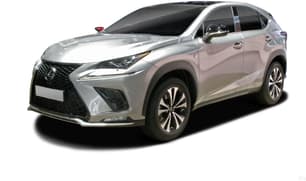
The Lexus NX 300h F Sport is both a comfortable and luxurious family hauler that is held back by just a few things.
Of course, gripes like the underwhelming dynamics might not be an issue for all, but the less-than-stellar fuel economy (for a hybrid, at least), disappointing practicality and fiddly multimedia will affect all potential buyers.
However, this is balanced out by loads of equipment and premium appointments for a reasonable price, which should put the Lexus NX on your shopping list if you are keen for an inner-city premium SUV cruiser.
The Toyota Fortuner is a family friendly wagon and a very capable 4WD, but it’s looking and feeling decidedly old, especially when cross-shopped against the current highly competitive 4WD wagon market in which vehicles are increasingly stylish, sophisticated and packed with driver-assist tech (that isn't clunky) and standard features (that are extensive).
The Fortuner is practical and easy to live with as a daily driver, and in GXL spec it makes a lot of sense as a functional not flashy off-road tourer, but it’s far from the best family 4WD wagon around.
Until a next-generation Fortuner possibly arrives, there are plenty of Toyota fans who’d happily settle for a current Fortuner – if they haven’t already.
Lexus might have been known for drab and dowdy styling in the past, but the NX’s sharp aesthetic is head turning and attention grabbing in all the right ways.
Though the NX first hit Australian showrooms in 2014, after six years we reckon it wouldn’t look out of place strutting down a catwalk, and can easily hold its own in the design department against the likes of the Audi Q5, BMW X3 and Mercedes-Benz GLC.
From the front, you can’t miss the trademark Lexus spindle grille, which, with its trapezoidal shape, gives the illusion of a wider and more aggressive car.
The high-set, slender headlights also gives the NX a wide stance, while the sweeping daytime running lights and sharp bumper design give the impression that the NX is cutting through water.
In profile, the NX is characterised by a strong shoulder line, chiselled lower doors and narrow glasshouse, while the black plastic wheelarch cladding hints at its SUV status.
The black trim detailing on the tail-lights almost make it look like the NX has narrowing cartoon eyes from the rear, but the subtle diffuser and large bumper soften its look a little.
If you can’t tell, we dig the aesthetics of the NX, especially the subtle exterior features such as crystal-like front foglights and the unique side mirror design.
Step inside and those neat little design touches continue.
From the almost folded fabric-like design of the door trims to the soft-touch surfaces throughout, the NX’s cabin oozes luxury, class and quality.
The centre stack shape mirrors the front grille’s trapezoid shape, while all the buttons and switchgear have a nice heft and weight to them, and are laid out in an easy-to-use, ergonomic fashion.
Sure, look a bit closer and you might see some carryover items from lower-end Toyota models, such as the cruise control stalk but, be honest, if we didn’t point it out, would you have even noticed?
The GXL is 4795mm long with a 2745mm wheelbase. It is 1855mm wide, 1835mm high and has a listed kerb weight of 2185kg. It has a 11.6m turning circle.
Not a lot has changed in terms of the Fortuner’s looks over the years and while it stubbornly retains that pleasingly non-offensive exterior of most modern SUVs, it does manage to not be totally bland.
The GXL is a body-on-frame 4WD based the HiLux, so it’s no sports car in appearance whether you gaze at it from the front, side, rear or from a bird’s eye view, but it doesn’t look like a block of rotten wood, so unless you’re looks-obsessed, then you should be okay driving this around.
The Fortuner interior is looking dated and the standard dark grey fabric cloth seats, though well-suited to coping with day-to-day messes and spills, don’t do the cabin any favours either, and – you know what? – I don’t mind any of it. Note our test vehicle on this occasion had black leather-accented seats as part of its GXL Option Pack, but I've spent time in cloth-seat Fortuners.
Measuring 4660mm long, 1870mm wide, 1645mm tall and with a 2600mm wheelbase, the NX puts it foot firmly into the mid-size SUV class.
Front occupants can easily get comfortable thanks to seats with a wide breadth of adjustment, while drivers also get a telescoping steering wheel that automatically raises when the car is turned off for easier ingress/egress.
Generous door bins up front will swallow large water bottles and any other paraphernalia, while two deep cupholders are found between the driver and front passengers.
If you want to tuck any items out of sight though, the glovebox and centre console bin will do the job, but there is also a hidden compartment where the driver’s touchpad palm rest.
Lift up the flap and your precious valuables can be hidden away, but look underneath the flap and it doubles as a handheld mirror to check you don’t have any food in your teeth before a date.
The outer two second-row seats offer ample room for six-foot-tall passengers, and – even with the front seats in our preferred position – there is plenty of legroom in the back.
Like most vehicles, the middle seat is a bit compromised, but in the NX it feels especially narrow and uncomfortable.
This isn’t helped by the middle seat’s seat belt, which comes down from the roof and intrudes well into the backrest of the neighbouring seat when not in use.
It makes loading the NX full of passengers tricky as there is a bit of shuffling around to get all the belts in place and passengers comfortable.
Our advice? Use the NX as a four-seater and just fold down the centre armrest, which also exposes two cupholders, for extra comfort.
Other rear seat amenities include air vents and storage pockets in the doors, the latter of which will accommodate water bottles or small items.
Open the boot and the NX will swallow 475 litres of volume, which can expand to 1520L with the rear seats folded down.
Boot space is down on its rivals, with all of the German models offering at least 550L of volume.
In real-world terms, this means the NX’s boot won’t close with a large- and medium-sized suitcase sat side-by-side, but has no problem with smaller cases.
Boot space might be lacking in the NX, but the hybrid system’s batteries have to go somewhere, and at least Lexus offers up two big bag books and tie-down points.
The Fortuner’s cabin has a comfortably familiar feel to it and, thankfully, this interior is all about function not fashion.
It’s a practical space, with standard cloth seats (as mentioned our test vehicle has the Option Pack leather-accented seats, but I’ve spent enough drive time in Fortuners with cloth seats to know how those cope with the mess and dirt of everyday life), carpet floors with rubber mats, and durable plastic surfaces everywhere.
Up front, there’s an 8.0-inch multimedia screen (too small, not clear and bright enough) and that system has USB-connected Apple CarPlay and Android Auto (no wireless anything), and a 4.2-inch colour driver’s display, which is too small, too basic and part of an outdated mix of analogue and not-new-enough digital instrumentation.
There are the usual storage spaces – including a glovebox, a centre console, a tray for your smartphone, pop-out cup-holders on the outboard edges of the dash – and a USB port and a 12V socket for charging purposes.
The Fortuner’s three rows are in a 2-3-2 seat configuration. The 60/40 split-fold second-row seat has a one-touch, tumble feature. The 50/50 third-row seats are able to be stowed away, sort of. When folded to each side they protrude into the load space, reducing the size of what would otherwise be a more useable cargo area.
It’s reasonably comfortable in the second row; I sat behind my driving position and I had adequate head and knee room.
The second row has cup holders in the fold-down armrest, ceiling-mounted controls for the aircon, and two ISOFIX and three top-tether anchor points.
All three rows get aircon – with ceiling-mounted vents – and there are a few storage spaces in the third row, but no cup-holders.
In terms of comfort, it’s ordinary back here; the seats are flat and unsupportive – and, for anyone other than children, the space is tight.
Boot space is listed as 200 litres with the third-row seats in use, and in that area there are cargo hooks and a 12V socket.
Stow away the third-row and cargo space increases to 716 litres. But the seats still jut into the cargo area, greatly reducing your actual useable load space, and they also obscure a lot of driver vision to the rear.
With the second and third rows out of the way you have a listed 1080L of cargo area.
The Lexus NX mid-size SUV range kicks off at $55,700 before on-road costs for the base 300 Luxury 2WD, but our NX 300h F Sport AWD test car carries a $68,700 pricetag.
Of course, the price goes up due to the petrol-electric hybrid engine (more on that below), all-wheel-drive set-up and sporty appointments of the F Sport grade, but the list of standard equipment is sizeable.
From the factory, our test car is fitted with privacy glass, roof rails, auto-dipping and heated side mirrors, 4.2-inch driver display, keyless entry and push-button start, dual-zone climate control, wireless phone charger and powered tailgate as standard.
F Sport grades also score unique 18-inch wheels, a lowered ride-height and sports bodykit, as well as a bespoke leather shift knob, steering wheel with paddle shifters, seats, and interior trim.
Speaking of seats, the front pair are heated and cooled, and also feature electronic adjustment with memory function.
Handling multimedia duties is a 10.3-inch widescreen that outputs to 10 speakers dotted around the cabin., Digital radio, satellite navigation, Bluetooth connectivity, Apple CarPlay/Android Auto support and a DVD player can be found within the multimedia system, which is controlled by a central touchpad or via voice commands.
The only option ticked on our car is the Titanium premium paint. The only standard colour for the NX 300h F Sport is Onyx (black), with all other colour options incurring a $1500 penalty.
Of note, Lexus keeps the sunroof and colour head-up display on the options list.
While the 300h F Sport might be close to the top-end of the NX hierarchy (only cheaper than the Sports Luxury trims), its $68,700 asking price is comparable to base grades of key German rivals, such as the Mercedes-Benz GLC ($67,400) and BMW X3 ($68,900) that are rear-driven and offer less equipment.
Our test vehicle is the GXL, the mid-spec variant in a line-up topped and tailed by the base-spec GX and the top-shelf Crusade.
The GXL has a starting price of $58,895 plus on-road costs.
Standard features onboard this seven-seat 4WD wagon include a 8.0-inch multimedia touchscreen (with Apple CarPlay and Android Auto), a six-speaker sound system, digital radio, manually adjustable seats and 17-inch alloy wheels.
Exterior paint choices include Glacier White (no extra cost) or premium paints Frosted White, Graphite, Stunning Silver, Eclipse Black, Feverish Red, Phantom Brown, and Saturn Blue, which all cost $675 extra.
Our test vehicle has the Option Pack, which includes black leather-accented seats and eight-way power-adjustable front seats.
Propelling the Lexus NX 300h F Sport is a petrol-electric mild-hybrid powertrain, combining a 114kW/210Nm 2.5-litre naturally aspirated four-cylinder petrol engine with two electric motors – 105kW/270Nm unit for the front axle and a 50kW/139Nm unit for the rear wheels.
The total system output is measured at 147kW, which is sent to all four wheels in our test var via a continuously variable automatic transmission (CVT).
The zero-to-100km/h acceleration takes 9.2 seconds thanks to a fairly hefty 1895kg kerb weight.
Every Fortuner in the line-up has a 2.8-litre four-cylinder turbo-diesel engine – producing 150kW and 500Nm – and that’s matched to a six-speed automatic transmission.
In terms of performance, the Fortuner is not going to set any hearts a-flutter: it’s sluggish off the mark, it takes a heavy right boot to make it feel like anything other than lacklustre on the move, and the six-speed auto downshifts quite harshly at times, especially when going up or down long, gradual inclines on the highway.
However, the 4WD set-up is effective, with adequate low-range gearing, a quietly efficient (but a tad clunky) off-road traction control system, and a rear diff lock.
Official fuel consumption figures for the Lexus NX 300h is 5.7/ litres per 100km, though we managed a 7.6L/100km figure in our week with the car.
Our driving consisted exclusively of inner-city driving for groceries and just two trips down the freeway upon collecting and returning the car due to Melbourne’s lockdown rules.
The Fortuner has official fuel consumption of 7.6L/100km.
On this test I recorded 9.6L/100km.
Going by my on-test fuel figure, you could reasonably expect a driving range of about 833km from this Fortuner’s full 80-litre tank.
Though the Lexus NX might look sporty and dynamic from the outside, don’t be mistaken into thinking Lexus’ mid-size SUV is anything other than a comfy cruiser.
Steering remains light and lifeless in its default ‘Nomal’ drive mode, but even in ‘Sport S’ and ‘Sport S+’, weighting feels artificial and numb.
What this means is that the NX 300h F Sport is a joy to manoeuvre around town at low speeds, but is found lacking when the speedo climbs and the roads get a bit twisty.
Likewise, a stab of the throttle is met with a spike in revs and engine noise as the powertrain switches from its electric motor to internal combustion engine, but the expected thrust-burst never comes.
CVTs are generally tuned for better fuel economy, not a sporting drive, so it makes sense that the NX is a little more hesitant and lethargic to get up to speed, but the transmission does suffer from that ‘elastic’ feel where it can be slow to ‘shift up’ if it thinks you are wanting a sporty drive.
However, these shortcomings are especially evident when stacking it up next to the new Toyota RAV4 hybrid.
The NX is underpinned by Toyota’s MC platform, shared with the old RAV4, whereas the fifth-generation mid-size SUV that launched in 2019 is updated with a TNGA platform.
Much of our aforementioned criticisms in driving dynamics and snoozy drivetrain are fixed, or at least alleviated, in the latest Toyota RAV4, so here’s hoping the next-gen NX rumoured to break cover soon will be a welcomed step forward.
And while the current Lexus NX is certainly not the last world in SUV driving dynamics, it’s not trying to be.
As a daily runabout for the family, the NX is comfortable and predictable – just what some families might be after.
The suspension does a great job at soaking up road imperfections and little bumps you might find on your journey, helped by the comfy seats and great interior sound insulation.
What is noticeable though, is overcoming large bumps or any change in elevation at speed, where the NX 300h’s hefty weight means it takes just a touch longer to get settled again.
The cabin also feels a bit fussy from the driver’s seat, with the multimedia especially being fiddly and hard to navigate when on the move.
We reckon a rotary controller like those found on a BMW, or even better multimedia software as seen with a Benz, could go a long way in fixing Lexus’ multimedia woes.
Having said that, the system is compatible with Android Auto, and is laid out well on the widescreen, so you could easily forgo the annoying touchpad and janky software for a better experience.
On-road, the Fortuner offers up a pretty standard driving experience for a ute-based wagon. It’s on the HiLux ladder-frame chassis, and it has a firm ride, bordering on harsh. Having said that, you do get used to it soon enough and the Fortuner's coil-spring suspension set-up takes most of the sting out of surface irregularities, except for the more severe dips and bumps.
The Fortuner’s driving position offers plenty of visibility – although the A-pillars are bulky and the third-row seats block vision to the rear when they’re folded up to the sides of the cabin.
This 4WD wagon is generally quiet, although there’s noticeable wind-rush noise around the wing mirrors and engine noise builds to a diesel shriek when you use a heavy right boot as is regularly required.
Steering – reach- and rake-adjustable – is adequately light and sharp, and the Fortuner, with its 11.6m turning circle, is reasonably nimble in suburban areas.
Acceleration, from a standing-start or for overtaking, is laggy but available power and torque come in handy during general driving, making the Fortuner more agreeable all-round than previous versions.
The six-speed auto is generally right for the job, but it downshifts harshly, especially when going up or down long, gradually sloping highway stretches. That happens enough for it to be on the wrong side of annoying.
Some aspects of the Fortuner’s driver-assist tech is annoying: active cruise control is too abrupt and pre-emptive, consistently miscalculating the space between the Fortuner and the vehicle in front as accurately as most of its rivals. This clunky application of tech to real-world scenarios works against the Fortuner.
While driving a lightly corrugated and rutted dirt track o the way to our set-piece off-road tests, the Fortuner’s ladder-frame chassis yielded a stiff, firm ride, bashing and bouncing over any and all surface imperfections. Airing down the Yokohama Geolandar ATs (265/65R17) from 38 psi (pounds per square inch) to 26 psi takes some sting out of the ride.
The Fortuner is a very capable 4WD with standard off-road measurements, including ground clearance (216mm), approach angle (29 degrees), departure angle (25 degrees) and rampover angle (23.5 degrees). It has a listed wading depth of 700mm.
The Fortuner’s switchable part-time 4WD system has two-wheel drive (H2), and high- (H4) and low-range (L4) four-wheel drive. There’s ample low-end torque on offer – on tap across a broad rev range – for controlled low-speed 4WDing and the unfussed turbo-diesel engine keeps the Fortuner ticking along, without any hassle.
Engine braking is good, keeping the Fortuner to a sustained and composed momentum on downhill runs.
The off-road traction control system is an effective set-up, limiting wheel-spin and sending much-needed torque to the tyres with some useable traction, with the aim to keep the vehicle moving along at a safe, controlled pace.
Besides that, the driver always has the option of engaging the rear diff lock for more traction action.
Wheel travel is decent for a wagon like this and if you can get the full suspension flex, and drop any mid-air tyres to the dirt for more traction, chances are you’ll be able to get moving along safely soon enough.
So, the mechanicals are fine – its 4WD set-up is very effective – but the Fortuner doesn’t have a whole lot of ground clearance (a claimed 216mm, standard for a contemporary 4WD wagon) and the side steps are prone to hitting on the edges of steep and deep ruts, but those factors are easily overcome through considered driving and tyres that are better suited to off-roading.
The standard Yokohama Geolandar AT tyres are somewhat of a flaw in the Fortuner’s off-roading set-up. Sure, they’re technically all-terrains, but I reckon a better bet for you – if you’re planning to drive anything beyond formed trails – is to invest in a set of more aggressive all-terrains with greater sidewall bite.
If you’re planning to use your Fortuner to tow anything, keep in mind that it has a 750kg unbraked towing capacity and 3100kg braked towing capacity. Remember: to be on the safe side, avoid going loading up to anywhere near those capacity figures.
Payload is 615kg (easily reached when you factor in people, pets, camping gear and more), gross vehicle is (GVM) is 2800kg, and gross combined mass (GCM) is 5900kg.
All Lexus NX grades carry a maximum five-star ANCAP safety rating, applicable to all variants of introduced from October 2017 onwards.
As the NX was tested on ANCAP’s old standards, it scored 35.39 out of a possible 37, dropping only 1.61 points in the frontal offset test for ‘acceptable’ protection of the driver’s chest and feet, and passenger’s lower legs.
Like all NX models sold in Australia, our car came with the brand’s Safety System+ suite, which includes autonomous emergency braking with pedestrian detection, blind-spot monitoring, rear cross-traffic alert, adaptive cruise control and lane departure warning.
Other safety tech in our F-Sport grade includes hill-start assist, automatic headlights and adaptive highbeams, while eight airbags, seatbelt pretensioners and a tyre pressure warning system are found throughout the local NX line-up.
The Toyota Fortuner GXL has the maximum five-star ANCAP safety rating from testing in 2019. Note the ANCAP safety rating for the Fortuner is based on crash tests of the Toyota Hilux.
Standard safety gear includes seven airbags and driver-assist tech, including AEB with pedestrian (night and day) and cyclist detection (day only), active cruise control, lane departure alert, road sign assist and more.
Like all new Lexus vehicles, the NX 300h F Sport comes with a four-year/100,000km warranty, along with roadside assist over the same period. A six-year anti-corrosion is also part of the aftersales assurance package.
Scheduled service intervals are every 12 months/15,000km, whichever comes first.
The first three years/45,000km of scheduled servicing is capped at $495 for each annual service, which falls under the brand’s Encore service that also entails pickup and delivery of the NX, loan car, and wash and vacuum.
Lexus ownership also means owners will be access to exclusive events, dinners and drive days, as well as promotions from partner hotels.
Although servicing costs are relatively cheap for the first three years, Lexus’ four-year/100,000km lags behind luxury brand leaders Mercedes-Benz and Genesis, who both offer five-years/unlimited kilometre assurances.
A five-year/unlimited kilometre warranty covers the Fortuner, which is par for the course these days.
If you stick to the relatively short servicing schedule – six months or 10,000km with at authorised dealerships – Toyota says it will cover the engine and driveline for up to seven years. All warranty elements are subject to terms and conditions, so make sure you’re fully aware of those.
Capped-price servicing applies and, for our test vehicle, it was $290 per appointment for the first five, then $377.38, $813.93, $572.55, $478.93 and $377.38.