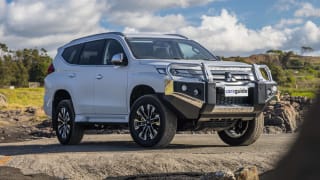
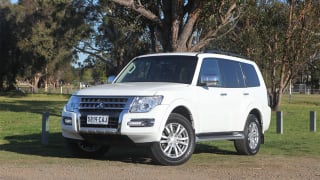
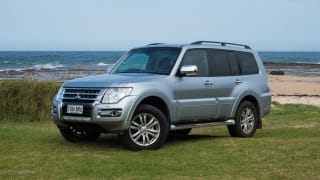
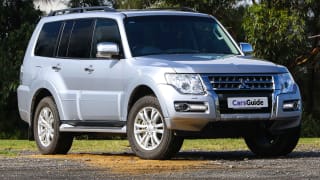
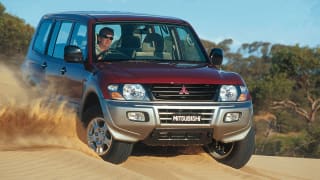
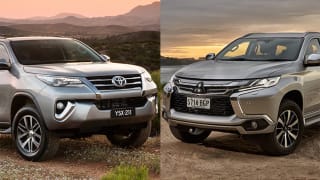
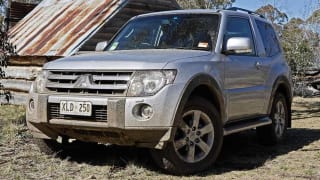
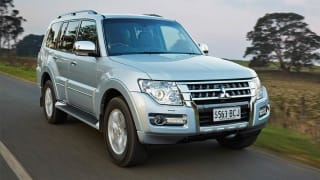
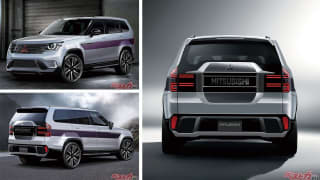
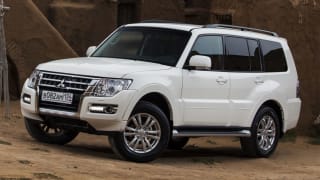
Vehicles described as three-door are usually small hatchbacks, not rugged four-wheel-drives. Mitsubishi has been bucking the trend by building a three-door version of its Pajero 4WD.
The three-door was sold in Australia (called the iO), but was cut in 1999 because of poor sales.
Now Mitsubishi has overhauled the Pajero range and returned the three-door.
The Japanese carmaker says the three-door is the closest product to the Dakar Rally-winning racer that customers can buy — a stretch, given the Dakar machine is a custom-built racer with aeronautical steel tube frame, carbon-fibre panels and gullwing doors.
The latest Pajero maintains the same base, including the existing 4WD system. Exterior changes are obvious, but there is also a fresh interior and new petrol and diesel engines. A rear differential lock is available for off-road work.
The range starts at $40,990 for the three-door R petrol and runs to the five-door Exceed diesel at $70,990. The three and five-door models have a 3.8-litre petrol V6 or a 3.2-litre four-cylinder diesel.
The petrol engine has 184kW and 329Nm and the turbo-diesel 118kW and 381Nm, which makes it better suited for towing.
A price premium for the diesel has been pegged to a modest $2000.
The three-door models are available only with a five-speed automatic transmission, as is the five-door Exceed range-topper. The five-door GLX and VRX come standard with a five-speed manual and the five-speed auto is a $3000 option.
All the Pajeros have 4WD that includes a super low range for rock crawling and hill climbing.
For everyday driving the Pajero has rear-wheel-drive, but drivers can select high-range 4WD or high-range 4WD with a locked transfer (maintains 50/50 split between front and rear) for slippery surfaces and the 4WD low range with locked transfer.
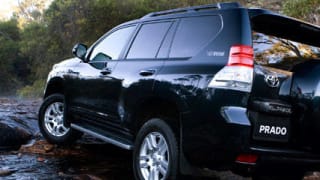
Front driver and passenger airbags are standard, which compares well to the base model Toyota Prado that misses on standard anti-skid brakes and stability control.
ON THE ROAD
THE three-door Pajero stands out on the road. Many people take a second look to make sure they are not mistaken.
They might be appreciating its compact styling, or simply wondering what it is.
Mitsubishi knows it won't appeal to everyone, and tips the smaller model will make only 7 per cent of Pajero sales.
After testing the short and long Pajeros, I can see both upsides and downsides to owning the smaller version.
The car park is the first place to notice the advantages. It's the same width as the five-door Pajero, but is 515mm less in length. You notice this when reversing into tight spaces. It feels more nimble and is also about 230kg lighter. But the three-door is still almost as tall as the five-door (just 20mm shorter), so you still have that high seating position that so many people like.
Its height creates a strange feeling when you are driving the three-door Pajero hard on dirt roads or bumpy tarmac. It maintains good grip, but still feels tall . . . a bit like it is on stilts.
The longer, heavier five-door feels bulkier, but more stable on both surfaces.
Both cars ride comfortably on the highway.
The refinement levels are good considering this is a serious off-road worker. There is a bit of wind noise, which is probably not helped by the tall, upright windscreen.
The centre trip computer with information including altitude, fuel use and a compass is handy, and the seats are supportive.
I had the X test car that has heated sports seats, 18-inch alloys, fog lights, side steps and spoiler. They all added to the sporty look.
Off-road, both cars are capable. They will both pass challenges that the most extreme off-road drivers can throw at them.
The level of off-road work was not enough to test whether the three-door or five-door was better.
An expert friend says short and long-wheelbase 4WDs usually have a similar level of capability even if each might excel in particular situations.
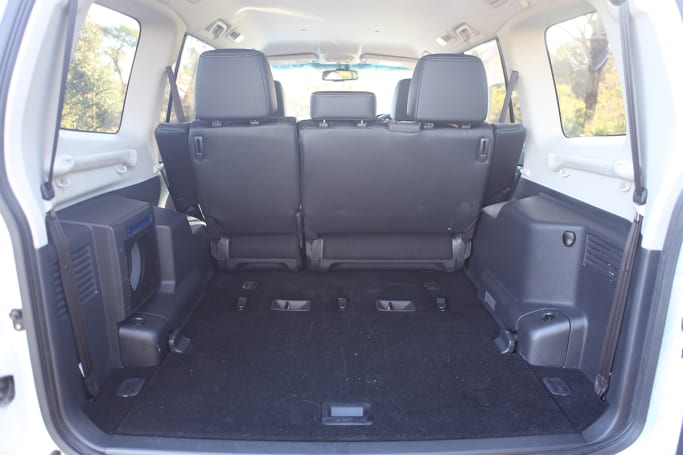
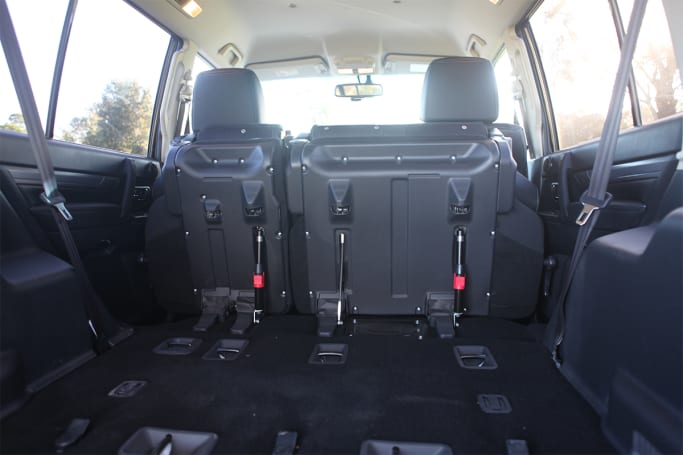
The three-door Pajero is a five-seater, but the second row of seats is cramped and access is compromised. Adults could use them for shorter trips.
If you want to carry a family, the five-door Pajero is better.
The second row seats fold, creating useful load space that can swallow a bicycle if the bike's front wheel is removed.
The diesel X three-door engine had brilliant pulling power. It's noisy when compared with the passenger car diesels coming from Europe, but it is better and more economical than the quieter petrol.
THE BOTTOM LINE
ATTRACTIVE option as a relatively compact go-anywhere machine. Compromised, but good value for money considering its off-road capability.
73/100